As I sit here, watching Saber Interactive’s CEO have a normal one about how generative AI dialogue can totally improve videogames, I can’t help but grit my teeth in the same, enamel-grinding fashion I have ever since companies like Ubisoft started promising a future with AI-powered “neo-NPCs.”
If you’d believe the hype, these things are potentially good on paper, right? We live in a development environment where the ambitions of big-budget open world games are far outstripping their cost—wouldn’t it simply be marvellous if you could populate a world with infinite dialogue chains and storylines?
In practice, the result is… pretty middling. While yes, some of the isolated tech demos we’ve seen have been impressive, the actual implementation of those we’ve seen in videogames, such as the life sim Seed, or Inzoi, which tried to pilot “smart Zois”, fell flat.
Even when they’re a source of entertainment, that fun is mostly found in the process of making them believe they’re pregnant—and listen, I love toys. Putting aside my general distaste for generative AI, I don’t think that every single videogame that comes out has to be a work of art. Toys are fine, you can smash action figures together and have a lovely time.
But that’s not been the pitch, has it? Convai, an AI NPC start-up, wants to avoid a world without games where background “characters are given one line and repeat that one line over and over again, maybe two lines at best.”
Ubisoft wants “fully personalised and immersive experiences”, where its neo-NPCs make games “more alive and richer,” whatever that means. Meaning Machine, a company that’s pioneering reactive battle banter, is pushing for narrative-based games which are entirely powered by the tech. The dream is, in a lot of places, to use AI to try and tell stories.
The problem is, this pipe dream fails at the conceptual level, because this just isn’t how good storytelling works. These people don’t get it. And if they do get it? They think you’re dumb. They think you’re dumb as bricks.
In defense of miscellany
The main lie to the idea is the implication that background details, specifically what NPCs in said background say, aren’t of any great importance. This couldn’t be further from the truth.
One of videogames’ biggest strengths is the ability to divorce themselves from pacing. Not entirely, mind—a singleplayer game with a linear narrative is still going to care about pacing a great deal. But an open-world game can take the time to establish, create, and put forward background details that would otherwise bog a story in any other medium down.
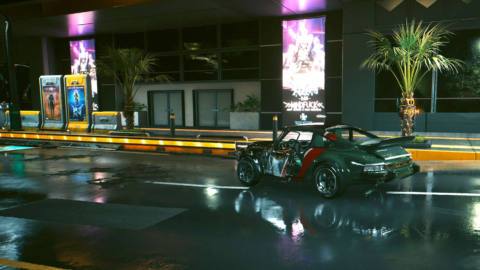
There are more obvious examples. Say, a town crier in a fantasy RPG telling you about some far-flung event you’ll likely be dealing with—but there are more subtle instances of this sort of thing working brilliantly. My favourite example by far are Cyberpunk 2077’s adverts, which are tailor-made to invoke the exact right amount of corporate overstimulation and dread in you as you muddle around Night City.
In a game with a stand-out story, all of these hundreds of little opportunities will be leveraged powerfully to draw you in—they can do more than just hand you information about the plot, they can create a sense of scale or place. Combat barks can characterise an enemy faction, journal entries can flesh out a culture, and so on.
The perception that these qualities in a game’s overarching script are somehow “less important” is just completely backwards—they’re the backbone on which the rest of the story lies. And even when they’re not exactly award-winning, this background chatter still creates a game’s sense of character.
Imagine a world in which lines like “Do you get up to the cloud district very often? Oh what am I saying, of course you don’t ” or “I used to be an adventurer like you, but then I took an arrow to the knee” had been scraped out and replaced with the ability to, like, make them think you’re Abraham Lincoln reincarnated, or something.
Background chatter, combat barks, NPC dialogue, side-quests, it all matters.”
Heck, the fact that you’re probably summoning to mind videogames with hilarious or immersion-breaking background natter proves my point, right? You’re already able to tell when it’s gone wrong.
Starfield’s setting feels bland and dull when compared to something like New Vegas not just because of its main yarn, but because in the latter, its locations and background babble are hand-crafted and designed to surprise you, and in the former, procedurally-generated planets lie next to grey and perfunctory cities with all the rough edges sanded off.
Even just being placed next to a bunch of crap that wasn’t hand-made causes Starfield to feel shallower as a result. Now imagine if all of those cities had AI-generated NPCs with disconnected, jilted, random stories to tell you—stories you couldn’t even have a shared laugh at with your mate when they were bad. Does that sound better?
In this sense, the idea that AI-generated NPCs are some miracle fix that will give smaller studios the ability to tell stories in bigger worlds just completely falls apart, because those worlds are only made to feel big and textured because of thousands of little scripts that are laboriously written out by hand.
At the risk of stating the obvious, you can’t just skip over that hard work and expect the same results! There’s far more creativity in all the smaller choices a team of writers makes than the broad, conceptual idea that started them off. Background chatter, combat barks, NPC dialogue, side-quests, it all matters.
They think you can’t tell the difference
The reason these bigwigs think they can get this crap past you has a lot to do with the same, broader, executive misunderstandings of what makes good art: People. It’s a sentiment that was echoed by id Software’s baffled Chris Hays, who has been watching Microsoft push statement after statement that the studio was still the same id Software, even after half of its staff were laid off.
Or take EA’s head honchos, who Dragon Age creator David Gaider said believed “you made an RPG and the nerds in the cave would always show up for an RPG, because it was an RPG.” It’s no coincidence that Gaider, ostensibly responsible for one of gaming’s best fantasy settings, was pre-emptively exhausted at the idea of AI-generated story back in 2023.
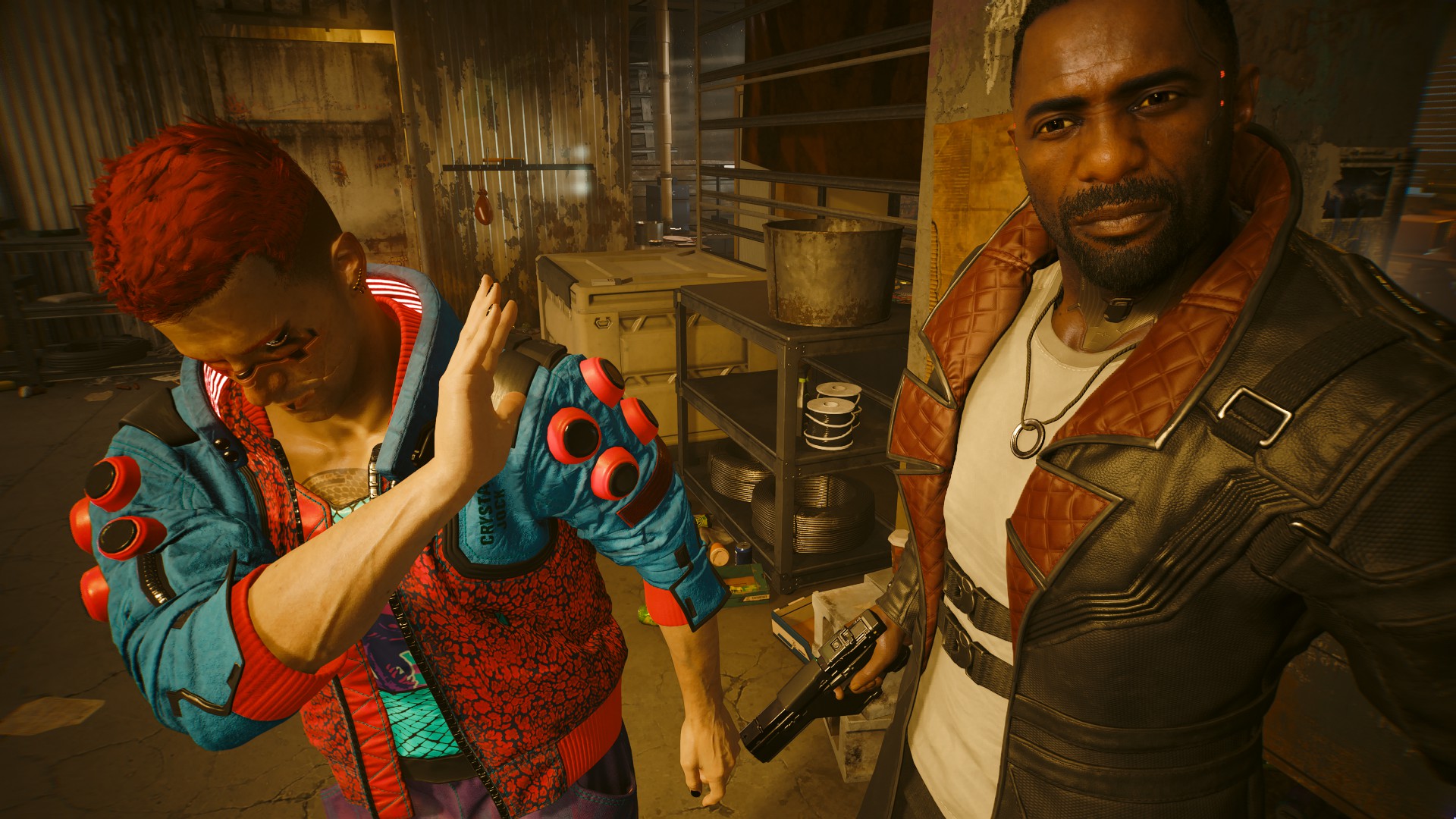
Nor is it a coincidence that Cyberpunk’s quest director was unimpressed by the technology, or Larian’s head writer, who called its output worse than their worst drafts. People who know what actually makes a story good aren’t cringing at generative AI because they’re luddites whose jobs are being threatened—if it was able to put something compelling together, they’d spot it.
They think it’s garbage because it’s garbage, and they don’t want to have a hand in feeding you garbage. It’s really that simple.
The biggest insult of suits peddling this crap is the idea that you just don’t care. That you don’t care if the music you’re listening to is crap, you don’t care if their games look hideous, and that you don’t care if a game’s story leaves you confused and hollow. They believe that you will merrily accept the substitute of a bunch of keys being jangled in front of your face over something that was carefully hand-crafted to make you feel something.
To those people, videogames are products. Hasbro thinks it can spit out another Baldur’s Gate just by throwing the same amount of money at a different studio, Amazon’s then-boss of games blithely said, in 2024, that videogames don’t have acting. This is the prevailing attitude—a row of artless suits who are trying to sell you a bridge. Don’t buy the damn bridge, I beg you. It won’t make your games better.
2026 games: All the upcoming games
Best PC games: Our all-time favorites
Free PC games: Freebie fest
Best FPS games: Finest gunplay
Best RPGs: Grand adventures
Best co-op games: Better together
About Author