
A ruling from a German court has found that Google is liable for the claims made in Search’s AI Overviews. What is this? The consequence of Google’s all-in-on-AI actions?
The case involves false claims made about two Munich-based publishers. Allegedly, Search’s AI Overview misattributed the questionable practices of another existing business to the plaintiffs, drawing a link that did not exist in the sources it scraped. The two publishers initially sent a cease-and-desist letter to Google, only bringing the legal case after the search giant did not appropriately address the issue (via The Decoder).
As a result, on May 28, the Munich Regional Court issued an injunction against Google. To get a little bit into Deutschland’s legal landscape, there are existing rulings from Germany’s Federal Court of Justice that basically say companies like Google have limited liability when it comes to the third-party content dredged up by traditional search results. The Munich Regional Court argues that AI Overviews represent a different legal beast, and its ruling could have an international impact in the future.
The court makes the case that, from the perspective of your average user, the AI-generated response reads closer to direct information from Google rather than pointing towards external content (via Heise Online). Considering Pew Research found last year that Google users are much less likely to click on a source shared via an AI Overview, I can definitely follow the argument.
According to The Decoder’s translation of the court documents, the court argued that Google owns the content its AI Overviews produce “because it alone has influence over the AI’s offering and the algorithms with which the AI operates.” Therefore, the Search giant is liable for the “independent, new, and substantive statements” generated for the AI Overviews.
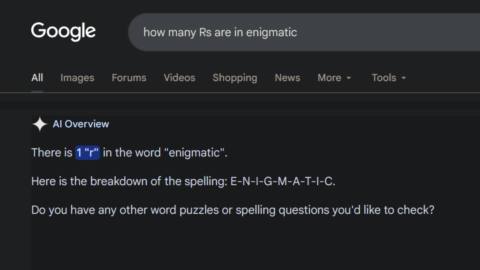
Apparently, at the hearing, Google claimed that most users would know “that information generated with AI should not be blindly trusted,” highlighting that AI Overviews include linked sources folks can check for themselves. The court rejected this argument on the grounds that the capacity to check claims made via AI Overviews does not “regularly exempt from liability for this statement.”
To put it another way, if I were to write something heinously false about Google right now, the fact that you could probably very easily look elsewhere online to disprove my claim would not save me from the end of my journalistic career.
I’d rather not get into the specifics of how libel law works in the UK, so instead let me explain why this German case is also interesting when it comes to free speech protections for AI-generated statements. Specifically, the court wrote, “[An AI-generated statement is] not the expression of an acquired conviction of the persons expressing it, but the result of an algorithm.”
I would not be surprised if similar reasoning starts to crop up in future legal cases internationally. The court also described AI-assisted research as “above all an expression of Google’s business activities” and “at most a secondary expression of an interest in being able to freely express one’s opinion and beliefs.”
Long story short, the court has ruled that, though you can often easily fact-check what you read in an AI Overview, Google is still liable if this particular Search product makes false claims. As such, Google has been served with an injunction against disseminating false claims about the Munich-based publishers, and the company also had to cover 80% of the legal costs.
While this case is now concluded, I wouldn’t be surprised if we see its ruling ripple across the international legal landscape. There’s never a guarantee different legal systems will agree on the same arguments, though—and I can’t help but wonder how this case might’ve played out Stateside.
About Author