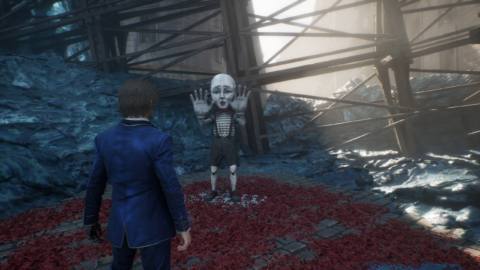
The developer of an upcoming horror drinking game has cancelled plans for a public Steam demo in favour of private preview sessions, citing concerns that AI vibe coders might use the demo’s content to clone the game.
Drunken Goddess Reflux is a “shot glass Russian roulette” drinking game where players square off against an anime demon girl who loves you but also kind of wants to murder you (which sounds like a standard relationship to me), with the goal of getting your girl-frenemy so blotto that she barfs up her soul. Frankly, it doesn’t sound like my cup of tequila, although there is a mechanic where the rules of the game grow weirder and wilder the more alcohol you imbibe—which sounds neat.
Regardless, developer Alliance Arts planned to release a Steam demo on October 19, but in a post on X (via Rock, Paper, Shotgun), the studio explained this is no longer the case. Instead, the studio will host “closed online play sessions for a limited number of participants.”
“We sincerely apologize for the short notice,” Alliance Arts added, before explaining its reasoning behind the demo’s cancellation. Apparently, the demo would have come with “some restrictions on posting and streaming gameplay videos”, which Alliance Arts decided it wouldn’t be able to properly manage.
On top of this, however, the devs are also worried the demo will be exploited to create AI-coded clones. “We’re concerned that the demo’s content could be used to quickly imitate or replicate the game’s presentation and gameplay with AI or other tools, and that such works could be released before launch.”
It isn’t clear which of these was Alliance Art’ bigger worry, but game developers having their projects vibe-cloned is becoming a more frequent issue. Back in March, a developer shared her game prototype online only to have it cloned within five hours. This isn’t the only example either, over on Bluesky, McPixel developer Sos Sosowski shared numerous examples of indie game developers having their works almost instantly copied by AI cloners and released on Steam.
Games being flagrantly copied is not a new problem—the mobile space has struggled with it for years. But the way AI tools have sped up the process is clearly a cause for concern among developers—especially since one of the best ways to improve a game’s chance of success in today’s crowded market is to share the idea early and build a community around it. As such, unless Valve and other game stores take a firmer stance against outright copycats, we may well see more developers adopt Alliance Arts’ approach.

Best cozy games: Relaxed gaming
Best anime games: Animation-inspired
Best JRPGs: Classics and beyond
Best cyberpunk games: Techno futures
Best gacha games: Freemium fanatics
About Author