Intel went on record at CES about a planned version of its new Panther Lake chip specifically configured for handheld gaming PCs but didn’t provide any details. Now Videocardz claims the chip will be branded “Intel Core G3 Extreme” and have the same iGPU as Panther Lake in laptops.
That means the Core G3 will get the same 12 Xe3-spec graphics cores as the top-spec Panther Lake chips for laptops. However, the leak claims that some concessions have been made to squeeze Panther Lake into the handheld form factor.
On the iGPU side, it’s said that clock speeds have been reduced from the 2.5 GHz of laptop chips like the Core Ultra X9 388H to 2.3 GHz. No doubt the idea is to reduce power consumption without noticeably impacting frame rates.
That slight reduction in clock speed has apparently been enough to have Intel rebrand the iGPU from Intel Arc B390 in the top laptop variants of Panther Lake to Intel Arc B380 for the Intel Core G3 Extreme.
As for the CPU of the Panther Lake package, that’s had a bit more of a haircut. The full-spec Panther Lake configuration in the aforementioned Core Ultra X9 388H has four Performance cores, eight Efficient cores and four Low Power Efficient cores. But if this leak is correct, the Intel Core G3 Extreme for handhelds will have two fewer Performance cores, with the other core counts carried over.

Peak clock speeds for the Performance cores have been reigned in from 5.1 GHz for the Core Ultra X9 388H to 4.7 GHz for the Core G3 Extreme.
That probably all makes sense. For mobile gaming, you’d always want the spec to tilt more towards GPU power than CPU power. Panther Lake’s Efficient cores, likewise, look to be pretty impressive. So, two Performance cores to handle the really demanding CPU threads and another 12 Efficient cores for everything else should be plenty in CPU terms.
For the record, along with the Core G3 Extreme there is also said to be a non-Extreme Core G3. That has an Intel Arc B360 iGPU with the Xe3 core count reduced to 10 and another slight drop in graphics clockspeed to 2.2 GHz. The non-Extreme variant is reported to have the same CPU core counts as the Extreme chip, but a very slightly lower Boost clock of 4.6 GHz.
All told, this looks like a very promising chip for handheld gaming. Andy had a quick go with the laptop version at the CES show and came away very impressed indeed. Long story short, it looks to be a remarkably capable iGPU and well up for 1080p gaming at decent quality settings.
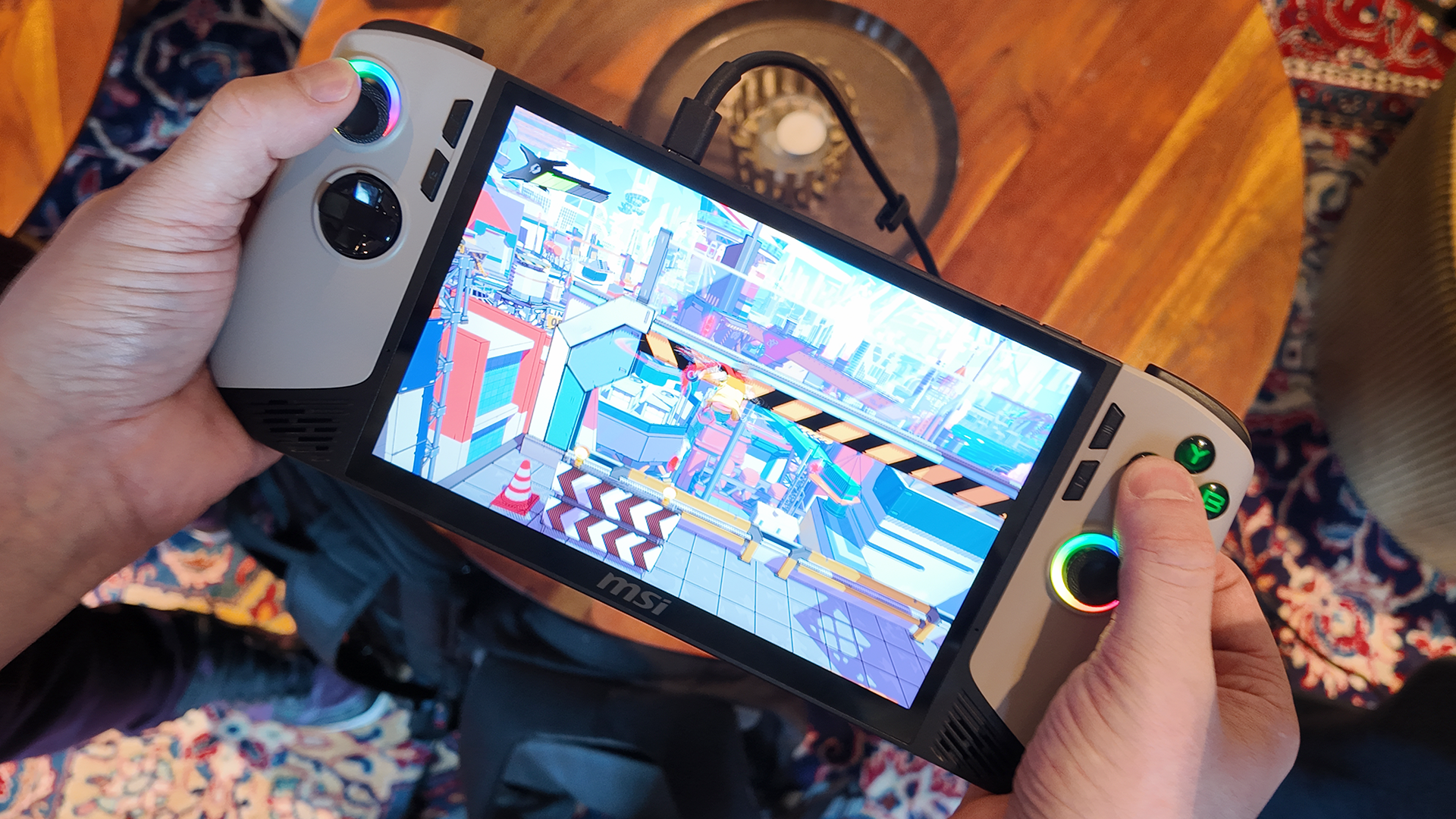
It should easily have the edge on AMD’s equivalent APU, the not-entirely-new Ryzen AI 400 series also announced at CES. The big questions at this point are therefore not so much peak performance, which looks to be impressive, but driver quality and battery life.
On the former point, Intel claims its driver quality is “light years ahead of where we were a few years ago.” Regarding battery life, well, we’ll just have to wait and see.
About Author