Weird Weekend is our regular Saturday feature where we celebrate PC gaming oddities: peculiar games, strange bits of trivia, forgotten history. Pop back every weekend to find out what Jeremy, Josh and Rick have become obsessed with this time, whether it’s the canon height of Thief’s Garrett or that time someone in the Vatican pirated Football Manager.
When I first walked into the mime’s house in Rhell: Warped Worlds & Troubled Souls, I hadn’t intended to destroy it. In fact, the prospect of encountering a mime in a house hadn’t factored into my thoughts at all.
I don’t generally go around expecting to find mimes in places, and I’ve never once entertained the concept of mimes being on the property ladder. I’d always assumed they lived in those invisible boxes they never seem to be able to escape.
Nonetheless, walk into the mime’s house I did, and almost immediately picked up a spell for magnetism that was just lying around.
I suppose mimes don’t have much use for magnetism, given they are inherently repulsive. But it does beg the question why this silent entertainer had an elaborate magnet-themed puzzle set up in his abode.
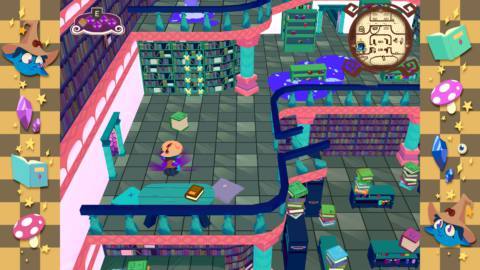
Anyway, I solved the puzzle and was about to leave, as I feel similarly about being close to mimes as I do electric fences or saltwater crocodiles. But then I spied a barrel lodged in a gap in a wall, which seemed to have open space behind it. Naturally, I suspected a secret, and assumed some cunning deployment of magnets would yank the barrel from the aperture.
Unfortunately, through some fumble of my spellbook that I still don’t fully understand, I ended up casting magnetism on myself. At which point, half of the items in the mime’s house were all dragged out of place and began clattering toward me.
Books, cushions, sideboards, all were trapped in a swirling vortex around me.
As my borked spell proceeded to wreck the joint, I did briefly ponder why this surprise magnetic field affected so much more than metal. But I didn’t have long to consider the notion, because the mime was being dragged towards me by the laws of attraction—at which point I panicked and ran out of the house.
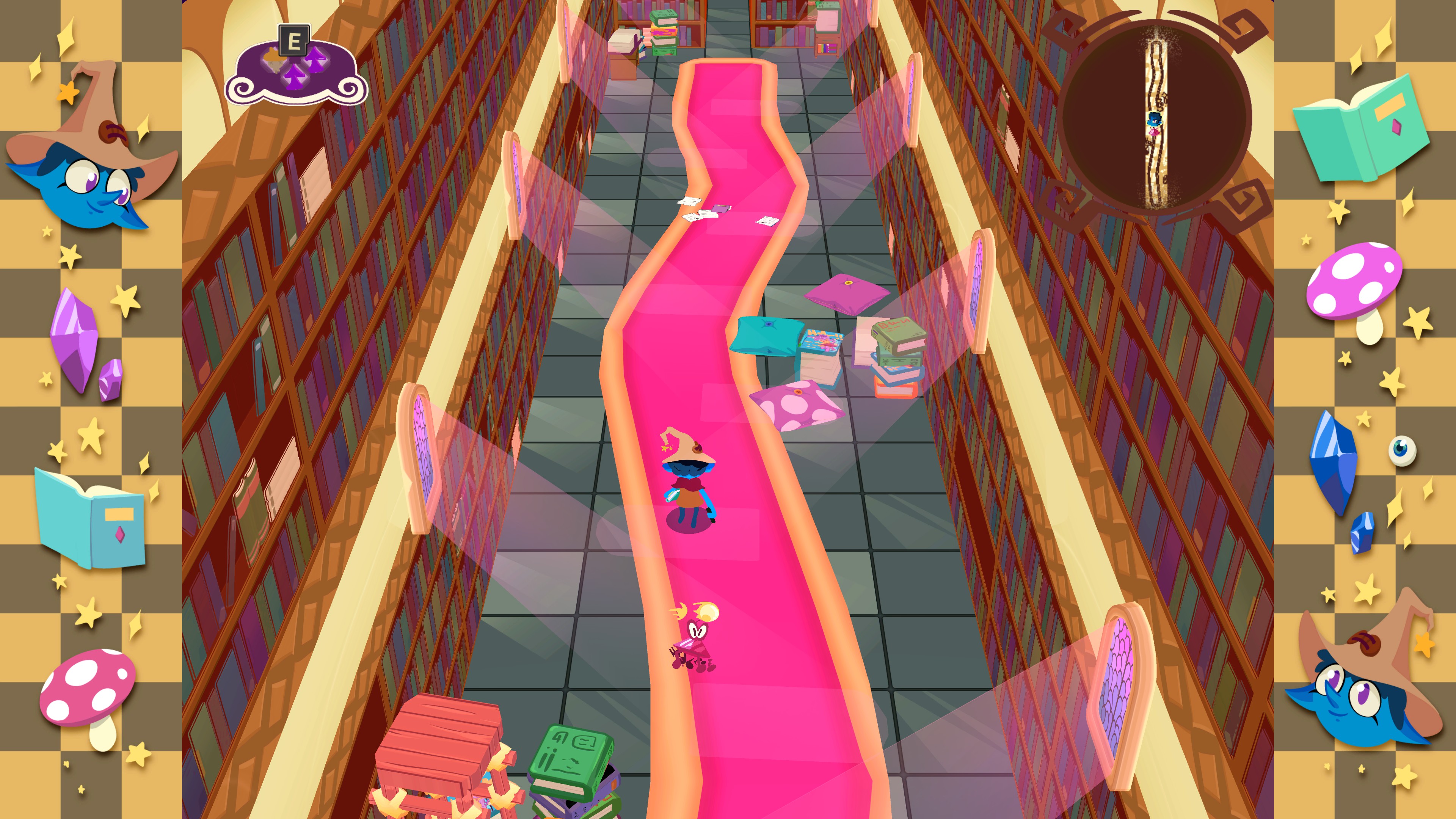
This is just one of around a dozen anecdotes I could summon to explain the brilliance of Rhell. In fact, this hybrid of Zelda-ish RPG and immersive sim might just be the best game about being a mage I’ve ever played. Not only because of the astoundingly reactive toolset it provides, but also because of how often your dabbling in the occult comes back to bite you on the arse.
Rhell kicks off with a simple, intriguing premise: everybody in the fantasy kingdom you reside in is disappearing, and you’ve decided to figure out why.
You are Rhell, by the way, a curmudgeonly apprentice mage who abandoned their studies eight years prior, instead pursuing an illustrious career of getting locked up in a castle dungeon for some reason. But a spark of fortune enables you to escape, and you resolve to return to your wizardly ways and solve the mystery of the missing citizenry.
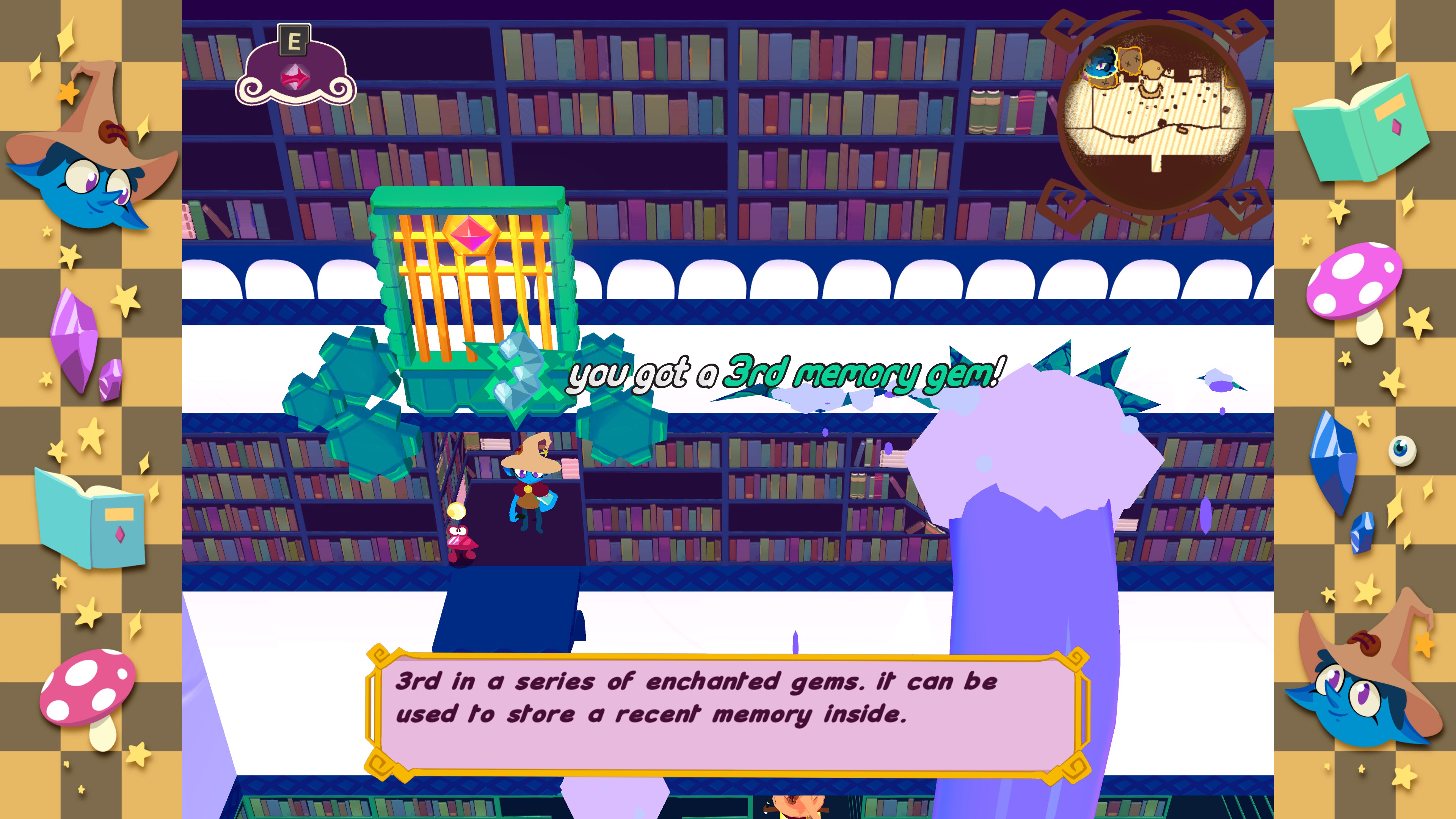
Structurally, Rhell is similar to the Zelda games of yore, with you exploring colourful fairytale landscapes from a top-down perspective. The world is basically a gigantic puzzle box that you need to solve, scattered with eccentric characters who will help you along your way.
The world is basically a gigantic puzzle box that you need to solve.
In place of Zelda’s key items, however, Rhell furnishes you with a far more elaborate toolset.
The game features 40 spells (known-in game as runes) you can paste into your personalised grimoire, ranging from simple push runes to pyromancy and turning things into slime. What’s more, you can combine up to five spells at any one time to enhance their existing effects or create completely new incantations.
For example, you could combine a push spell (which shoves objects forward horizontally) with a lift spell (which raises it in the air vertically) to make the object essentially jump in a forward direction. Adding more push spells will increase the horizontal force of the spell, while adding more lift will increase the height.
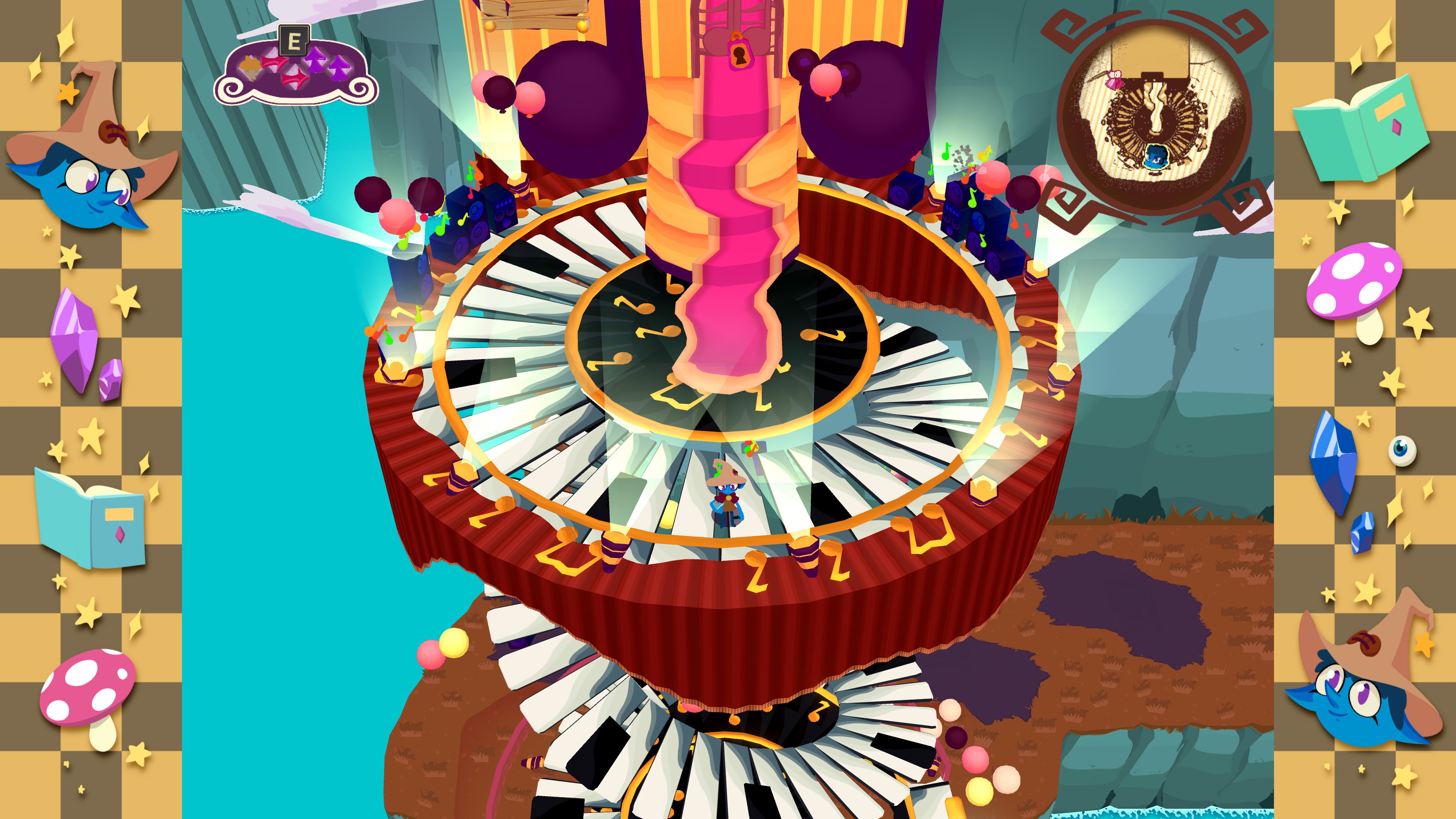
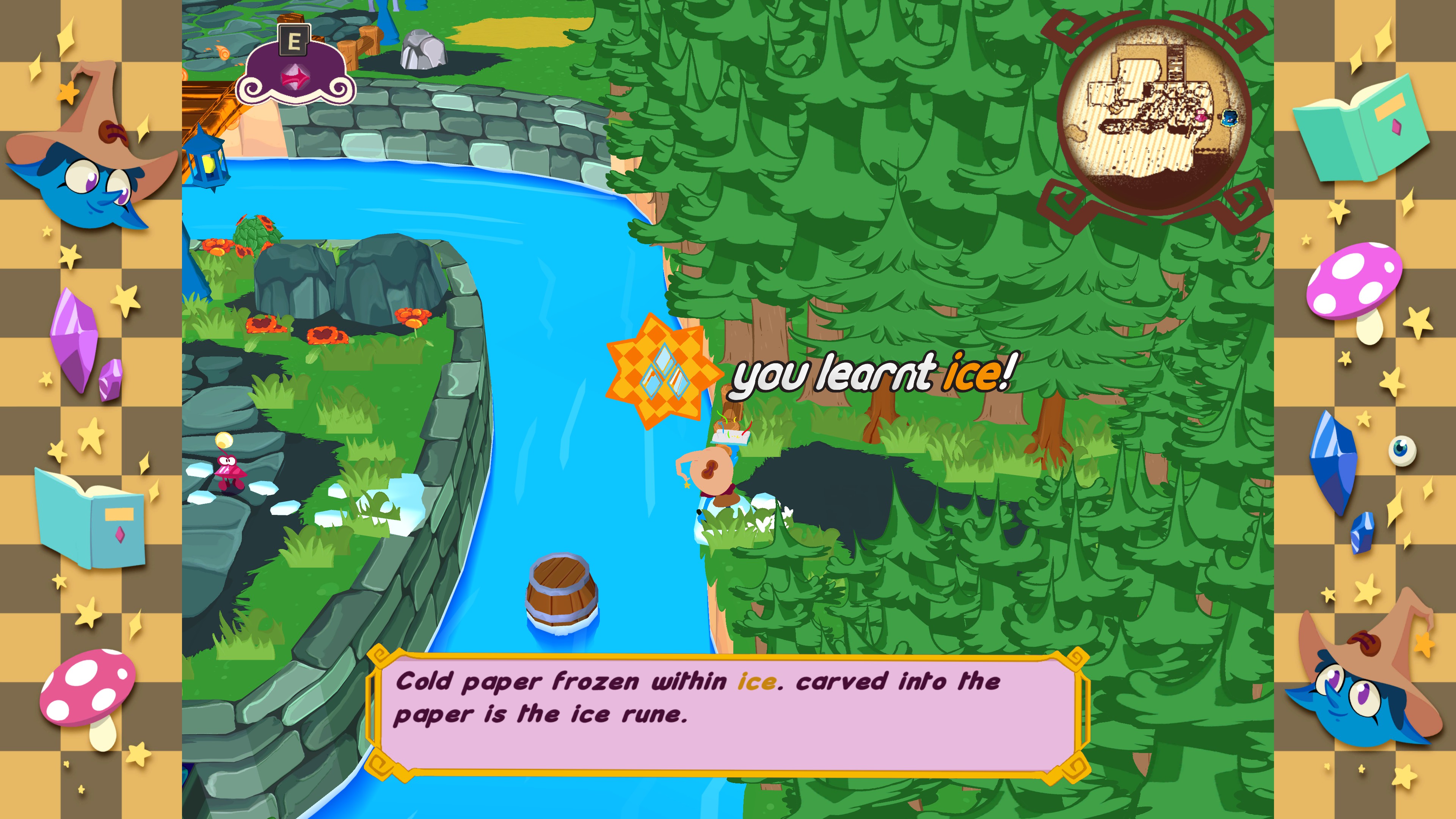
Rhell couples this system with a highly systemic world that follows rules that are logical and intuitive. Fire burns wood. Ice freezes water. Combining fire with ice creates water. If you apply slime to an object, it will become bouncy. If you apply ice to slime, it will become hard and heavy.
This toolset affords a truly dizzying array of ways to solve puzzles.
Say you want to jump from one platform to a higher platform. You could push together stacks of books or boxes to create a makeshift staircase. You could apply slime to an object and bounce up to the higher ledge. But you could also conjure a scarecrow-like dummy—which will fire any spell you create alongside it at regular intervals—and program it to fire a push/lift spell which you can then stand in front of.
It’s a properly galaxy-brained bit of a design, and you can tell that it’s brilliant because of how much fun it is when things go wrong.
In one early puzzle, I had to hold down two buttons that were positioned directly opposite each other on the floor and ceiling. “No problem!” I thought. “I’ll just cover this box in slime and then use a lift spell to make it bounce between the two buttons.”
But I had to push the box into place before I could lift it, and stupidly, I covered the box in slime before I did this. So when I pushed the box, it immediately rebounded off the opposite wall and hit me square in the face.
So when I pushed the box, it immediately rebounded off the opposite wall and hit me square in the face.
It helps that Rhell leans into such mistakes.
There are lots of slapstick-enhancing animations if Rhell getting dazed or squashed or burned or frozen when struck with her own spells, as if Wile-E-Coyote stopped ordering stuff from ACME and took up sorcery. But the actual cost of failure is relatively low. Falling to your death simply causes you to respawn at a nearby point, while any puzzle-room you cock up can be instantly reset in the menu.
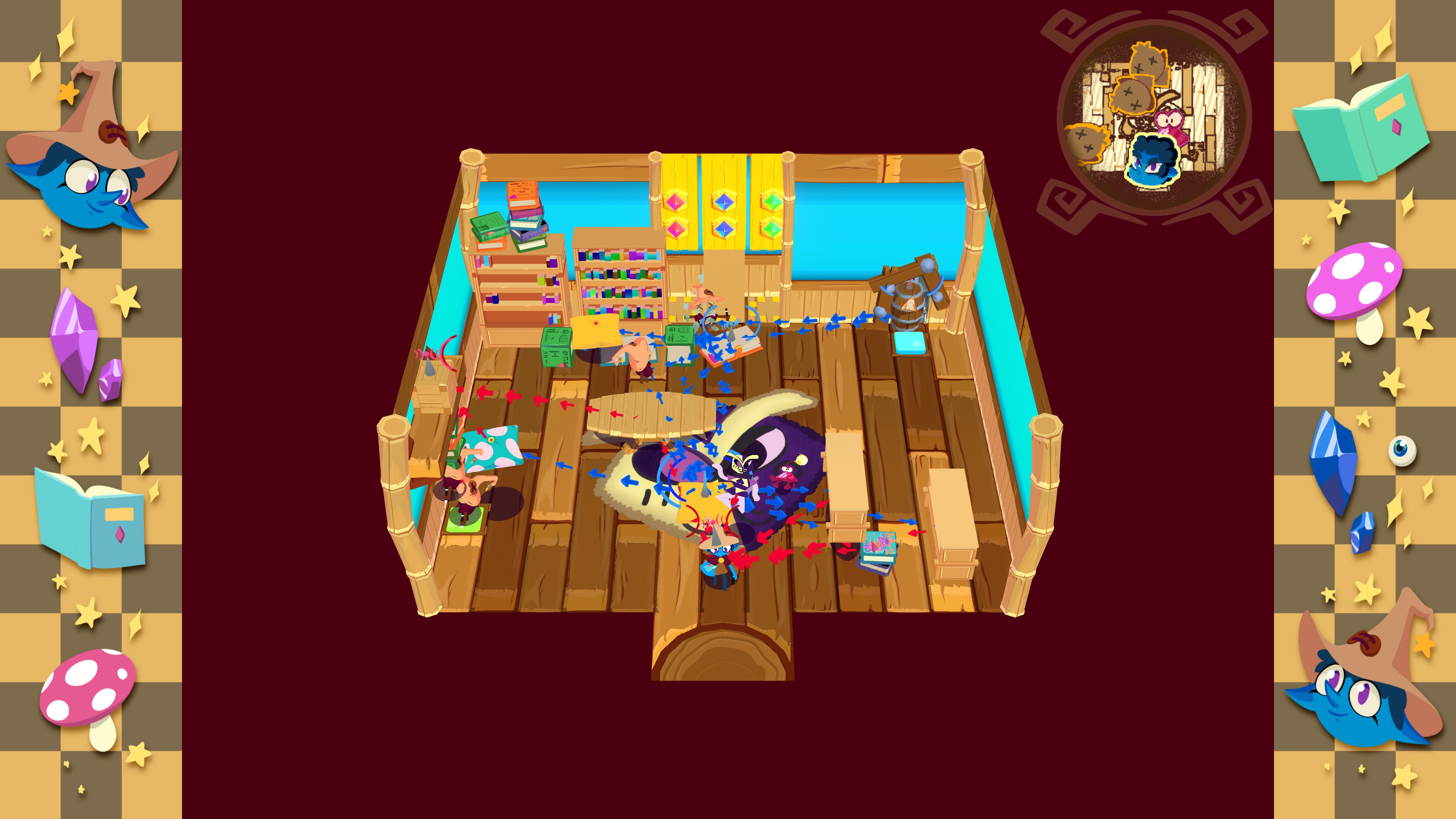
As such, when you succeed in a puzzle, you get rewarded. When you fail, you get a punchline. Rhell also effectively communicates what it would feel like to wield powers that no person should probably wield. Simple mistakes can lead to colossal screw-ups, as my hostile rearrangement of the mime’s house demonstrates.
There are a couple of nits I could pick at with Rhell. The writing’s a little rough around the edges, and I think would benefit from dialling down Rhell’s world-weariness ever-so-slightly. Also, constantly reprogramming spells is a little fiddly, though Rhell does its best to help you with this through gems that you can find specific spell combinations to. I also don’t begrudge that finickiness too much, as it led to so many of the stupid mistakes that had me howling with laughter.
While it looks nothing like Deus Ex or Dishonored, Rhell absolutely embodies the spirit of those games. In fact, it’s arguably a truer example of “Zelda, but an immersive sim” than the likes of Breath of the Wild or Tears of the Kingdom. If you’re a fan of either strand of its inspirations, you owe it to yourself to give it a try.

2026 games: All the upcoming games
Best PC games: Our all-time favorites
Free PC games: Freebie fest
Best FPS games: Finest gunplay
Best RPGs: Grand adventures
Best co-op games: Better together
About Author