Steam’s (two-year-early!) rejection of developer Santa Ragione’s new art horror game, Horses, and Valve’s subsequent refusal to clarify what triggered the ban or allow Santa Ragione to submit an updated build, has unfortunately overshadowed what’s interesting about the actual game.
By provoking controversy, Horses has clearly done part of its job as a work of art, although after playing it, I was disappointed that it didn’t fully take advantage of its potential as a game. It’s visually strong and thematically coherent, and a fascinating attempt to explore topics and tones in games that have often been reserved for film, but it struggles to integrate the experience of the player in a way that doesn’t distract from its point.
The horses are people, if you hadn’t noticed yet
In Horses, you play a young man, Anselmo, who’s sent to stay and work for two weeks on a farm. The farm is populated mainly by naked humans wearing horse masks. Bad things happen on the farm. To be extremely blunt about Horses’ themes: this is an intentionally disturbing game about fear, repression, inherited violence, and societal control. It deals with sexuality frankly, unpleasantly, and often. There’s also slavery, murder, suicide, normal assault (not just sexual), and a scene in which Anselmo helps castrate someone.
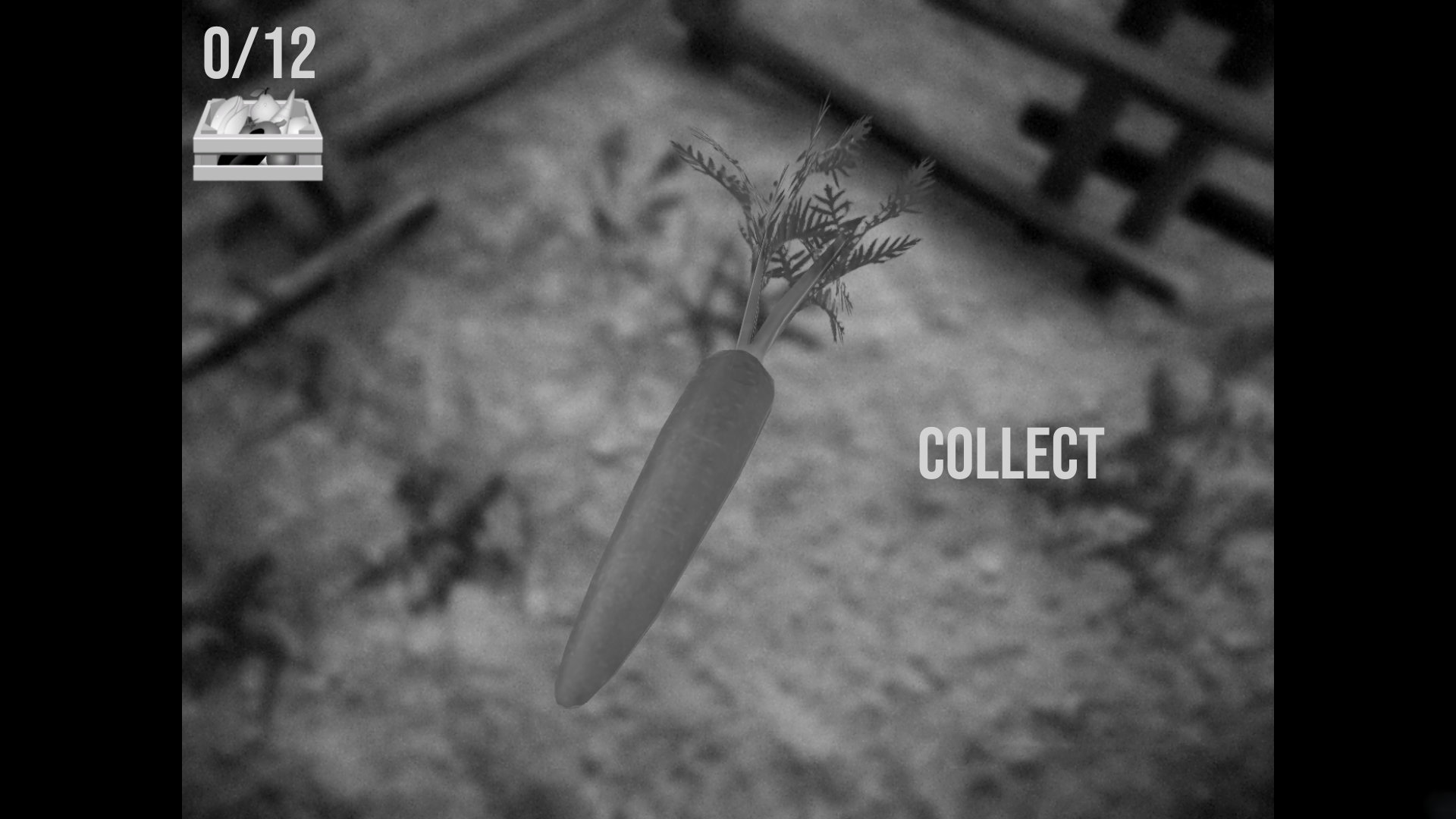
Horses borrows heavily from the language of film—4:3 aspect ratio, black and white color scheme, with silent movie-style title cards instead of spoken dialogue and flashes of FMV—but also it makes liberal use of in-engine awkwardness to add to its uncanny effect. I would describe its vibes as “rancid” and its appeal as “your mileage may vary.”
So it’s not surprising that Horses ran afoul of Steam’s vague content policy, which among other things forbids material intended to “shock or disgust”. The question is not whether Horses contains shocking, disgusting material—it does! this is the point of the game—but whether it is a storefront’s place to censor the expression of these things. The point of art, after all, is to provoke emotion.

The fact is, with a set of rules as loose as Valve’s, all Horses needed to do to get banned was make someone behind their opaque corporate wall uncomfortable. It clearly did this. That is a rousing testament to the achievement of the game. Horses will make you uncomfortable. It is an itchy piece of art, one that gets you shifting uncomfortably in your seat from the first minute and won’t let you settle for hours after. Playing it is an unpleasant experience; as with many great pieces of art, it asks the viewer (or in this case, the player) to endure this unpleasantness and to choose, repeatedly, to keep playing in order to understand the greater point.
Keeping a routine
This, more than the tone or content of the game itself, is where Horses has the most potential and where Horses stumbles hardest. Horses has been repeatedly compared to Salò, or the 120 Days of Sodom, Pier Paolo Pasolini’s adaptation of the Marquis de Sade’s novel and one of the most widely censored films of all time, for its subject matter. However, I found it structurally to be far more resonant with Chantal Akerman’s Jeanne Dielman, 23 quai du Commerce, 1080 Bruxelles, which lulls the viewer into the mundane routine of the titular character’s life over the course of slow, repetitive hours before interrupting it with an act of shocking violence.
In Horses, the first day at the farm sees Anselmo being shown around by the farmer, who warns him that his chores must be done properly every day: never forget to feed the dog, always put the tools back where you got them from, etc. The threat behind the warning—and the fact that you’ve already been let in on the humans-as-horses thing—effectively put a fear of upsetting the farmer in me. Every day I would wake up, eat my breakfast, go feed the dog, and then dutifully check the list of chores the farmer had left for the day.
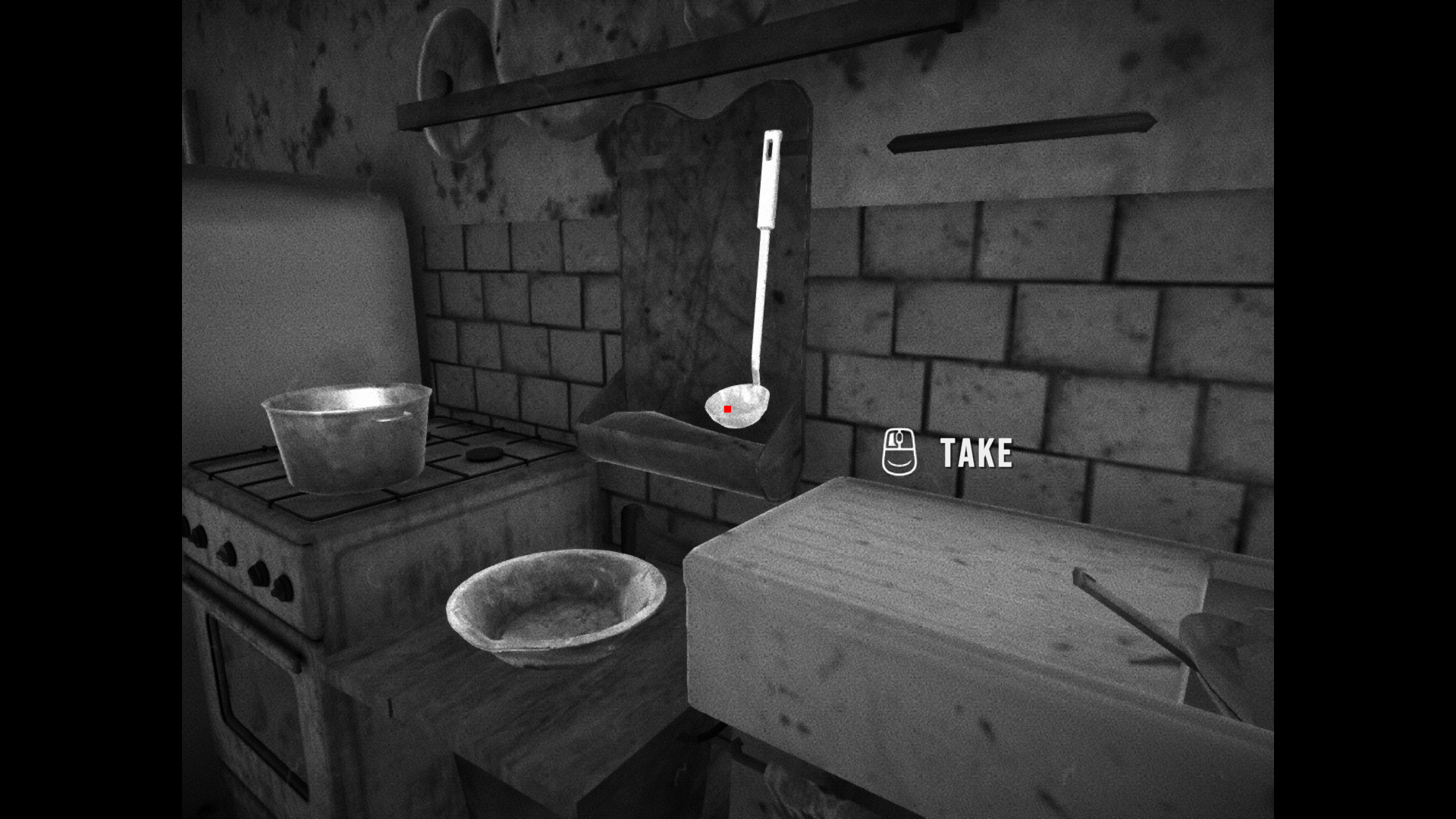
The problem is that Horses quickly abandons this routine, and as a consequence loses the strongest argument it has for being a game rather than taking some other form. It’s an inherently different experience to watch Jeanne Dielman go through her day repeatedly and to play Anselmo going through his. This is not just because of the active participation required, but because this repetition creates a feeling of comfort on the part of the player, even when the wider context of the game is as unsettling as Horses’ farm.
The rapid pace and on-rails nature of the second half of Horses makes me think that the developers were afraid of boring the player.
Knowing that every morning I would use the ladle to get the slop from the pot to feed the dog became one point of certainty in the rest of Anselmo’s terrible, horrible, no-good very bad day. This familiarity, however, is not used to its full effect. In fact, Horses removes the ability for you to do your chores at all extremely quickly, to the point where I was able to predict whenever a non-standard event was about to occur because of the presence or absence of the ladle. The game undermines the role of the chores—they are a lulling routine, a way for the player to both ground themself as Anselmo and to act as a familiar sequence of events to interrupt. Without the repetition of the chores, these non-standard events felt less like disruptions and more like theater.
The rapid pace and on-rails nature of the second half of Horses makes me think that the developers were afraid of boring the player—which feels out of character for a game borrowing so heavily from the language and ideas of art-house cinema. In most games the desire for the player to not be bored comes as a given, but in Horses, which spends its entire duration leading the player by the bit into a state of tortured discomfort, it’s strange that it seems so hesitant to give us any time to breathe, to establish our bearings, or to space out the shocks of its discomfiting plot, especially when that neutral space is such a key tenet of its sister medium of film.
Powering through
An important part of watching an uncomfortable movie is choosing to stick with it. The experience is not solely about what is happening onscreen but also about what is happening internally to the viewer as they endure feelings like shock, disgust, or—yes—boredom.
The controversy over Horses’ bans and videogame censorship at large has brought needed attention to how we treat controversial topics in the medium.
Horses trades liberally in the first two, but shies away from the third. As such, it seems unconfident in the staying power of its subject, as if by giving the player time to think it would somehow insulate them to its impact. In fact, the opposite is true. The second half of the game has Horses’ strongest imagery and a few genuinely arresting setpieces, but it is also structured like a minecart ride, where Anselmo lurches from terrible thing to terrible thing, uninterrupted, without question of direction or agency. It feels less like the game is being played and more like the game is happening to you.
The controversy over Horses’ bans and videogame censorship at large has brought needed attention to how we treat controversial topics in the medium, and hopefully the conversation about what topics games are allowed to discuss and in what manner while still allowed access to monopolistic storefronts will continue. But Horses is interesting for other reasons too, and I hope that the unfortunate situation of its release won’t stop us from considering what the game is actually doing, whether it works, and where it fits in with the conversation of the wider texts it draws inspiration from. Despite its shortfalls, Horses is a genuine attempt to approach, through videogames, the spaces that film and literature take for granted, and we shouldn’t overlook that just because Steam was squeamish.
About Author