Videogames: They’re cool because they make us feel things—like how cool it is to be a cowboy—or think about things—like which things are worth carrying around while being a cowboy.
Or at least, that’s what Obsidian design director Josh Sawyer says in his latest YouTube video, adding yet more yield to his recent crop of game development wisdom by explaining the place of artistic inspiration in the game design process.
In the video, Sawyer responds to a question from a viewer who’d noticed that most of his YouTube uploads are primarily focused on systems design in granular, mechanical terms and wanted to know where and how much he draws on artistic inspiration.
Asked whether game design is more a process of injecting art into design systems or designing systems around art, Sawyer provided what he said is “sort of the copout answer”: Artistic inspiration, he said, is a constant throughout the process.
The “heart of the design process,” he says, is an understanding that “you’re trying to get a person to think or feel something about something”—and not just whether or not they’re having fun.

“There’s a lot of things you want the player to think about or experience or feel. And I would say that’s true of art and all media,” Sawyer said. “That’s kind of the goal. You’re sharing something to evoke thoughts or thought processes or an emotional experience.”
Where games differ from those other kinds of media, however, is that players often spend orders of magnitude more time with a single game than they would with even a three-hour movie. As a result, for someone like Sawyer, whose development history includes games that “are over 100 hours easily,” pursuing that goal requires “constantly reevaluating” not just how major set piece sequences, climactic story beats, and companion interactions are accomplishing the intended player experience, but also whether it’s being reinforced by the moment-to-moment systems and gameplay that will take up the bulk of a player’s time.
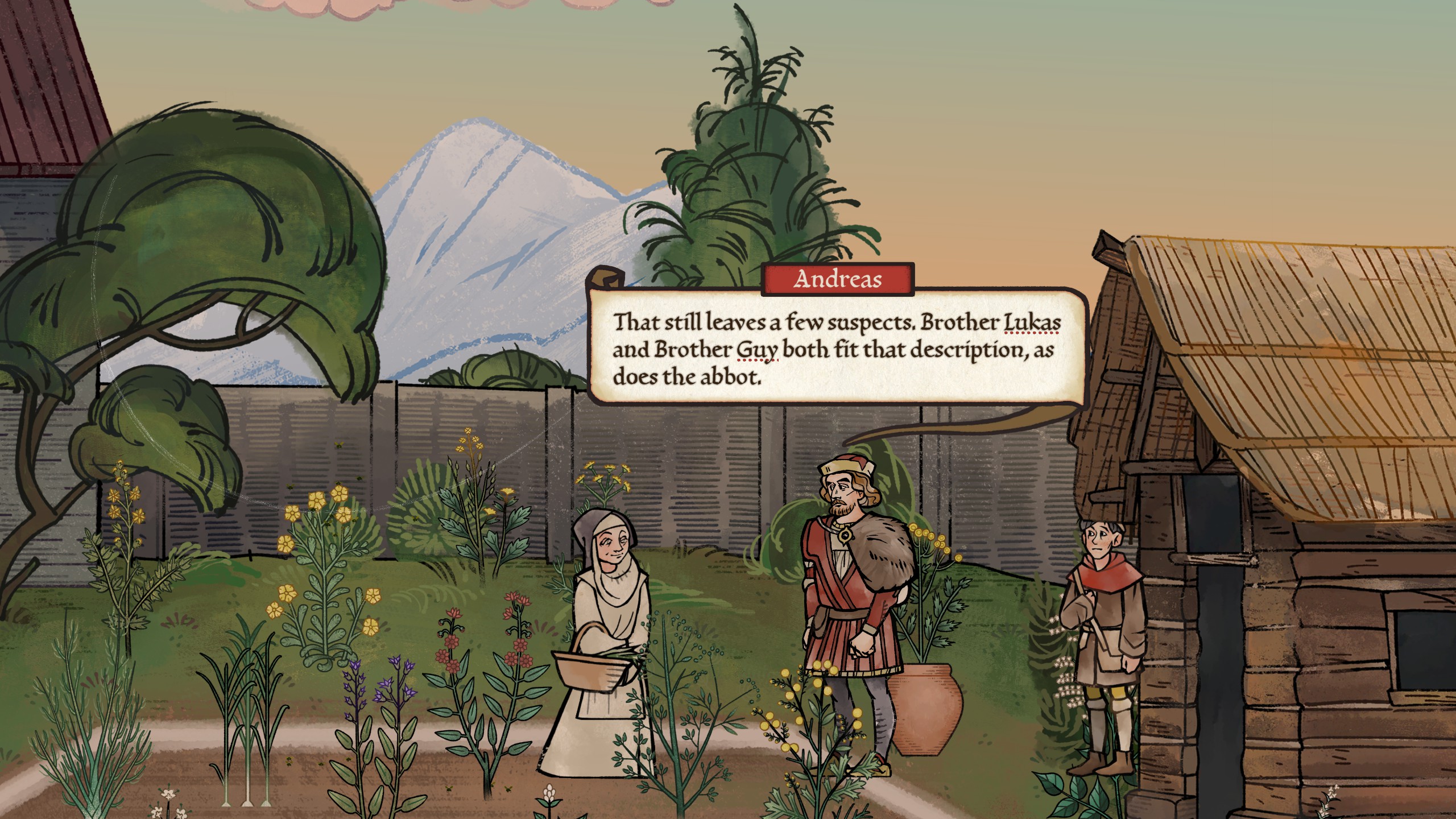
That could mean adding looping reloads and hammer-fanning animations to Fallout: New Vegas to help it realize its “really cowboy” player fantasy. In a game like Pentiment, where the player’s choices can lead to characters’ executions, Sawyer said it was a matter of “continually going back and asking ourselves is this achieving the intended emotional effect. We wanted the player to feel like making that decision was hard—that they had evidence they were weighing and they were thinking, reflecting about ‘Do I feel okay making this decision? Do I feel okay sending this person instead of that person? Am I okay with the fact that I don’t really have a choice or way out of this?'”
Meanwhile, the names of Chanter abilities in Pillars of Eternity were constructed to feel like snippets of the songs, poems, and plays that were fixtures in its cultures’ collective consciousnesses to provoke the player to imagine what their plots and authors were like. Other design decisions, like those around inventory systems, are less concerned with producing emotional effects, and more about putting the player into different cognitive modes.
“Inventory systems make you stop sneaking and murdering and climbing and doing all the core, in-the-world mechanics and then look at a menu—which you could say is immersion-breaking,” Sawyer said. “But it does have an effect on your cognitive activity. You’re doing something else. You’re thinking about things in terms of value and weight and stacks and all these other things. You’re just evaluating things in a way that you aren’t when you’re going through the world.”
All those choices, he says, are informed by artistic inspiration, leveraging the “certain symbolism and emotional connection” that we attach to images, archetypes, tropes, and aesthetic styles we’ve seen elsewhere.
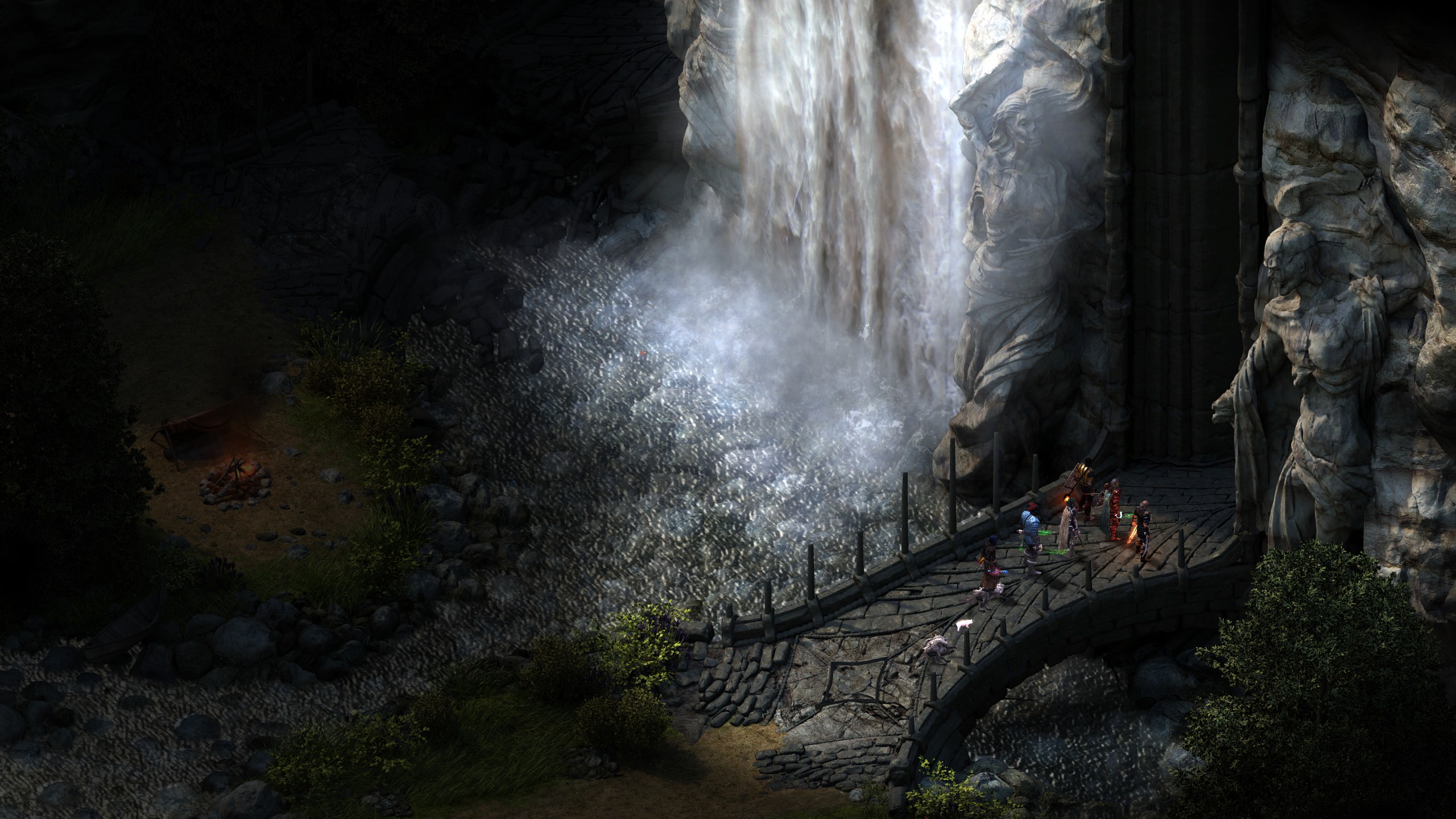
In his own work, Sawyer says he draws on a wide range of inspirations. In Fallout: New Vegas’ Honest Hearts DLC, he said he was channeling Robert Bolt’s character-writing from his screenplays for Lawrence of Arabia and The Mission. In Pentiment, he pulled on the “agonizing” moral and ethical turmoil of classical theater: “Greek plays, they knocked it out of the park thousands of years ago—why not look at them?”
Also on his list are Sondheim musicals, medieval illuminated manuscripts (surprise), the Modigliani and Wyeth art books that his bronze sculptor father had in his collection, the striking simplicity of a Rothko painting—even the misinterpreted lyrics of a Florence and the Machine song.
“So yeah, you can pull inspiration from anywhere and everywhere,” Sawyer said. “And I think it can be continual—and probably should be continual—throughout the process of working on anything.”
2026 games: All the upcoming games
Best PC games: Our all-time favorites
Free PC games: Freebie fest
Best FPS games: Finest gunplay
Best RPGs: Grand adventures
Best co-op games: Better together
About Author