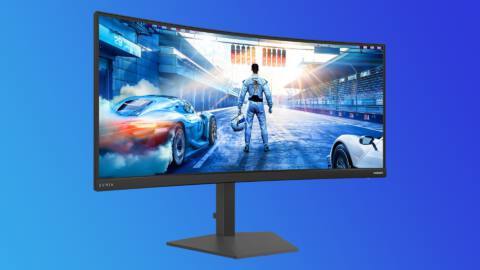
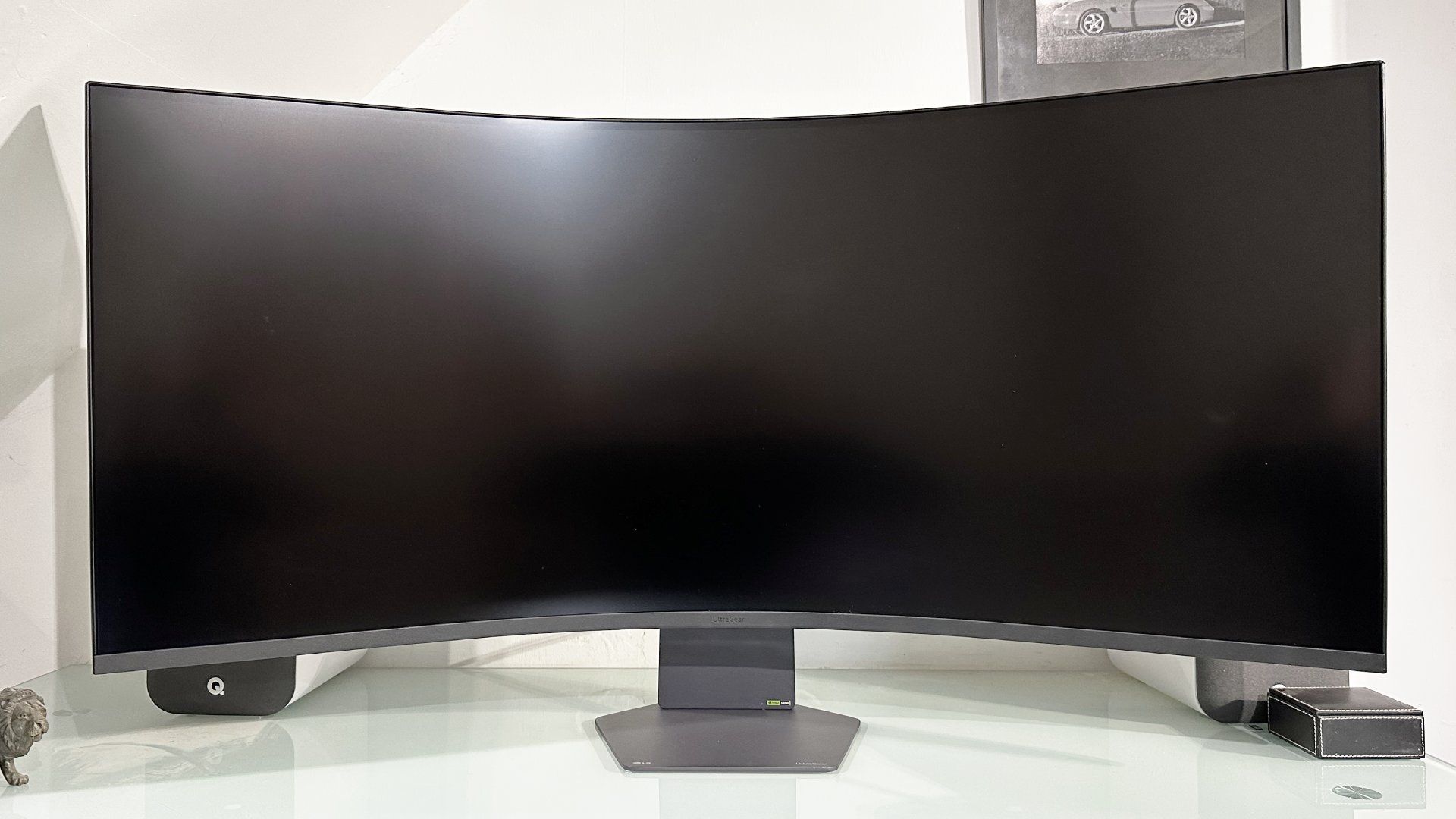
Can you have too much of a mediocre thing? If I was being unkind, that’s the challenge I’d make to the new LG UltraGear Evo 52G930B. What we are talking about here, people, is a monumental 52-inch 5K2K gaming monitor. But it’s based on an old-school VA panel.
Yep, not OLED. Not IPS. It doesn’t even have mini-LED local dimming. It’s just a huge, high-res, VA panel. At 52 inches, it’s so big and so expensive it immediately poses another problem. Why wouldn’t you just buy a 4K TV?
After all, this LG clocks in at $1,699 or £1,499, which buys you an awful lot of 4K TV here in late 2026. That kind of money puts you in reach of OLED TVs up to around 65 inches. And, like I said, the LG UltraGear Evo 52G930B isn’t actually that well specced save for its size and resolution.
Screen size | 52-inch |
Resolution | 5,120 x 2,160 |
Brightness | 400 nits SDR, 600 nits HDR |
Response time | 1 ms |
Refresh rate | 240 Hz |
HDR | DisplayHDR 600 (no local dimming) |
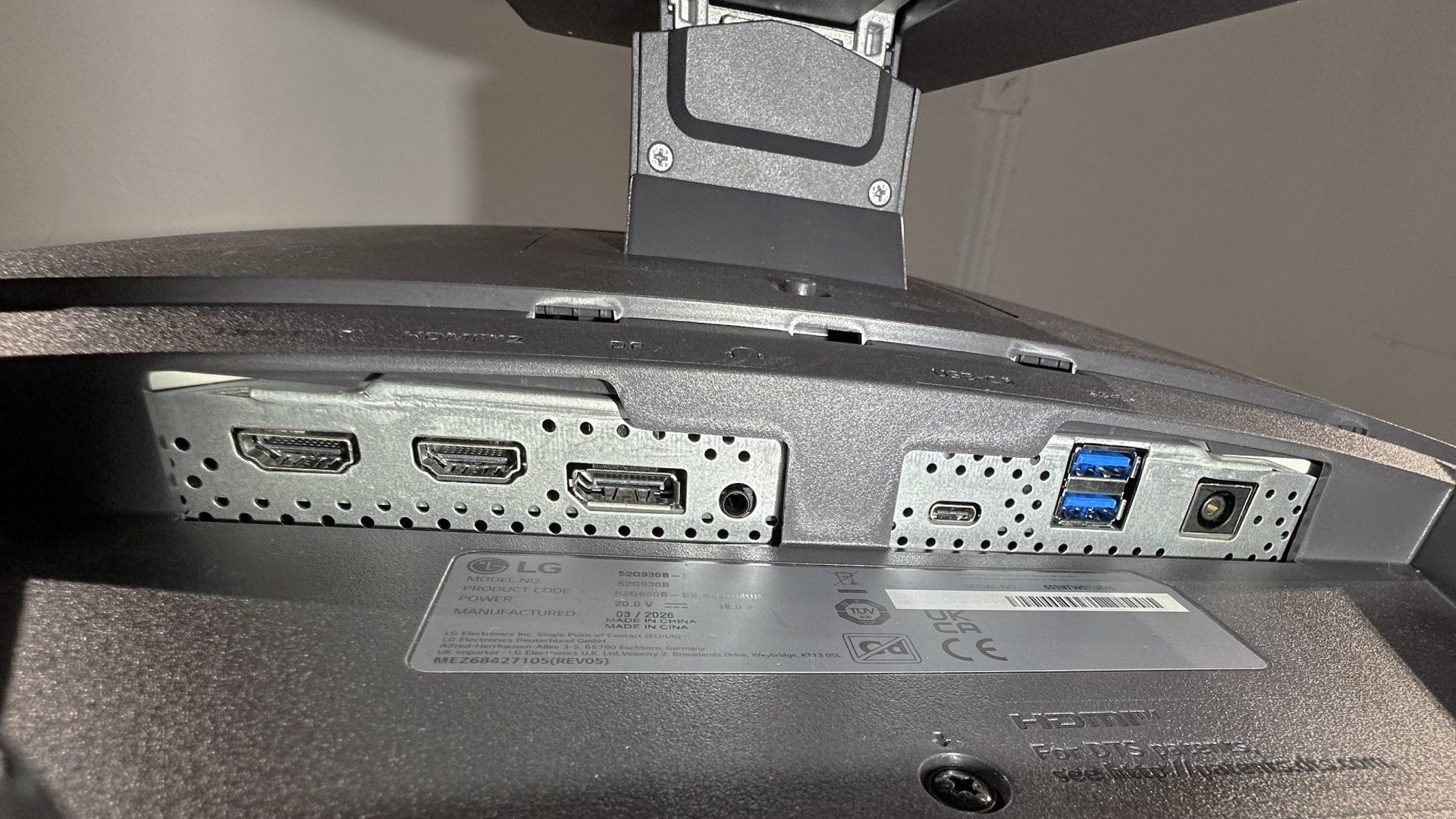
Features | VA panel, 2x HDMI 2.1, DisplayPort 2.1, USB-C with 90 W PD, USB hub, 3.5mm audio |
Price |
Buy if…
✅ You want the ultimate in big-screen immersion: 52 inches in an ultrawide format, plus 5K2K resolution, makes for a genuinely cinematic experience.
Do not buy if…
❌ You’re expecting OLED speed and contrast: This LG has an old-school VA panel and the response and lighting control is miles behind OLED.
There is a counter argument in favour of this huge 52-inch ultrawide beast, and it goes something like this. For starters, this LG has various PC gaming-centric features. Most obviously, that includes 240 Hz refresh and the low latency that promises. But you also get lots of granular controls over image quality settings, such as colour spaces and pixel overdrive.
You likewise wouldn’t expect to see the DisplayPort and USB-C interfaces that LG has included. Admittedly, various TVs have at least some of those features. But usually not all. There are also some ergonomic issues to bear in mind. This is a 21:9 aspect 5K2K display. That immediately makes this monitor a touch more usable than a similarly-sized TV.
Put it this way, there’s only so tall you can go with a monitor on your desk before it gets a bit ridiculous. What this monitor offers is immense and immersive width with manageable height.
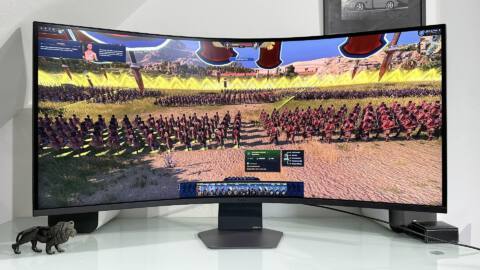
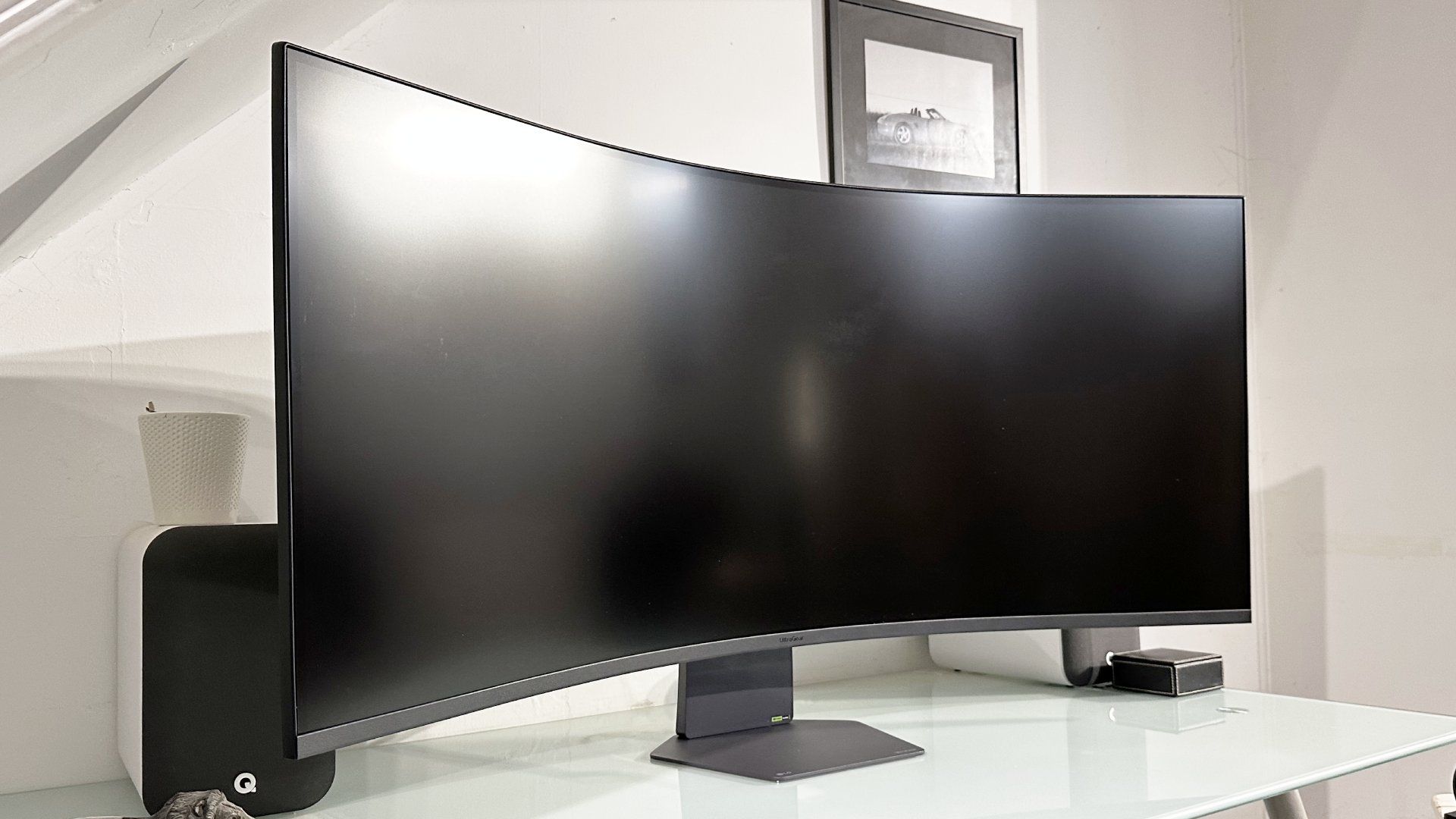
That it’s also curved helps. The 1000R curve means it wraps around you from a typical PC gaming position, which is inherently much closer to the panel than you would normally sit when watching TV. The 5K2K resolution also means you’re getting better pixel density than a big 4K TV, albeit you’re still not getting great pixel density by PC monitor standards. Hold that thought, we’ll come back to it.
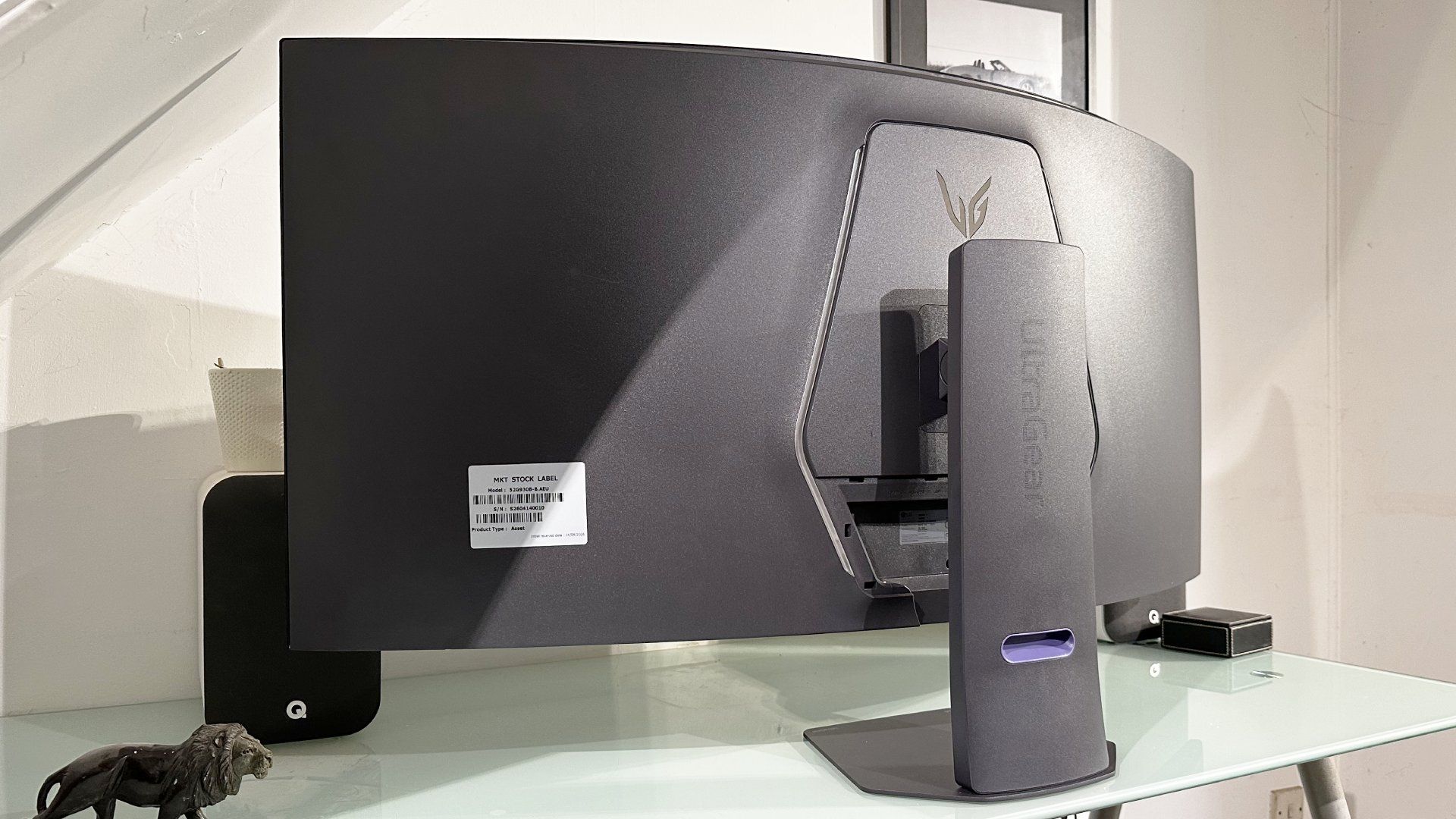
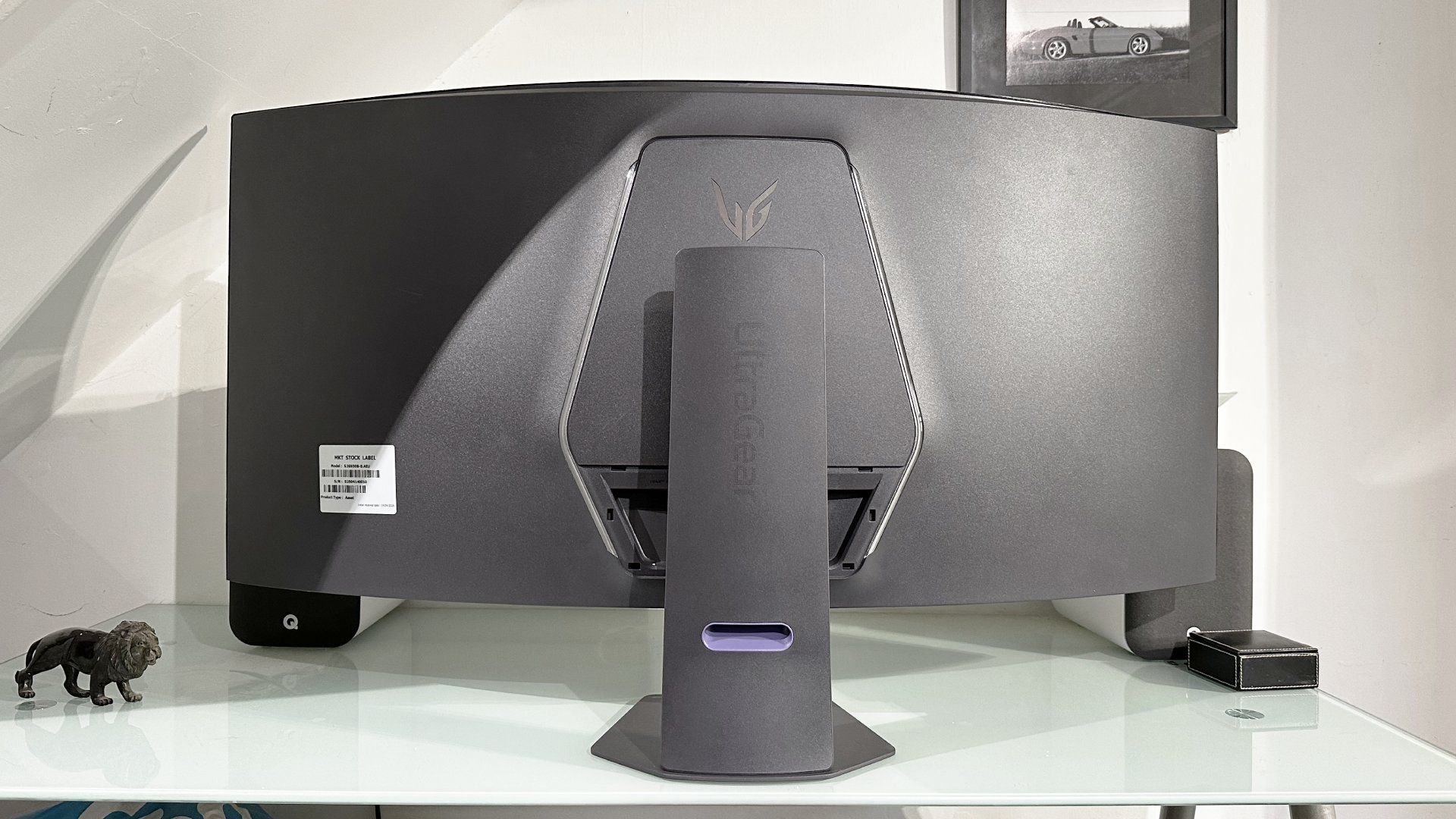
All that said, the LG UltraGear Evo 52G930B isn’t automatically an ergonomic master stroke. I have a pretty big desk and this thing barely fits on it. That extreme 1000R curve means that it isn’t just very wide, but also quite deep. And, generally, if you are unconvinced by curved monitors, you really aren’t going to like this LG. It’s really, really curved.
Anyway, before we come to what kind of actual gaming experience you get from a monster like this, let’s cover off a few more speeds and feeds. As I said, there’s no local dimming and that means only limited HDR support.
Strictly speaking, there’s HDR 600 certification. But without local dimming, there simply isn’t the lighting control to deliver HDR visuals. However, you do at least get the intrinsic contrast of a VA panel. LG has rated this one at 4,000:1, which is about three to four times the static contrast that most IPS monitors offer. For the record, SDR brightness is rated at 400 nits.
Meanwhile, to go with the 240 Hz refresh, there’s pixel response of 1 ms grey-to-grey. At least, that’s the claim. For most VA panels, poor response is perhaps their most obvious shortcoming. And pixel response specs don’t always tell the full story. So, we’ll see about that.
On, then, to the experience this monster delivers. Out of the box—a particularly laborious process given the sheer scale of the thing—and it immediately feels unwieldy. I used a 49-inch 32:9 ultrawide as my primary display for about 18 months so I am not just familiar with using very large PC monitors, I’m absolutely a fan. But the LG UltraGear Evo 52G930B immediately feels too big.
I am not just familiar with using very large PC monitors, I’m absolutely a fan. But the LG UltraGear Evo 52G930B immediately feels too big.
That’s not down to the width, which is comparable to one of those 49-inch ultrawides, but the height and depth. It’s all so overwhelming and eats up so much desk space. Of course, the benefit is immersion and, crikey, does this massive monitor dominate your field of view when used at “normal” PC monitor viewing distances.
I think viewing it that close has surely got to be the point. Yes, you could push it back. But then why are you buying such a huge display? That close-up approach doesn’t work so well for TVs, first because they are generally flat and that means the edges of the display end up being viewed at quite an acute angle. The other problem is pixel density.
Take a 55-inch 4K TV. That has a pixel density of just 80 pixels per inch, which looks really rough and blocky at PC monitor viewing distances. This LG improves that figure to 107 pixels per inch, or very nearly the same as 109 pixels per inch of a typical 1440p 27-inch monitor.
Okay, that’s still not great compared to, for instance, the 138 pixels per inch of a 32-inch 4K monitor, let alone a 27-inch 4K panel. But it’s tolerable in terms of things like text quality and overall image detail.
The same goes for the general appearance of this huge VA panel. It’s definitely no OLED when it comes to lighting control. But it’s punchy and vibrant and has very good contrast for a conventional LCD monitor. It’s also pretty well calibrated in its various modes.
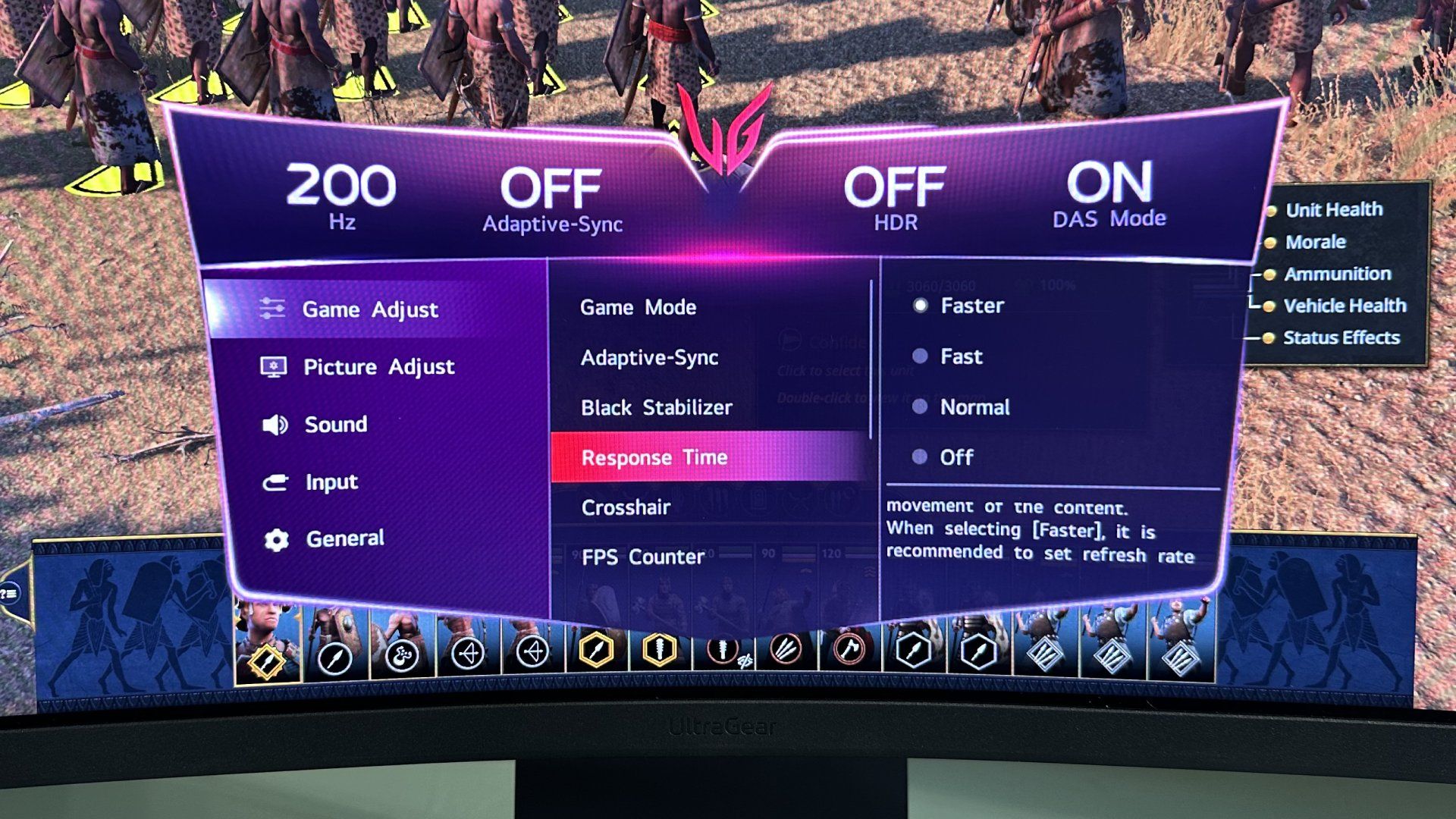
The one caveat to that observation is that you cannot enable pixel overdrive when using industry-standard colour spaces including sRGB and PCI-P3. Only the gaming-centric presets support pixel overdrive. The idea is to ensure greater colour accuracy in sRGB and DCI-P3. But, personally, I’d prefer the option to run those modes with overdrive.
Whatever, the most positive aspect of this monitor is definitely immersion. No other monitor I’ve used so effectively fills your field of view. That’s true to an extent that I actually think is borderline impractical for, say, a first person shooter. It’s certainly, far, far too big for esports where you want to be able to see pretty much all the screen within a relatively narrow field of view. You’re not going to last long if an enemy pops up on the edge of the screen two or three feet outside of your central gaze.
For games that are more about exploration and adventure than precision head shots… this monitor is positively epic if possibly a bit exhausting.
For games that are more about exploration and adventure than precision head shots, on the other hand, let’s say something like Witcher III or the Assassin’s Creed series, this monitor is positively epic, if possibly a bit exhausting. Again, immersion is a singular experience. But actually having to swivel your head around extensively to see all parts of the screen, is that something you really want to be doing?
In that regard, the faster the action on screen, arguably the less sense this screen makes. Along with the ergonomic issues of actually viewing such a large screen, there’s pixel response. And it’s not great.
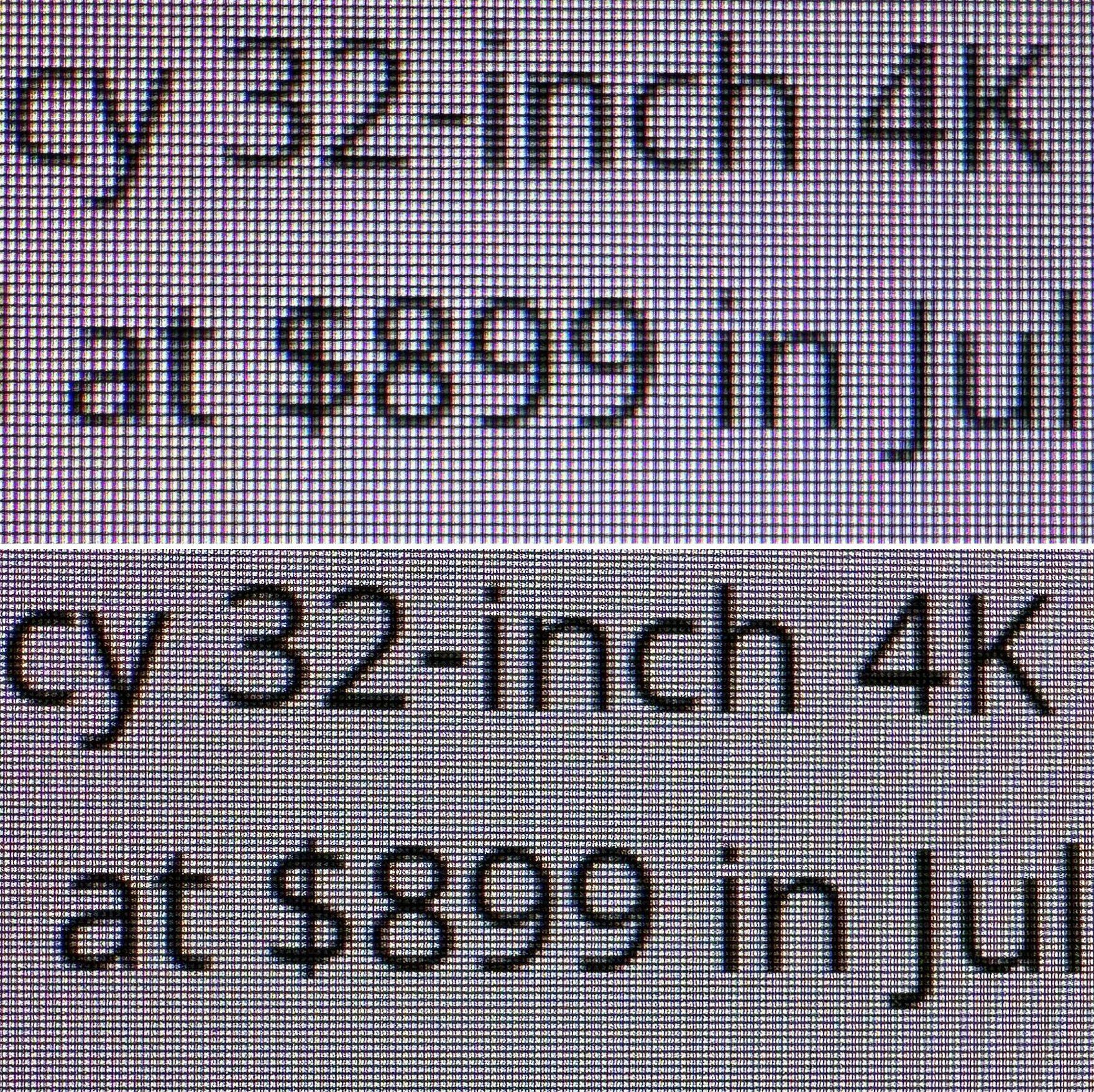
VA panels tend to be weakest when it comes to dark tone response and the LG UltraGear Evo 52G930B is no exception. Even with overdrive maxed out, there’s visible smearing. At the same time, the fastest overdrive setting also introduces overshoot and inverse ghosting that’s bad enough to be visible, in-game. As VA panels go, the response is fine as opposed to particularly bad. But compared to even an IPS monitor, it’s a step down. Compared to OLED, it’s absolutely hopeless.
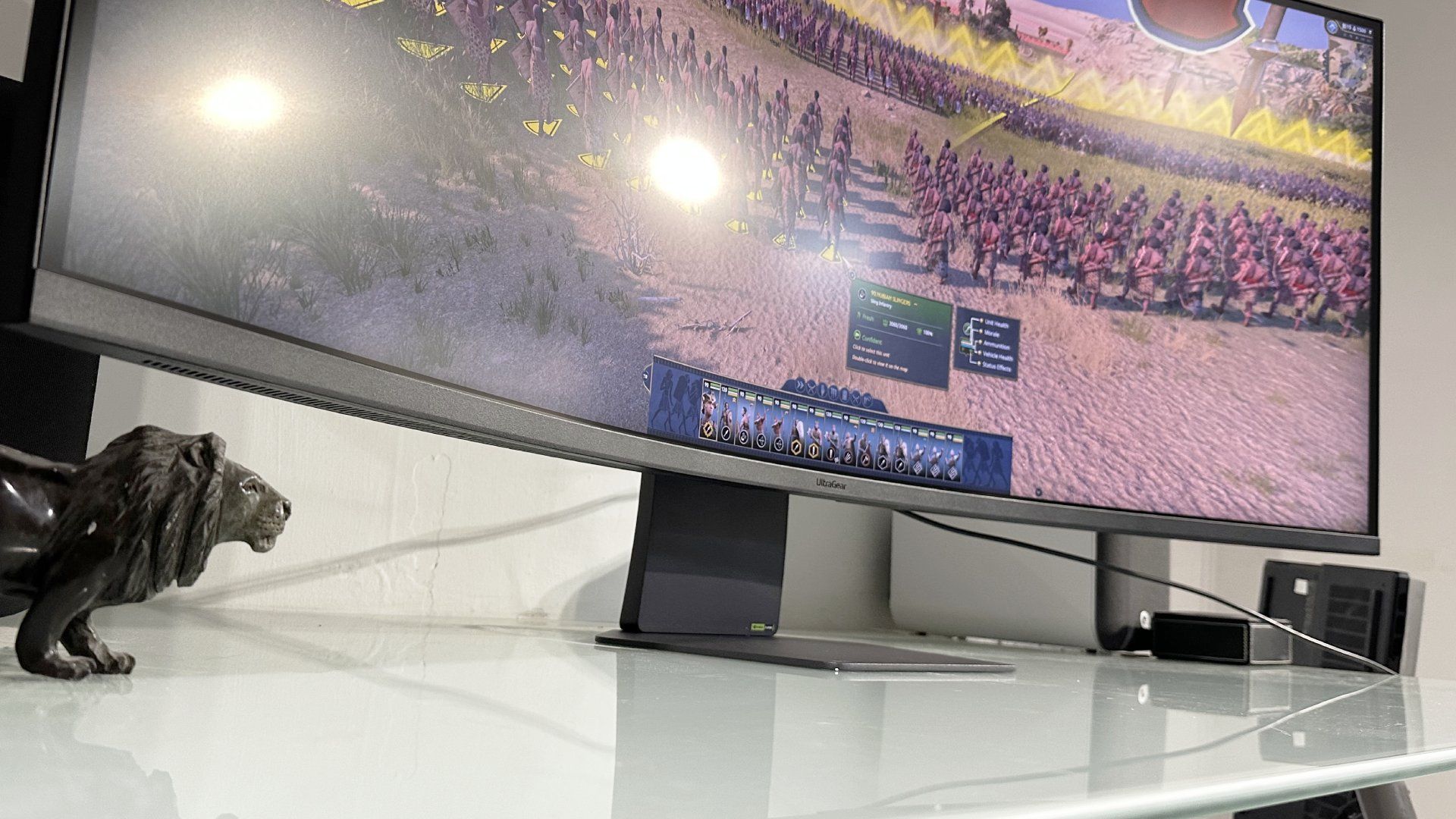
However, for me where this beast really makes sense is strategy games. Frankly, once you’ve played one of the Total War series rendered across a huge 52-inch 5K2K panel, everything else feels positively puny. The sight of numerous battalions of infantry, regiments of cavalry, rows of siege engines, whatever, sprawling across your field of view is undoubtedly a seminal PC gaming experience.
The sight of numerous battalions of infantry…sprawling across your field of view is undoubtedly a seminal PC gaming experience.
Another obvious application for a screen like this is driving sims. Okay, the pixel response isn’t exactly ideal, but the scale, the ultrawide aspect, and the wrap-around curve makes for one heck of a sim-rig screen.
At this point you’re probably getting the impression that the LG UltraGear Evo 52G930B’s appeal is pretty niche. And that’s about right. As a general purpose PC monitor, it really doesn’t make sense.
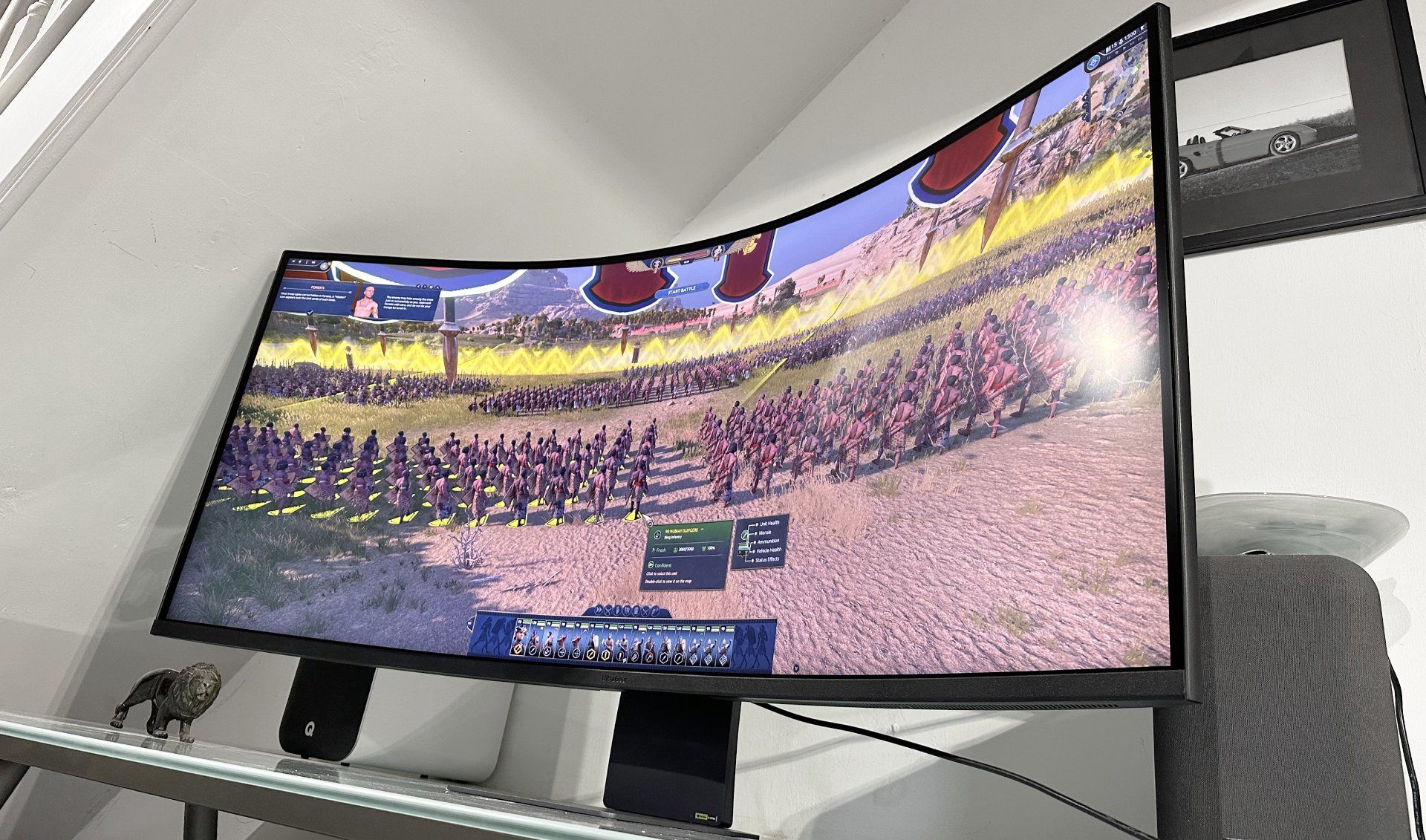
Certainly, it’s miles behind the curve (waahwaah) by most technical metrics. Just about everything else at this price point is OLED these days. So, to have a plain old VA panel that doesn’t even have local dimming in this segment of the market launching in 2026 feels like a bit of a throwback.
However, the combination of sheer scale and relatively high resolution does make for a unique proposition and, in at least some positive ways, an experience like no other. Well, almost no other. The obvious comparison here is the even bigger 57-inch VA panel as used by the Samsung Odyssey Neo G9 G95NC and Acer Predator Z57.
Right now, you can bag the Samsung for $1,449 on Amazon. Not only is it even bigger, it’s far higher resolution at 7,680 x 2,160 pixels and has full array local dimming with over 2,000 zones and therefore some proper HDR capabilites. Similar applies to the Acer, which is largely the same spec and available for $1,599.
Of course, that huge resolution, which is effectively dual-4K, makes for monumental GPU load. Even an RTX 5090 will struggle at times. But the value comparison certainly isn’t comfortable for this new LG.
In the end, then, the LG UltraGear Evo 52G930B isn’t going to make sense for almost anyone, especially not with something even bigger, higher resolution and more capable available for less money. But if you’re gaming in just the right niche, if money doesn’t really matter, and if you feel like it, well, what the heck, why not pull the trigger and march those armies across the Nile basin?
About Author