
Nvidia CEO Jensen Huang has admitted to an extramarital affair in a statement published on Nvidia’s newsroom. A strange move for the $4.5 trillion company without the added context: the person he’s suspected of having an affair with has also been deemed a Chinese intelligence asset by US officials, and was investigated for smuggling none other than Nvidia’s own chips.
The story goes far deeper than Huang’s affair; revolving around national security, export controls, spying, chip smuggling, and US/China relations. It’s in large part about AI, and who controls the hardware that makes it possible. So, if you’re wondering why Huang might be the target of Chinese intelligence to begin with, or why he’s announcing his affair in the most public way possible, here’s how we got to this point.
Why does it matter where Nvidia sells its GPUs?
Nvidia is at the centre of the debate about whether the United States should sell its most technologically advanced chips to China. The US had already ensured China couldn’t make the most cutting-edge chips through a ban of Netherlands-based ASML’s chipmaking machines. Yet it has also moved between qualified bans of high-performance chips, leading to made-for-China GPUs, such as the RTX 4090D, RTX 5090 D, and H20; to outright bans, namely the ongoing restrictions for the Blackwell architecture; Nvidia’s latest and greatest.
There have been a lot of changes to export controls between the US and China, going back to Biden’s trade war. Limitations were introduced in 2023 that used “weighted teraflops” and “adjusted peak performance” to decide which systems were deemed too good to be sold in China. It also limited specific cards based on their total processing power and performance density, which nixed specific chips such as the RTX 4090 (and later the RTX 5090).
Both Nvidia and AMD had to build slower versions of their GPUs to try to keep revenue flooding in from China. This itself was a contentious move, with then-Secretary of Commerce, Gina Raimondo, saying “if you redesign a chip around a particular cut line that enables them [China] to do AI, I’m going to control it the very next day.” They went back and forth on this approach a lot.
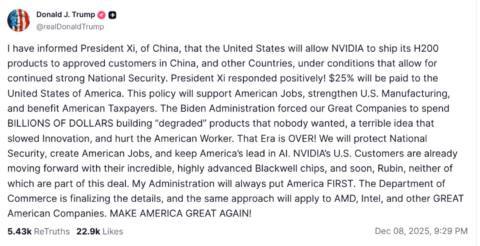
The good news for Nvidia and AMD was that it was President Trump who eased controls on GPUs, such as the H20 and MI308. Both chips were pared-back versions of existing chips, H200 and MI300, respectively, for the Chinese market in order to meet restrictions. The bad news was Trump said he’d do it in return for 15% of their China revenue. That was in August, 2025.
Whether either company sold any chips to China around that time is another matter, their respective CEOs suggest few, if any. Jensen Huang said in October, 2025, Nvidia was “100% out of China… we went from 95% market share to 0%.”
AMD’s CEO, Dr. Lisa Su, said in the company’s Q3 earnings at the start of November that it had received licenses from the Commerce Department but that it hadn’t included any sales in its Q4 guidance as it was still up in the air.
By December, 2025—yes, that’s how quickly these things change—Trump eased controls on China again, allowing Chinese companies to make do with last-generation GPUs, such as the H200. To get their hands on them requires a thumbs-up from the US Department of Commerce in return for a 25% fee. One report suggested that Chinese firms were limited to 75,000 GPUs each, which was reportedly half of what shopping giant Alibaba and TikTok owner ByteDance had hoped for. Though Nvidia confirmed later that it had received orders from “many customers in China”.
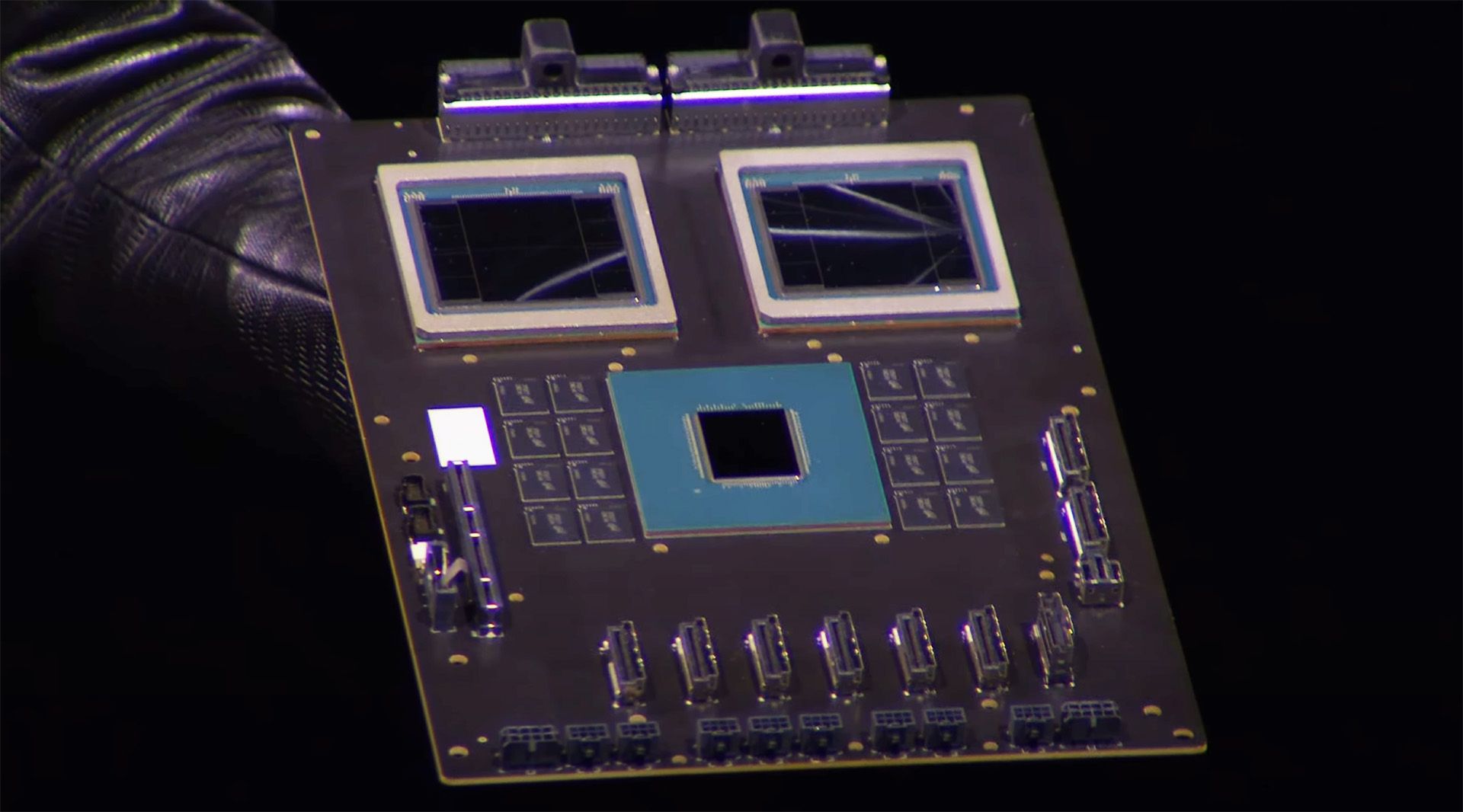
This has proven a contentious move. Not only in the US, where national security concerns are paramount, not helped by reports that the US is approving sales to companies with empty offices and ties to possibly blacklisted entities; but also in China. The Chinese Communist Party (CCP) wasn’t sure it even wanted the GPUs. It took a while to approve imports of the H200 and that wasn’t even the end of it, as there was reportedly another hold-up for imports later on.
The CCP didn’t sit back and watch this all unfold without action. It jumped between a policy of lessening reliance on US tech, building its own lithographic DUV and EUV machines, and making more efficient AI models, and blocking sales of specific cards, including blocking the RTX 5090 D v2 in China the day Jensen Huang was visiting. That sends a signal. Chinese authorities even launched an antitrust investigation into Nvidia’s acquisition of Mellanox, which was linked to export restrictions and part of the tit-for-tat trade war between the two countries at various points in the past half-decade.
Long story short, and to cut out some of the bits where it wasn’t really clear which chips could go where and to whom, there was a long period of time when Chinese firms couldn’t officially get their hands on a lot of the most powerful GPUs.
But perhaps there was another way?
GPUs: the black market’s hottest commodity
Throughout this entire period of export restrictions and policy changes, there were claims that companies and criminals were bypassing the whole lot of it.
Falsifying customs documents, diverting through third-countries, and purchasing under false pretences are all ways that one might get around the ever-changing export restrictions in both the United States and China.
The US Department of Justice seized more than $50 million worth of Nvidia GPUs from an American business attempting to circumvent export restrictions. Alan Hao Hsu, of Hao Global LLC, pleaded guilty to smuggling at least $160 million worth of Nvidia H100 and H200 GPUs between October ’24 and May ’25. Hsu and others are said to have used falsified shipping paperwork to try to ship the GPUs to China, Hong Kong and elsewhere in violation of US export controls.
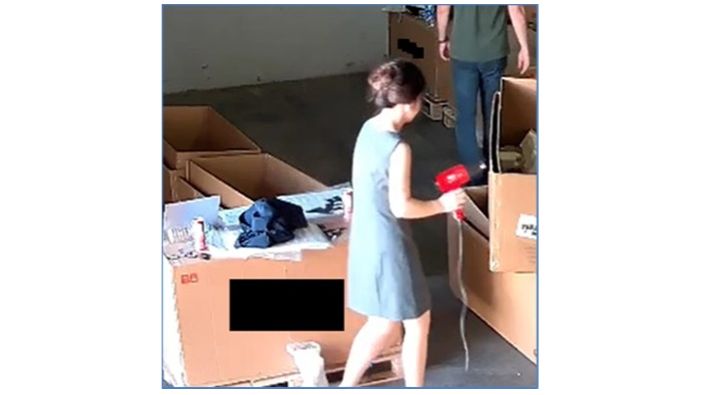
More recently, Malaysian customs shared it had seized $12 million worth of chips found in servers, which were headed for undisclosed countries in Asia. This is a hot topic for the US, which previously noted that it wants Malaysia to keep a close eye on shipments of any and all Nvidia chips in and out of the country, for fears of them ending up in China. A similar case saw two Chinese nationals arrested for exporting tens of millions of dollars worth of chips through Malaysia between October 2022 and July 2025.
A known name in datacentres, Supermicro, has also been mixed up in smuggling claims. The company’s co-founder, employee, and a contractor were charged with conspiring to divert servers containing powerful AI chips to China, via a Southeast Asian country, in violation of export controls.
“The indictment unsealed today details alleged efforts to evade US export laws through false documents, staged dummy servers to mislead inspectors, and convoluted transshipment schemes, in order to obfuscate the true destination of restricted AI technology—China,” said John A. Eisenberg, Assistant Attorney General for National Security.
The contractor involved in the case pleaded guilty to the charges in a New York court in October, 2026. The Taiwanese authorities were also heavily involved in the case, working with Supermicro to investigate the company’s local offices.
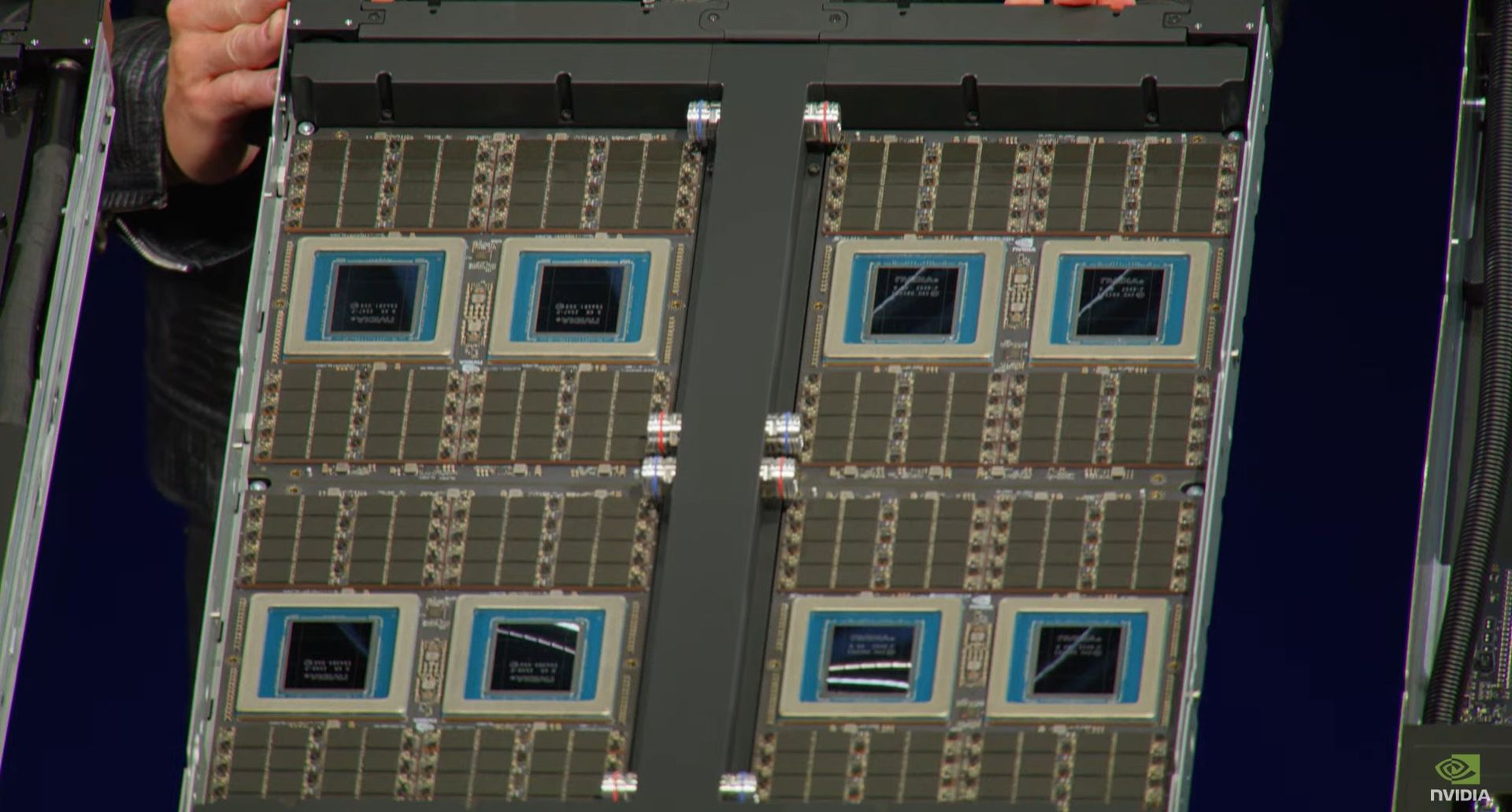
There have been similar cases in Singapore, too, which is one of the largest markets for Nvidia outside of the US, despite not making up a similar share of actual shipments. Companies use the country as a base for operations beyond its borders. The Singapore government said at the time it would enforce export controls and combat smuggling.
Whether these chips end up in China is, of course, the big question. The US has questioned whether major AI models out of China, namely DeepSeek, were trained on Blackwell GPUs despite export controls, suggesting it expects some cards are making it through its ban.
So, how does Huang’s affair fit into all this?
Jensen Huang never named the person that his affair took place with, but he does note the national security concerns arising from it, which alongside previous reports, suggest they are Alice Huang, also known as Huang Le. Alice Huang is connected to this saga not only through a personal relationship with Jensen Huang, but how the US authorities came to believe they were a Chinese intelligence asset in the first place.
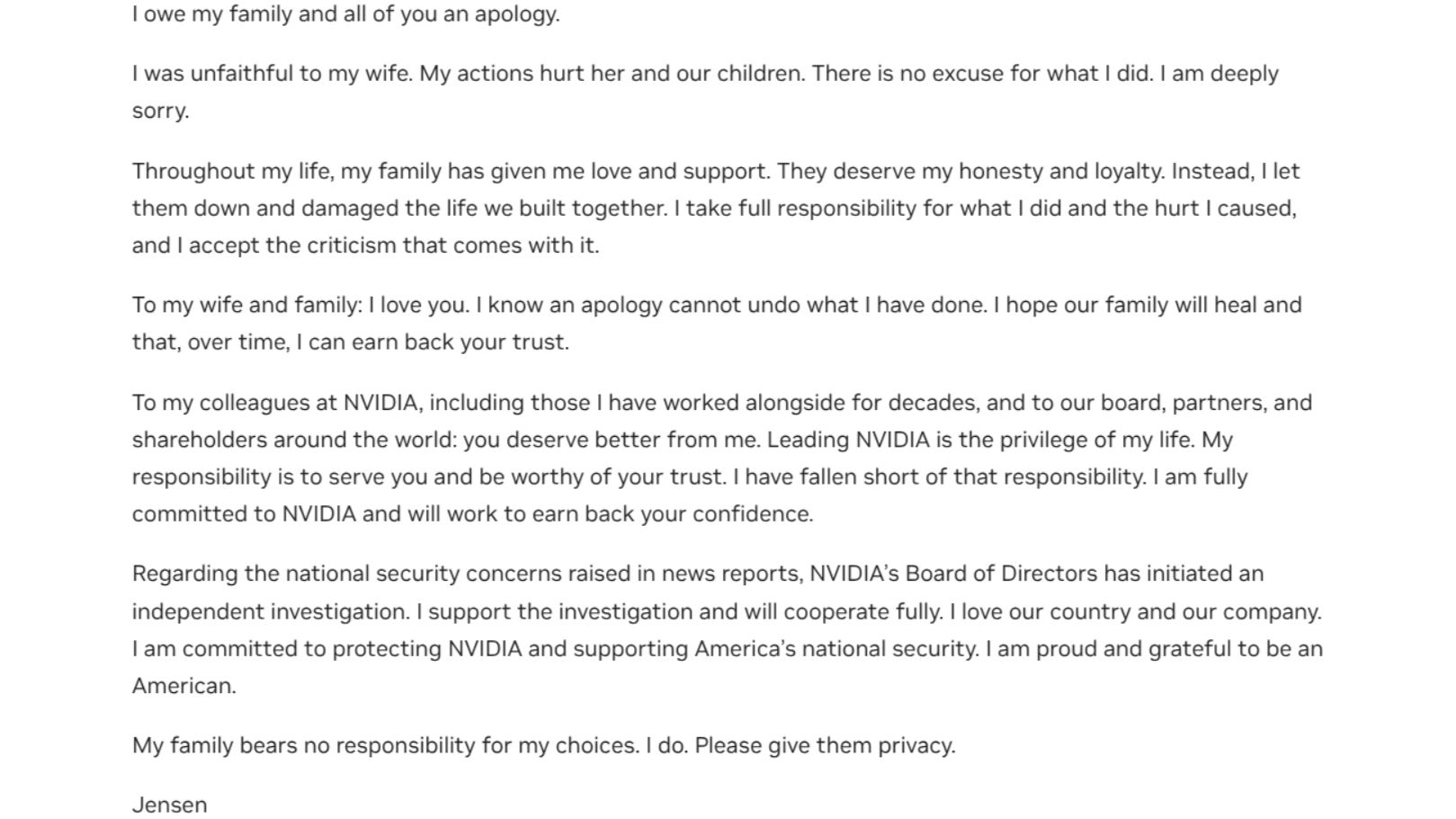
I was unfaithful to my wife. My actions hurt her and our children. There is no excuse for what I did. I am deeply sorry.
Jensen Huang
Alice Huang is linked to Singapore-based datacentre company Megaspeed. US authorities were monitoring her on suspicion of chip smuggling—yep, the thorn in the side of the US’ export controls—and the company has faced scrutiny over who funds/owns it and its operations; scrutiny that Nvidia has rallied against in the past.
“We want to be absolutely clear: over the past six months, our company has undergone multiple on-site inspections and reviews by key institutions, including the Bureau of Industry and Security of the US Commerce Department, the Ministry of Investment, Trade and Industry of Malaysia, and Nvidia. These thorough investigations have confirmed that there has been no evidence of any violations concerning the illicit transfer of chips or any illegal activities, and this demonstrates that we are a compliant and legitimate company,” a statement on the Megaspeed website reads. It is dated December 23, 2025, and pops up automatically when you visit the page.
Megaspeed rents computing power to other companies and has been connected to Chinese giant Alibaba. There’s quite a tangle of connections here, but it’s said that Alice Huang used her connections with Alibaba to secure investment, alongside suggestions of securing US chips. Alibaba is also said to have lent money to a Megaspeed subsidiary, Speedmatrix, via its own subsidiary, Apex Enterprise Solutions. Megaspeed’s balance sheet grew from $33 million to $3 billion in 2024, reportedly via its subsidiary, the Financial Times reports.
The authorities came to the conclusion that Alice Huang was acting on behalf of the CCP. They also discovered her relationship with Jensen Huang. Though the details of that relationship were not made explicit in the original report by the NYT. Reportedly, Huang had not been briefed on the threat of foreign intelligence, despite his importance and ties to the president of the United States.
Nvidia pushed back on the claims at the time. An Nvidia spokesperson said: “Jensen’s interactions with Ms. Huang are not unusual or unexpected. Meetings with customers are part of a CEO’s job; Jensen talks with thousands of customer executives every year.”
The Nvidia Board is initiating an independent investigation in light of recent reporting that founder and CEO Jensen Huang has been the target of a foreign intelligence effort.
Nvidia
Nvidia also holds that accusations of chip smuggling made against Singaporean firm Megaspeed were “thoroughly investigated and debunked last year.”
We now know that Jensen’s relationship was not as usual or as one might expect of a business partnership. A follow-up report from the NYT suggests that a memo was circulated around the Trump administration last spring (slightly unclear when exactly) that suggested a Chinese spy was close to Nvidia’s CEO.
All of which leads to Huang’s sudden announcement of his affair on Nvidia’s newsroom, and the company’s simultaneous investigation into the alleged interference by a foreign intelligence asset.
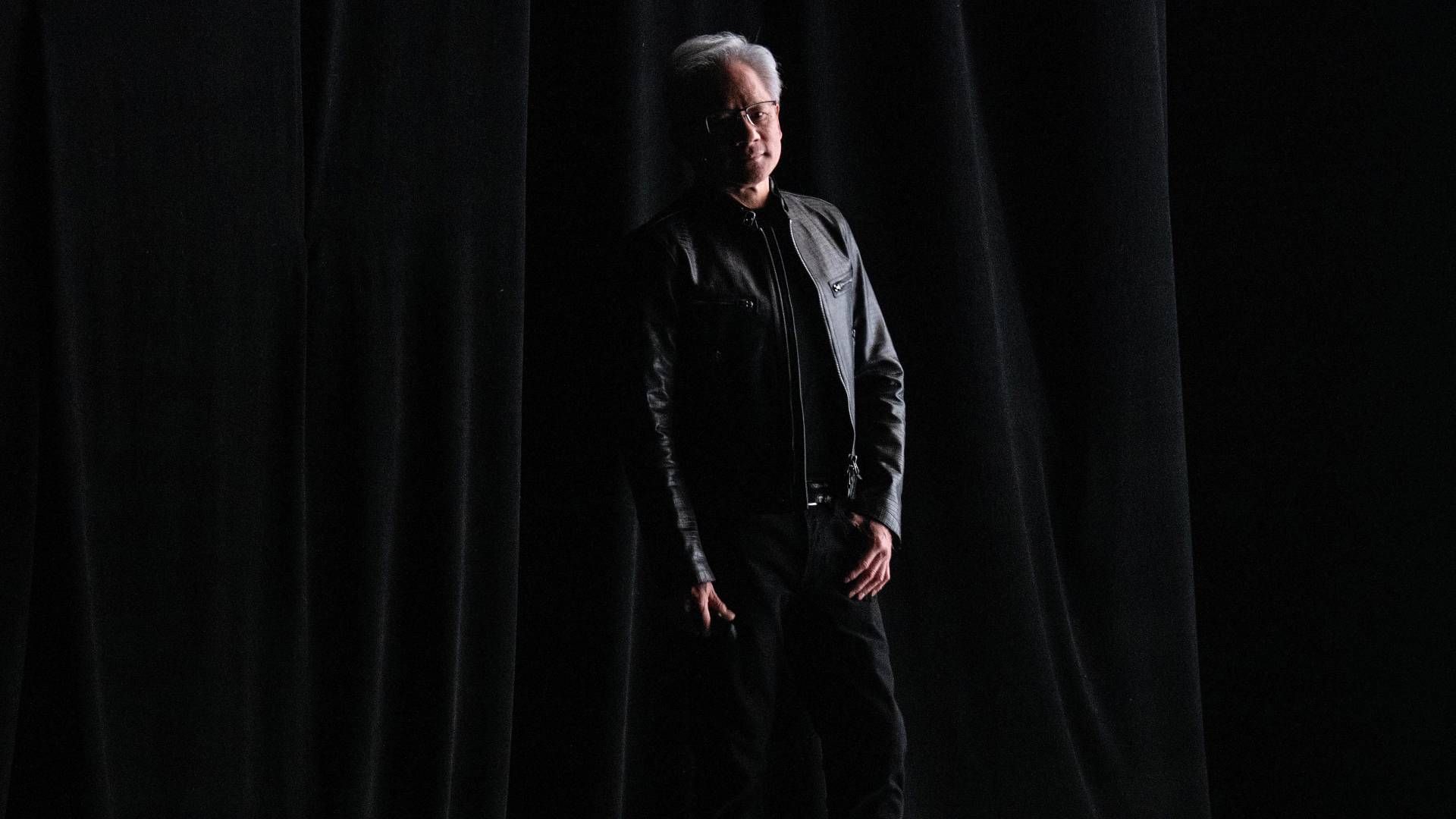
Prior to his statement, Huang had been asked to attend a closed-door joint meeting with the House Select Committee on China, House Foreign Affairs Committee, and House Permanent Select Committee on Intelligence. The meeting would be to discuss the concerns of these committees’ in regards to Huang’s relationship with Alice Huang and Nvidia’s security protocols.
“Recent reports raise significant national security concerns regarding the PRC’s access to sensitive US technology and information,” the chairmen say in the meeting invite. “The issue of PRC infiltration and access to cutting-edge U.S. technology is core to the investigative work of our three committees this Congress. It is vital that Congress determines the extent to which US national security has been placed at risk.”
The meeting is set for November 18, 2026.
So, it’s not all about Huang being so open as to express his affair to the world in the most public way possible. It was probably going to come out at some point anyways, and Huang is getting ahead of it to buttress his own chances of survival and his company’s share price.
Nvidia’s share price has dropped 16% in the past five days; the drop likely coincides with the joint statements from Huang and the Nvidia board, but partially in line with a wider sell-off in tech stocks. The AI bubble is straining right now.
About Author


