In a new video on his YouTube channel, Obsidian studio design director Josh Sawyer dug into how he thinks about difficulty when making a game. Ultimately, he sees it as less a question of setting immutable challenges for players to overcome, and more anticipating what they want out of the experience and responding to that.
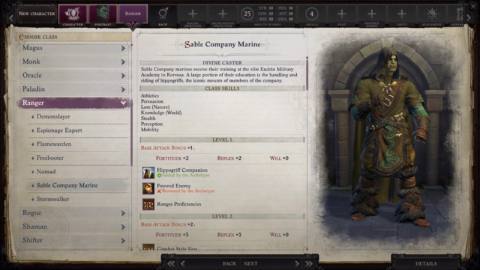
“Do you have any insights into, or thoughts about exposing extremely granular difficulty options to players?” asked viewer agroggybog. They went on to explain that they were an avid modder, digging into the guts of games like Pillars of Eternity 2: Deadfire to tweak the progression curves of player stats—which is about as granular a difficulty modifier as you can get.
They further asked for Sawyer’s thoughts on the cost/benefit analysis of letting players get so far into the weeds “officially,” or at least baking in the modding freedom to do so.
“If it cost nothing—which it does not—then I would say let players in-game set their difficulty options however they like,” said Sawyer. “And when it comes to exposing data tables and letting players mod that stuff, let ’em do whatever the heck they want.”
The nature of this question has changed over the course of his career, though—he pointed to Black Isle and early Obsidian RPGs like Icewind Dale, Neverwinter Nights 2, and Fallout: New Vegas as games that easily allow for this level difficulty customization through modding. According to Sawyer, it’s “more difficult to expose those things, especially on a data level” these days.
In terms of offering such “micro-difficulty” options in-game, he characterized it as a relatively deprioritized aspect of making a game, given the challenges and limited resources characteristic to game development. “I’m not saying this is the way it should be,” said Sawyer. “I’m saying this is the way that it typically goes in game development.”
But when working on difficulty settings in RPGs, broad or granular, Sawyer has gravitated toward designing for types of player, rather than level of difficulty. “I don’t think, ‘This is an easy player, this is a hard player.’ I think you have players that come to the games for different reasons,” Sawyer said. “It’s more about ‘What are they trying to get out of this game?'” To that end, he broke down RPG enjoyers (and thus Obsidian’s target audience) into three broad categories:
- Explorer: People with jobs, or “here for a good time, not a hard time” according to Sawyer. “Likely time-limited and involved for a story that they enjoy, and they don’t want to redo things.”
- Adventurer: The Joe Sixpack median RPG player who “wants a little more friction, wants a little more challenge,” but they probably don’t know what THAC0 is and understandably don’t care to find out.
- Survivalist: Real sick puppies, the ones who complete Pillars of Eternity’s “The Ultimate Challenge” or relax by playing Fallout 4 on Survival. Sawyer notes that, while they may appreciate aesthetics and story, they want games that are “immersive and simulative in the mechanics.”
Only three types may seem reductive, but it really does cover the sorts of RPG players I’ve met and been. Me and my friends all used to be adventurers, but now I’m a survivalist and those friends are lawyers and scientists (explorers, if they play at all).
One thing Sawyer said that got me thinking was that “Survivalists aren’t necessarily interested in Pentiment,” an amusing assessment of the combat-free mystery adventure. On a second glance, though, its complex network of choices and consequences could be an example of immersive or simulative mechanics—it’s certainly an aspect of design that guys on RPG Codex like to argue and get mad about, which is survivalist-coded.
Towards the end of the video, Sawyer echoes some of the ideas he shared in an interview with us at last year’s GDC: Starting with complex, difficult mechanics and features, but being able to collapse them into simpler, easier modes of play based on player preference. One example he gave in the video was bullet drop, the kind you see in Call of Duty or Battlefield. In an RPG, that’s survivalist red meat, but possibly annoying for an explorer or adventurer. Sawyer’s solution? Giving players the option to turn it off entirely.
“In the end, giving more granular difficulty options is a very good thing,” Sawyer concluded. “I think we should prioritize it more—I think I should prioritize it more.”

2026 games: All the upcoming games
Best PC games: Our all-time favorites
Free PC games: Freebie fest
Best FPS games: Finest gunplay
Best RPGs: Grand adventures
Best co-op games: Better together
About Author