I got off to a bit of an awkward start with Castlevania: Belmont’s Curse when it first booted to a black screen. A few minutes of troubleshooting later, I deduced that the game wouldn’t display on a monitor with its refresh rate set higher than 120 Hz. Easily solved, but I kept thinking of that quirk when I selected the in-game 120 fps cap and then watched the game jarringly lurch down to a lower framerate every time I hit a cutscene.
Maybe these technical quirks were treats for reviewers that have been smoothed over in time for launch. They haven’t stopped me from having a lot of fun with the eight or so hours I’ve played Belmont’s Curse—I think I’m closing in on the halfway point, and it keeps getting better as it goes. But it’s not quite the slam dunk I expected from the first new Castlevania in decades, with such a talented studio behind it.
Belmont’s Curse has a bit of a juice problem. You’ve probably heard (or said) “it’s got the juice” so many times in recent years that the expression has more or less just become shorthand for I think this is really good. As originally coined by some very smart game designers, though, it means something a bit more specific: the sort of polish that “feels alive and responds to everything you do—tons of cascading action and response for minimal user input.” There are some quintessential ways to add juiciness to an action game: screen shake, hitstop (the brief pause for impact when your attacks land), enemy reactions, flashy particles and other effects. Most important are how your character feels when they move or jump or dodge.
Juicy doesn’t have to mean fast, necessarily. But Dead Cells, which Belmont’s Curse developer Evil Empire spent much of the last decade working on, is one of the fastest and juiciest action games ever made. Hollow Knight’s fast nail swipes and precise dodges are also extremely juicy, which is one reason it has so resoundingly become the metroidvania others are now measured against.
Belmont’s Curse is somehow intermittently, confusingly juiced and… dry? Soured? There are ways in which it just feels off that are still bugging me hours into the game.
There’s a lengthy wind-up on Rose Belmont’s whip, which you use to swing all around France and Dracula’s castle, that becomes a frustration during spike-filled platforming challenges that require perfect timing on a swing. Even when I get the timing right, I often miss a grapple point because I’m holding the analog stick in the direction I want to move rather than pointing it at the spot I need to hook onto.
The first dodge Belmont’s Curse teaches you is a forward slide, but it has so few invincibility frames on it—if any at all—that it’s gotten me killed in more boss fights than it has saved me. Maybe I should’ve learned by now not to use it, but it’s just one of a dozen small things that I find fiddly or confusing in this game that I thought Evil Empire would absolutely have on lock.
Another one: Some tedious platforming challenges require phasing through specific walls and floors using a skill that, by default, is bound to the left trigger on a controller—which is fine until you have to pump it with a tiny margin for error. Phase through a wall (hold), then wall jump from it (release), then phase through another wall (hold), then land on one above a pit of spikes (release). Why bind that action to the analog input with the longest travel time on the controller?
Rose can use the whip to pull herself towards enemies and deliver a smashing blow, but the timing on that attack feels set too early.
Popping a healing flask requires holding a button down just long enough that I often think I’ve healed in the heat of battle until oops, surprise, dead.
And I know this is a budget limitation, but Belmont’s Curse is clearly so inspired by the Netflix Castlevania series—it even includes a couple of the same voice actors—that some of the early cutscenes, which are disappointing panning shots of static artwork, really cry out for a more lavish presentation. They deserved a proper animated treatment that Konami apparently didn’t shell out for.
Belmont’s Curse doesn’t make a great first impression, but once I reached Dracula’s Castle after a few hours in Paris it started kicking things up a notch, with clever platforming gimmicks I’ve never run into before and clues pointing in the direction of each of Dracula’s minions. It’s a little bit more puzzley and thinky than many older Castlevanias, and I could see this being my favorite version of the castle to pick apart by the time I’m through with it.
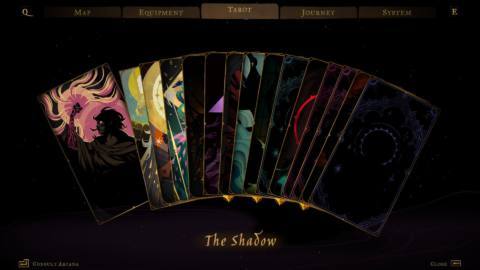
And it’s not totally juiceless! There’s great, punchy hitstop when your attacks connect; the animation work is slick; the presentation of the tarot cards, which double as special weapons and guides to each boss you need to defeat, is gorgeous. I love flicking through them in my inventory.
Were Evil Empire maybe trying so hard to ensure Belmont’s Curse didn’t feel like Dead Cells that it ended up with controls that didn’t quite gel? It’s a hard problem to articulate, but there’s a little slack in this whip holding it back from being the return to Castlevania I want to wholeheartedly love.
About Author