Balatro was PC Gamer’s 2024 game of the year. But that was in a more innocent age before we had to endure wave after wave of imitators. Seemingly every casino classic has been plundered at this point, with Balatro-fied spins on blackjack, roulette, and even those coin-pusher machines that haunt crap arcades (to be fair, that one shares a publisher with Balatro and is kinda excellent).
Outside of the casino, it’s word game developers who are the most frequent vultures hungrily circling poor little Balatro. Er, poor little obscenely-rich-and-successful Balatro. I can see the temptation as these games prove over and over that it doesn’t take much to turn Scrabble into a roguelike deckbuilder. Give the player a ‘deck’ of letter tiles, reward them for spelling prowess, then let them manipulate their deck by buffing or removing tiles and voila! You’re now one of the 5,789,247 Balatro-y word games on Steam.
Balatro of course didn’t invent this genre, but its influence is pretty obvious on a lot of these titles. Case in point…
Wordatro!

Well, top marks for shamelessness with the name. What, was ‘Spellatro’ taken? Oh, it was. Anyway, in Wordatro you have ten tiles to make words from. If your word is at least five, seven, or nine letters long, you’ll get permanently buffed tiles added to your deck, a clever way of rewarding good wordplay.
Between rounds you also get a choice of three permanent bonuses, like point boosts or extra multipliers for certain letters. Solid stuff, albeit increasingly reliant on decent bonuses showing up. Later difficulties are so demanding—seriously, only two attempts to get the score?—that if a great bonus isn’t offered early on then you might as well quit and start over. Boo!
Total time played: 9.8 hours
Dicey Words
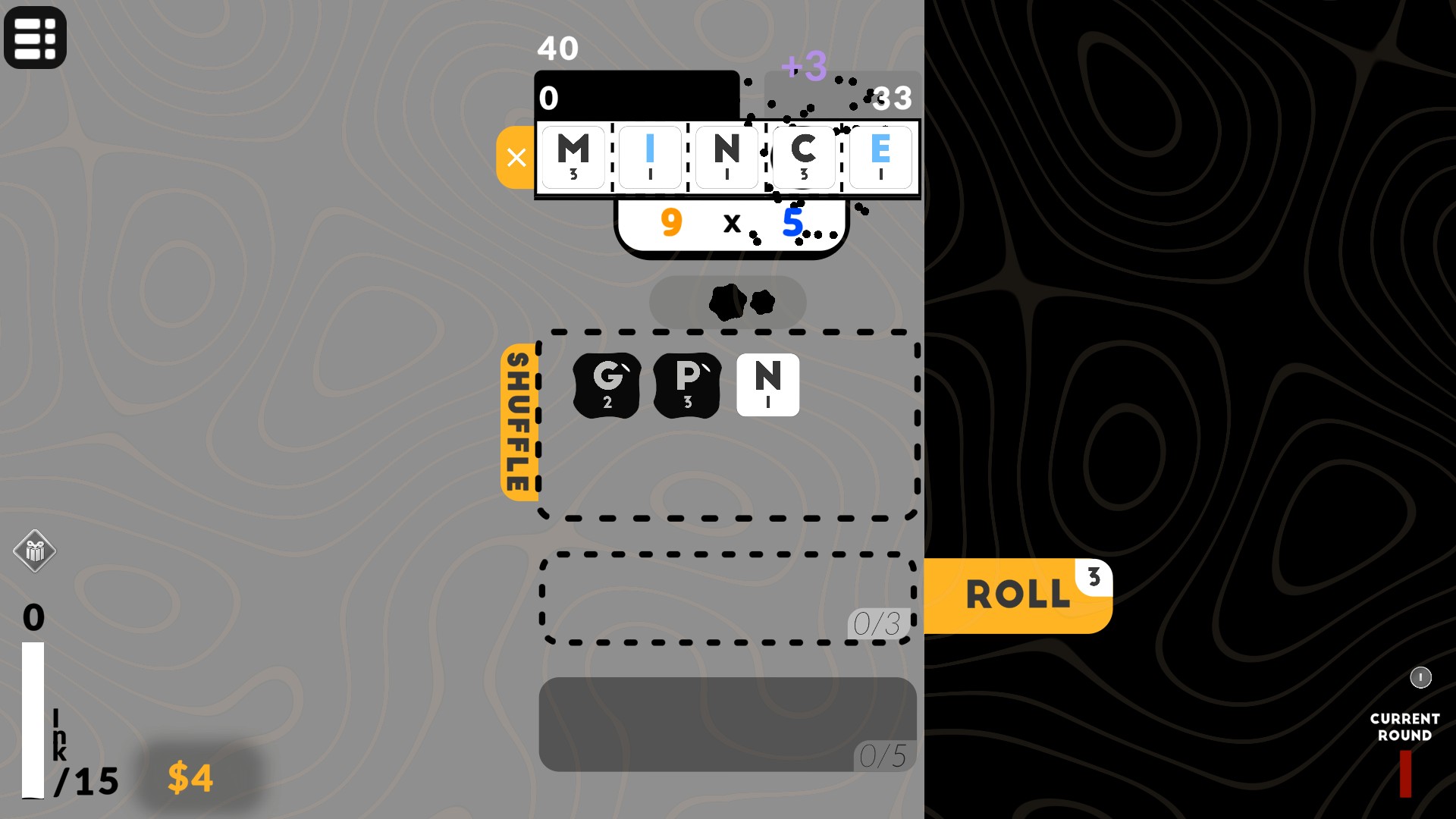
You can only play five letter words in this one, with success rewarded with money (nice) and ink (what?). Money can be spent on buying items that increase multipliers, reward certain letters being used, etc. Whereas ink can be used to increase the scores of your letters.
There’s also an interesting idea wherein you can occasionally gain permanent buffs at the cost of removing letters from your deck, though you should maybe hang onto at least a couple of vowels.
Not bad, but the always-five-letter restriction does stop you enjoying the giddy highs of making a massive word that’s often the highlight of these games.
Total time played: 5.3 hours
Birdigo
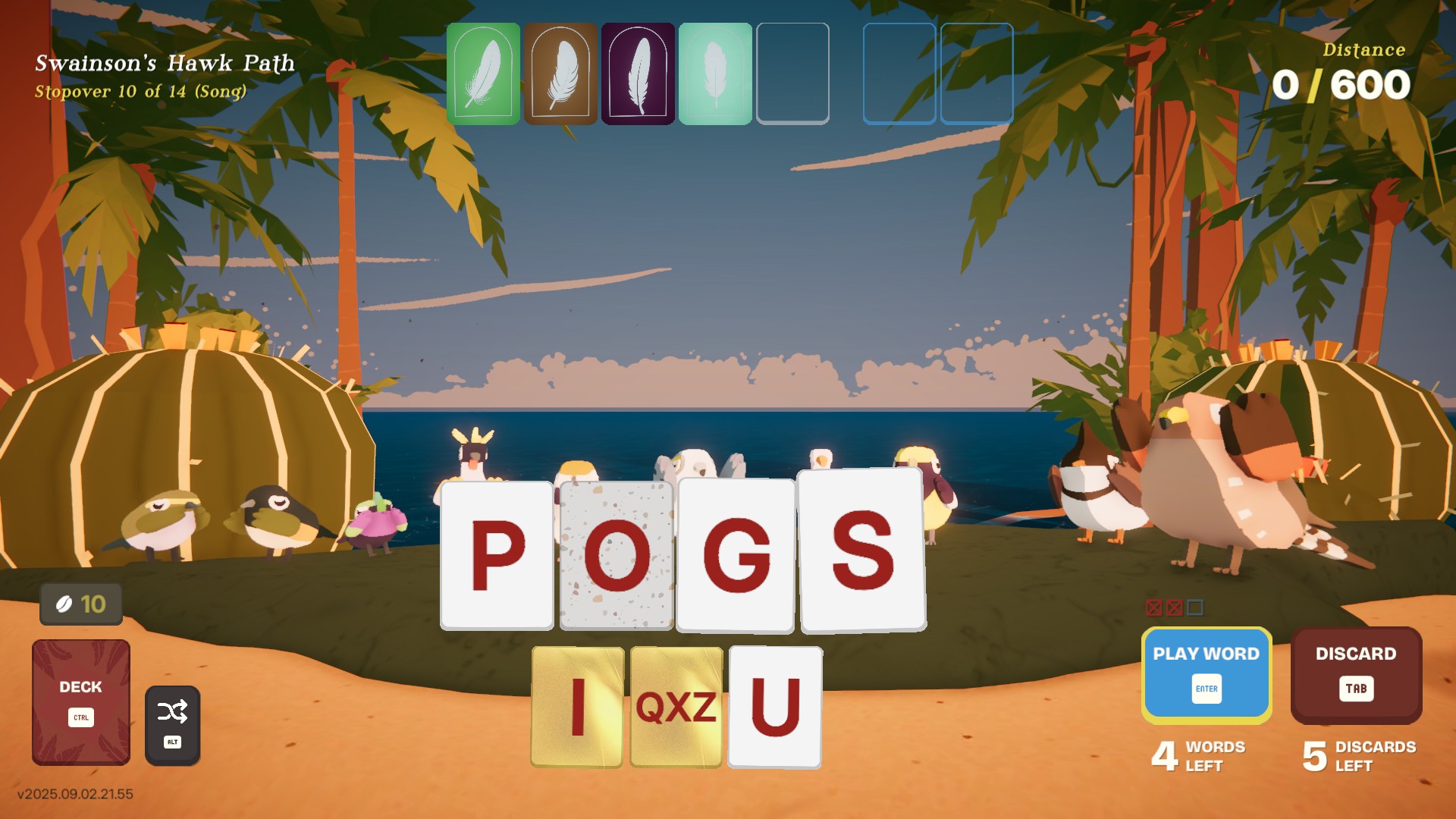
Help adorable birds migrate through the power of good spelling, or watch them all get in a super-stressed flap when you try to submit made-up nonsense. Lovely presentation, but where Birdigo starts flying straight into the power lines is a lazy approach to difficulty. Chances to upgrade your tiles and buy buffs get rarer, so much so that if you don’t see something good in the few chances you do get, you might as well quit. Sigh.
On one of my luckier runs I bought a buff that absurdly over-rewarded me for playing the letter ‘E’. Thus words like BEE suddenly smashed the scores of longer words that took actual skill to make. That’s fine in something like Balatro, where playing several cards with matching numbers requires all the pattern recognition ‘skill’ of your average toddler. But in a game all about testing word-making prowess, it just feels a bit scummy. Like I came to your Scrabble night with loads of blank tiles hidden up my sleeves. And a gun.
Does this mean the entire concept of a word game deckbuilder is inherently flawed? And that this article is therefore entirely pointless? …Hey, let’s check out Grammar Grind!
Total time played: 13.9 hours
Grammar Grind
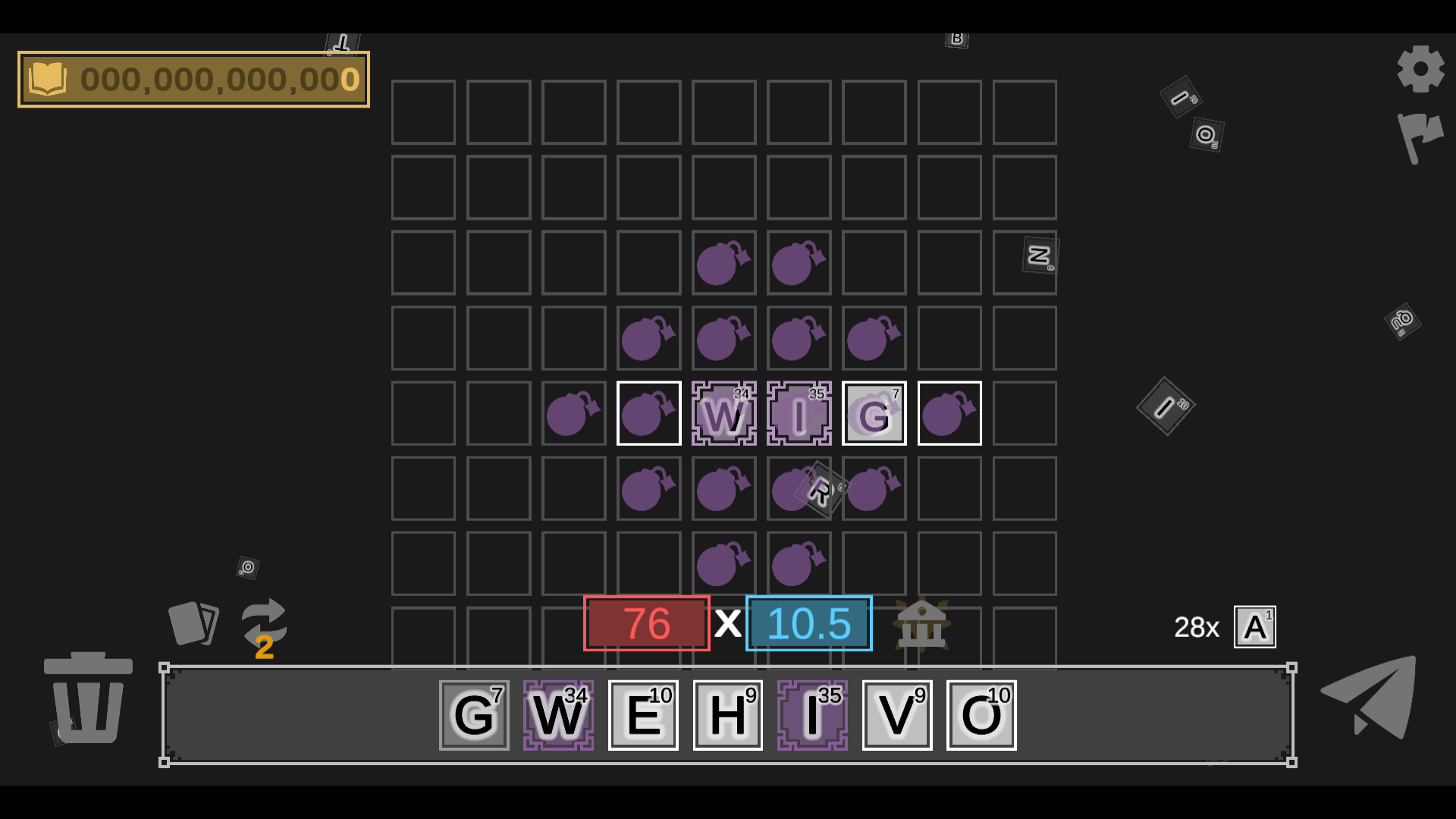
You’re a million pounds in debt. Naturally the only logical thing to do is keep playing Scrabble until you’ve somehow earned enough to pay it off. You spend money between rounds on increasing your multipliers (yawn) or buying silly tiles like explosive ones that can reclear parts of the board (hell yeah!).
There’s no way to fail and even the most pathetic run will see you leaving with some money, making a game about being a million in the red oddly relaxing. Slightly lacking in tension then, but a nice enough break from when the difficulty spike-ridden games on this list are playing the letters R A I S E on my blood pressure.
Total time played: 3.7 hours (Hey, that’s borderline healthy!)
Word Play
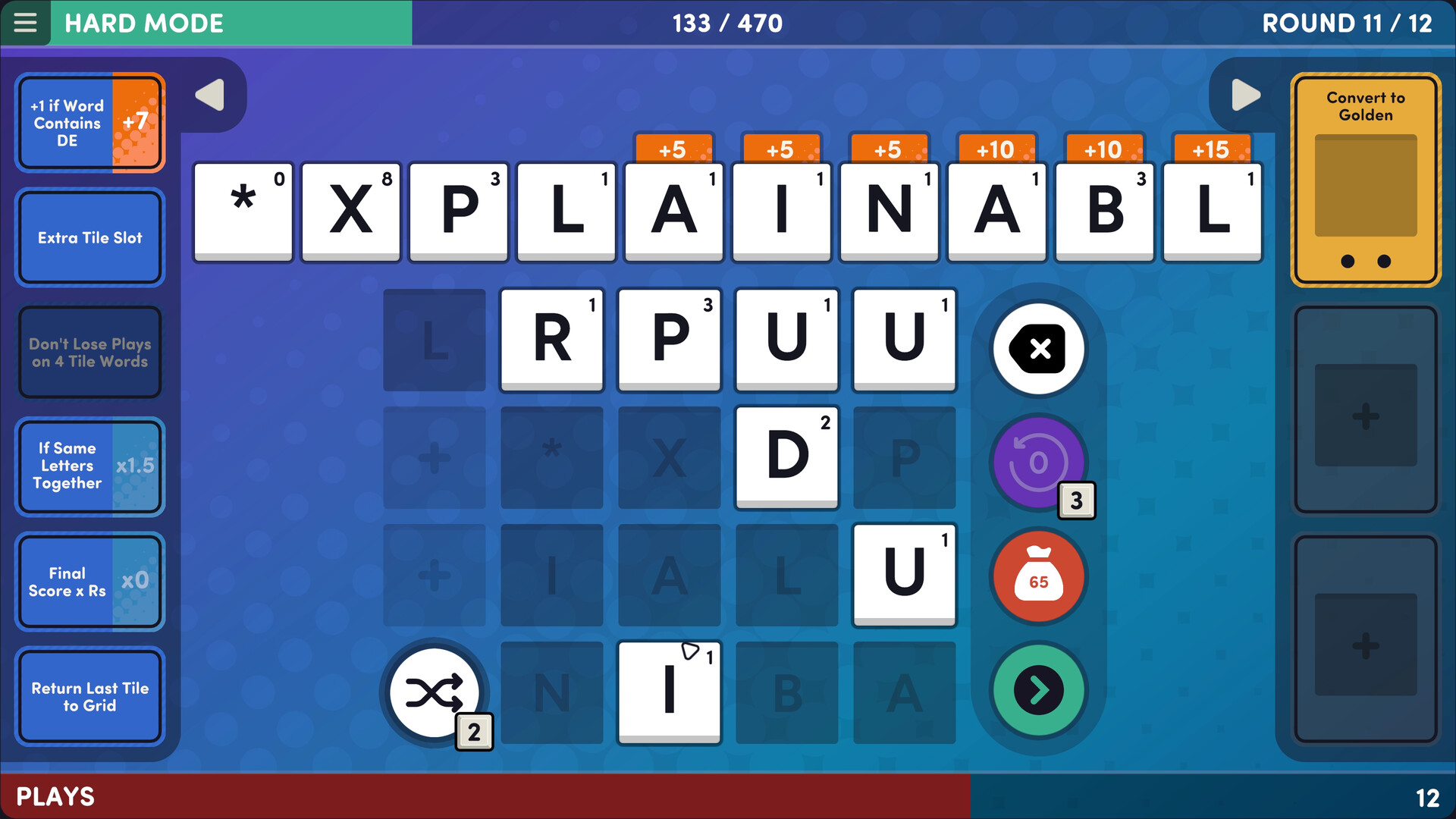
Word Play gives you access to sixteen letter tiles. The catch? The tile pool persists between rounds, making it easy to screw yourself by wasting all your vowels or hoarding Zs.
This one’s also too reliant on a decent bonus being drawn between rounds (sound familiar?). I do love the challenge tiles though, wherein you pump up their score by playing words with multiple letters in a row, or without using E, each time increasing the challenge tiles pot until it ‘locks’. But fail to meet the criteria with even one word and the score drops, or even resets completely. Other word game devs, rip that idea off!
Total time played: 26.5 hours
Letterlike
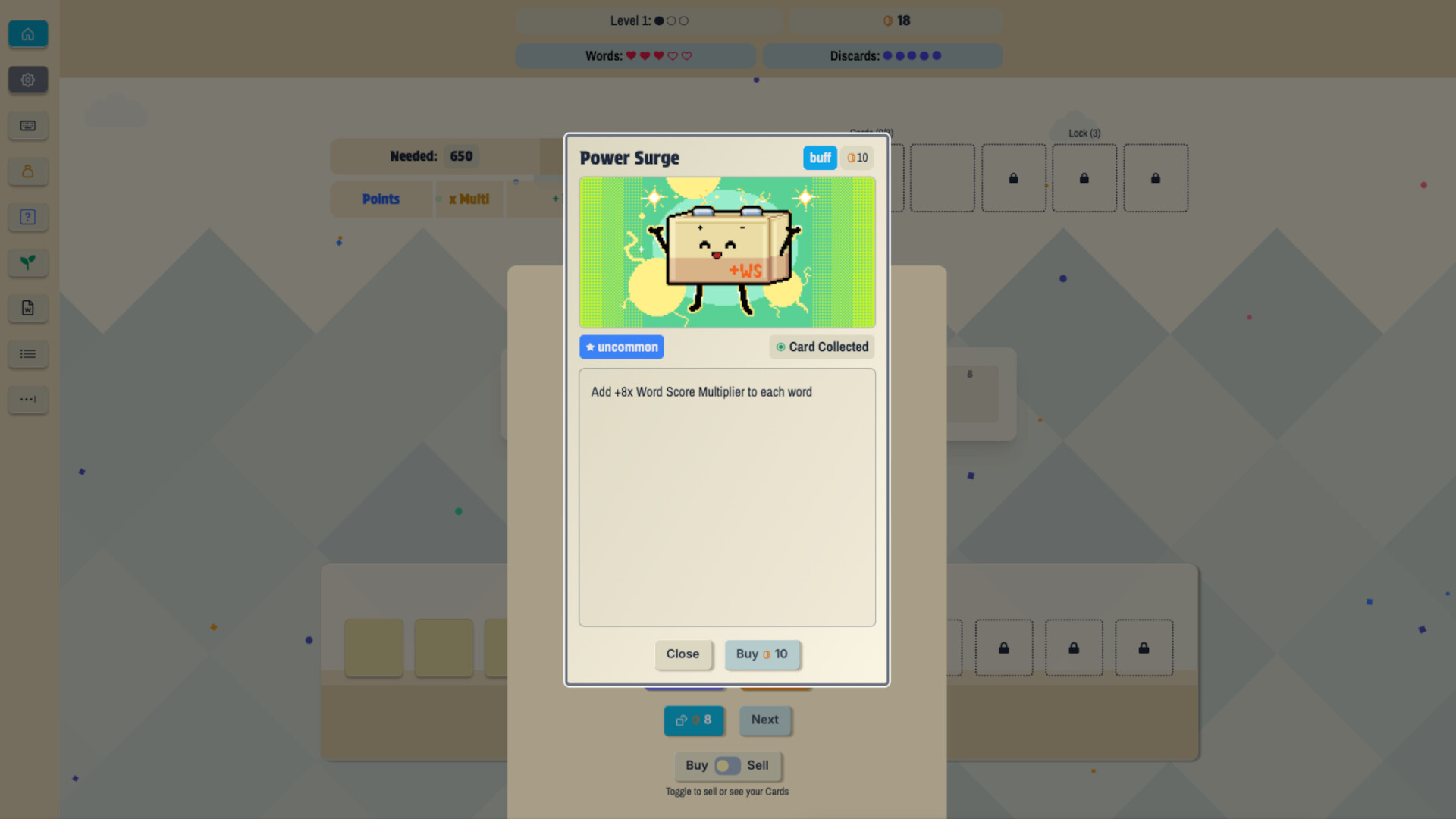
Yeah, I wasn’t kidding when I said there were about four million of these games this year. Luckily Letterlike is one of the better ones, with an expansive shop between rounds that lets you buy buffs for tiles, upgrade scores for certain word lengths, and buy relics that’ll give you a boost. Good stuff that proves how essential the varied shop is to Balatro’s success.
The more options you get to buy and sell, the more you feel like your decisions could potentially change the success of even the most disastrous run. Strip some of that away and failure feels much more pre-ordained. A little tip there for the next billion of these games we’ll see in 2026.
Total time played: I don’t want to talk about it.
OMG Words
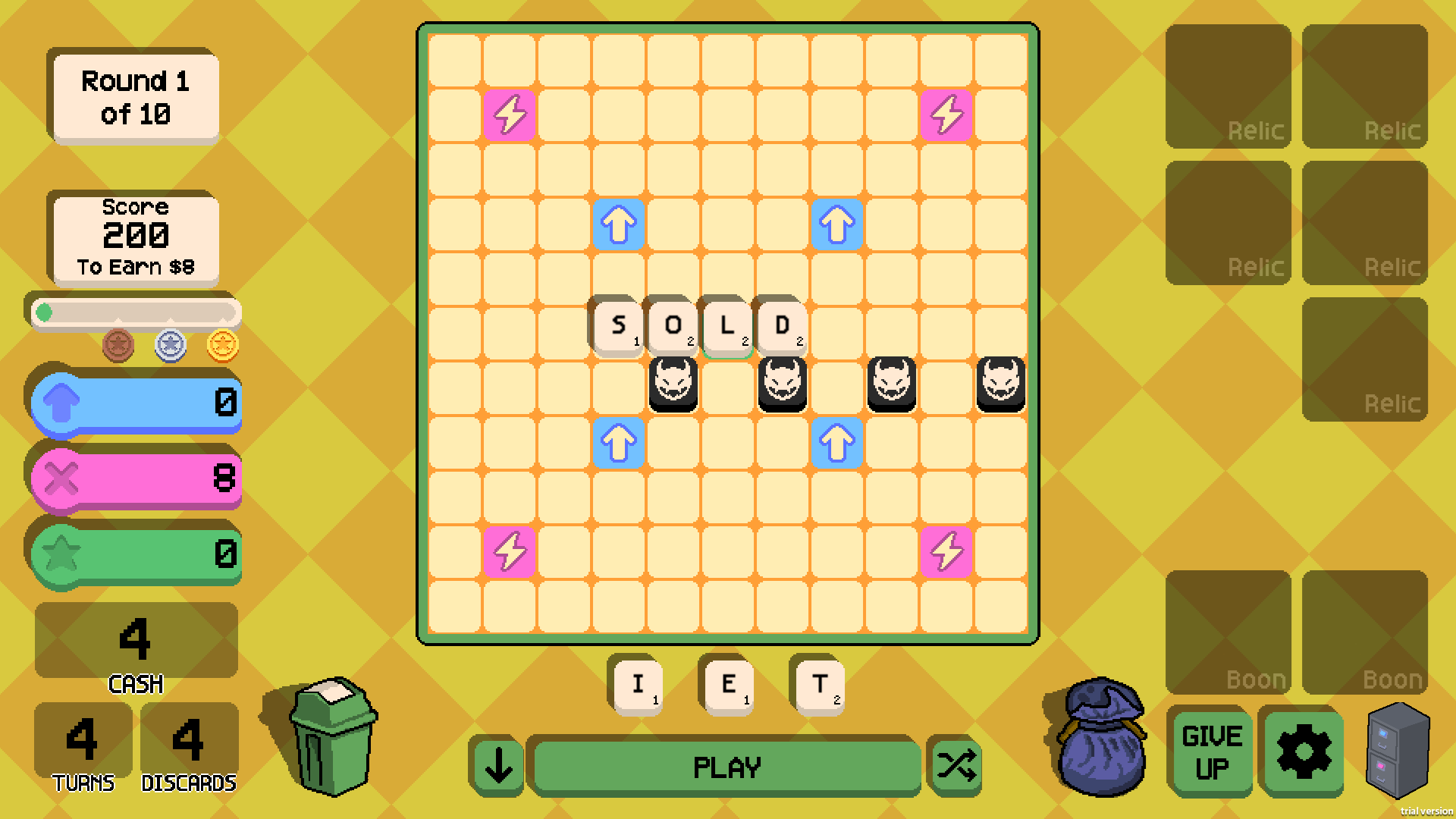
A title so horrible that I’d like to apologise to whoever named Wordatro, but this one is tragically also my favorite. It’s got a nice expansive buff shop and I really like how it incorporates the traditional Scrabble board. Being able to add buffs to random squares on the board is an idea so brilliant that I’m struggling to imagine how it came from the same brain who named it “OMG Words”.
One issue is that you’re only warned about what the boss will be right before the round when you face them. Balatro gives you two rounds of notice, and even that sometimes isn’t enough.
But now I’m just playing the word NITPICK. OMG Words is a winner!
Total time played: 31.9 hours
Total time of all these games played together: Oh good God.
About Author