
Unsurprisingly, Epic Games CEO and frequent X poster Tim Sweeney has thoughts about the $900 million lawsuit against Valve in the UK, which recently got the go-ahead from a competition tribunal. Also unsurprisingly, given his competing store and past criticism of Steam, Sweeney approves of the action, and based on his related legal tussles with Apple and Google, thinks there’s something to it.
The lawsuit, filed in 2024, very broadly alleges that Valve unfairly prevents game makers from offering their products at lower prices on other platforms and requires that all add-on content for games purchased on Steam also be purchased through Steam, and that Valve’s “excessive commission” has resulted in inflated prices for UK consumers. Valve had argued that the suit should not be allowed to proceed as a collective action—functionally similar to a class action—but a Competition Appeal Tribunal disagreed, ruling earlier this week that the suit can proceed.
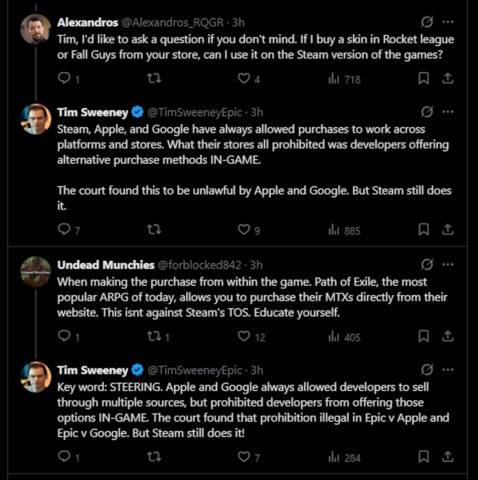
Sweeney has homed in on the DLC issue specifically. Although developers can sell DLC on other platforms and have it carry over to a user’s Steam copy, Valve doesn’t allow them to sell add-ons directly through in-game stores or to use their in-game UI to steer users to off-platform stores. This, Sweeney says, is “like a car dealership demanding 30% of gas purchases,” and is one of the things he and Epic have successfully fought Apple and Google over.
Sweeney’s comments naturally led to a flurry of dissenting responses, but he resolutely stood his ground: “Today, in the USA, developers are free to steer users of iOS and Android apps to competing purchase methods. Apple and Google collect 0% on those transactions. On computers and smartphones, Valve is the only major store still holding onto the payments tie and 30% junk fee.”
The Epic CEO acknowledged in multiple replies that Steam keys or DLC can be purchased from other platforms, but has reiterated that the problem is that “developers can’t offer alternative purchase options to customers IN-GAME” while following Valve’s rules. It’s a complaint that’s effectively identical to the one at the core of Epic’s legal wars against Apple and Google.
Epic is not directly involved with the lawsuit, but combatting Steam’s 30% fee and prohibition on steering users to off-platform purchase methods for add-ons was one of the founding goals of the Epic Games Store. In 2019, Sweeney went so far as to say that if Steam dropped its fee to 12%, he would stop pursuing Epic Games Store exclusives and even consider putting Fortnite on the platform.
Meanwhile, Epic has demonstrated a willingness to spend enormous amounts of money pursuing the principle against some of the biggest tech companies on the planet. Calling Steam’s 30% cut a “junk fee” is maybe a little much, but I also don’t think there’s any doubt that the industry is slowly trending away from it—led, in part, by Epic’s efforts.
Steam has managed to maintain its big cut and restrictive policies because it has such a dominant position in the market—being first sometimes really is best—but if this lawsuit in the UK (and a similar action slowly unfolding in the US) go badly for Valve, it may be forced to dial things back drastically. I’m sure Sweeney will have some choice thoughts on that if it happens, too.

Steam sale dates: When’s the next event?
Epic Store free games: What’s free right now?
Free PC games: The best freebies you can grab
2025 games: This year’s upcoming releases
Free Steam games: No purchase necessary
About Author