Hello everyone! I’m Takashi Ishihara, the Game Director and Art Director for Lumines Arise at Enhance. It’s been a little over a month since we released Lumines Arise, a reimagining of the Lumines puzzle game series originally introduced in 2004, on PlayStation 5 with optional PS VR2 support. Hopefully, you’ve been enjoying playing through the Journey mode, exploring the Mission mode and its Training missions and Challenges, battling other players around the world in Burst Battle, or taking part in Weekend Loomii Live events.
I’d like to give you more insight into the development of Lumines Arise and how the team at Enhance brought this project to life.
Defining next-generation Lumines
We already knew that after Tetris Effect: Connected, we wanted to revisit Lumines. The big question in our heads at that time was, “What defines the next Lumines?” An image began brewing in my head, and I spent time thinking about key words and colors that would represent the new game. It was all very abstract at first, but slowly the main idea took shape. This is when I sat down with Executive Producer Tetsuya Mizuguchi to align on the core concept and where we’d like this iteration to go. Once that was agreed upon, I went full tilt in designing individual stages, picking out moments or feelings I wanted to see visualized, including the UI/UX, getting an idea of the musical styles that might pair with each.
As it came together, I made a pre-visualization video. That’s when a real team was starting to take shape so I shared it with them. We started talking about how to make the concept even better and improve on the foundation. After this initial shaping and polishing process, that’s when we really started building out the game.
Developing Stages over time
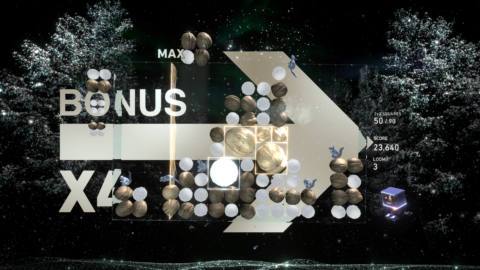
A common question that we get is how long does it take you to create a full stage from start to finish. Well, that’s a bit of a difficult one to answer, since during development we continually polish, improve, and tweak little things throughout. It’s become a bit of our house style at Enhance! At no point do we say, “OK, we’re done with that stage time to move to the next!”
The initial design for a single stage is quite broad—its visuals, music, and sound, and the feeling that we want it to evoke. Then, as we work, each person on the team, be it a visual designer or a member of the sound team, contributes tweaks and changes. This back-and-forth process doesn’t stop, but if you laid it all out on a timeline, it might show that it took three or four months per stage from start to finish! At times we would shift focus to certain stages and leave others to “breathe” and come back to them later. Every component of a stage—visuals, sound effects, music—needs to work together in harmony. The design informs the music, the music informs the design, and we change things throughout the process until the very end. When we reach the point where it’s in harmony and feeling good to play, that’s when we know the stage is working and everything is in its most polished, perfected state.
Speaking a little more about matching the music to a stage’s visuals, at the beginning it’s very broad. From what I just described, you could say our development style is very flowy. But at the start, we do a lot of music-related planning, analyzing sound waves, looking at the MIDI, timing and BPM data. However, it’s very similar to making something out of a mountain of clay. You have a plan, but as you’re creating it you take things away, add textures, or maybe you have to add elements back to it. Maybe a shape or curve you added doesn’t work anymore. You’re always perfecting and correcting, and our development style gives some room for that flexibility.
On the cutting room floor
Now, were there any stages we cut from the game? There were a few that we’d started working on very early in development that just didn’t fit thematically. One had an ocean theme, and another was a forest theme—in the end, these didn’t feel cohesive to the Lumines experience we were building. I’d set a high bar for what I wanted out of this new Lumines game. After working on these types of games over the last 20 years, focused on the core synesthesia experience, I had to dig deeper and it turned out that the more darker, cooler feeling tones worked better than the brighter and sometimes softer epic-scale vibes that fit more naturally in a game like Tetris Effect: Connected.
That VR feeling
This is the first time a Lumines game has been playable in VR, too—have you tried it in PS VR2? We wanted playing Lumines in VR to feel like being in the front row at a concert. The lights, the energy, the stage in front of you. It took quite a bit of tuning to get the camera positioning perfect to elicit these feelings, too. If you’ve played on PS VR2 you may have noticed there are lights and particles and things happening that are not visible when playing on a TV. Those little details, along with the headset vibration, help immerse you in the experience even further.
An Immense Task
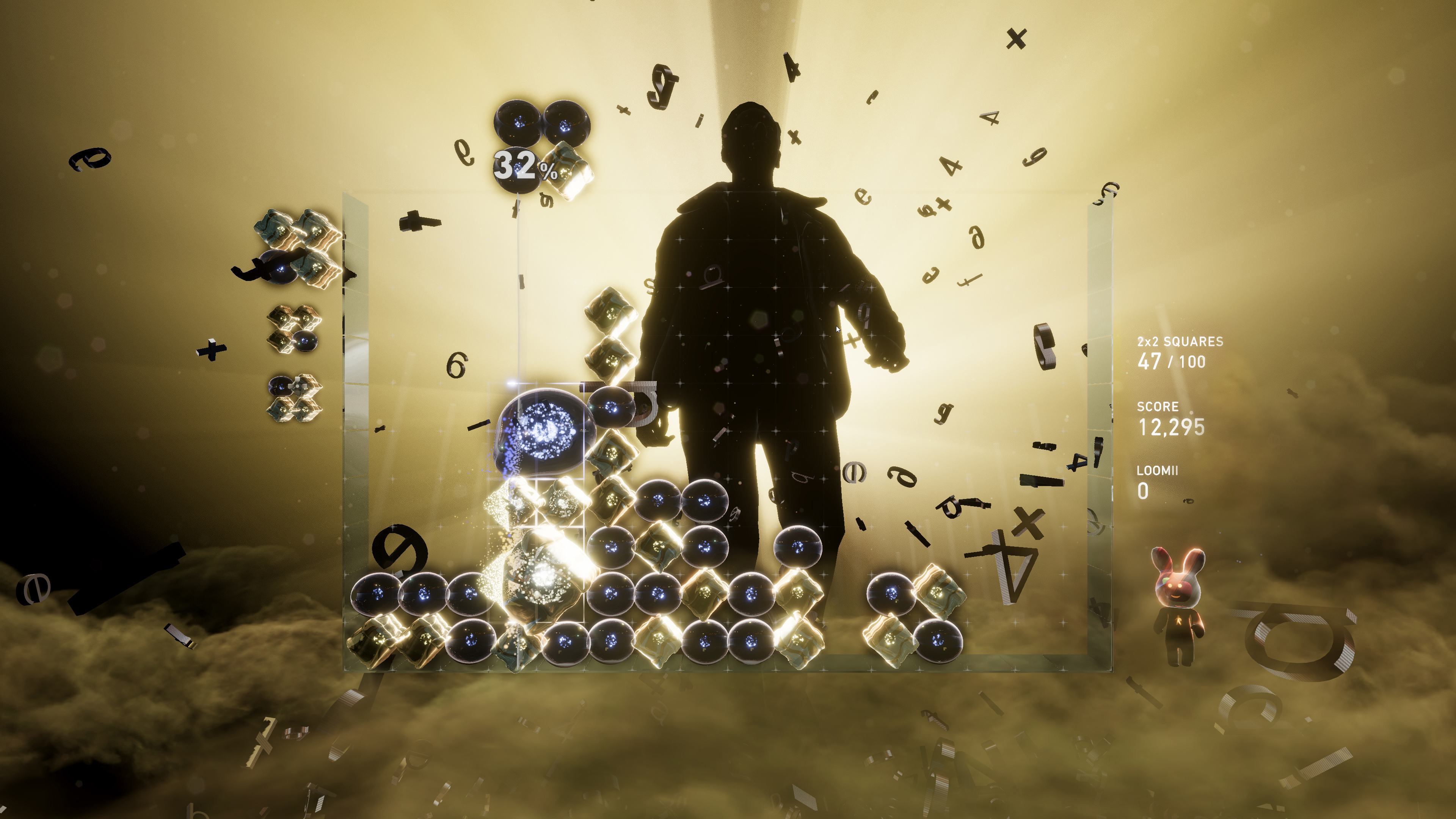
The games in the Lumines series up to now were all built in 2D. With Lumines Arise, we’re bringing all this into 3D, which means we’re working with a ton of assets, lots of sound components, and music. Every stage’s visuals, music, sound effects are different across all 36 stages. It was so ambitious in scope that we increased our production schedule by six months to get it all done. The finished project hopefully appears effortless, but the scale and volume of making this happen were immense. It was an absolutely huge effort by our team over three and a half years. In that time, our team grew, we learned a lot of new technology that we hadn’t used before, tuned each stage to painstaking detail, and we shipped a game that plays on your TV, PlayStation Portal, and in VR via PS VR2.
I am so proud that we were able to overcome all the challenges that this game presented to us. Lumines Arise is available right now on PlayStation 5 with optional PS VR2 compatibility. If you’re a PS Plus Premium subscriber, there’s even a game trial available so you can try out the game for yourself.
About Author