AMD’s next-gen graphics architecture has popped up in a graphics driver for the first time, with a suite of GFX13 patches going live in an AMDGPU Linux kernel graphics driver. This has first been reported by Michael Larabel at Phoronix, who spotted a series of eight patches being posted by AMDGPU maintainer, Alex Deucher.
The RDNA 4 GPUs, the Radeon RX 9070 XT et al, were all noted under the GFX12 codename in previous patches, so it is only natural to expect that GFX13 refers to the next generation of AMD graphics cards featuring the RDNA 5 architecture.
The timing of these graphics driver patches would suggest support for the new GPUs is going into the upcoming Linux 7.5 kernel release. With Linux 7.0 dropping earlier this year, and the 7.4 version currently in release candidate testing at the moment, it is expected that the 7.5 kernel release will occur sometime in early 2027.
Wee side note for you… that’s not the only interesting thing happening in Linux 7.5, however, as it will also mark the end of an era for Intel. The multimedia extensions it introduced in the Pentium era with MMX will have their last vestiges of optimisations removed in the upcoming kernel release.
At the moment, the current expectation on the actual AMD GPU release schedule itself would see one mid-range RDNA 5 card coming out in 2027, using silicon under yet another codename: AT2. That would tally neatly with the architecture’s appearance in this new Linux kernel.
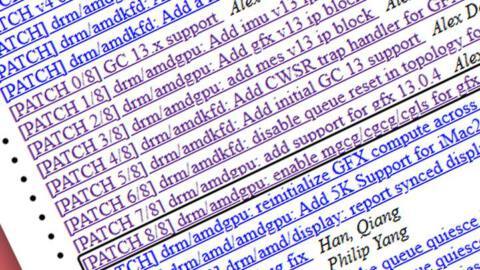
As for the actual code that’s been dropped in this series of driver patches… it’s not particularly exciting. There is a lot of code, and I am absolutely not smart nor Linux-savvy enough enough to be able to discern anything special from them, but Larabel has himself noted that as far as he can tell there isn’t anything in there that reveals tasty new tidbits about the potential future RDNA 5 feature set.
But that’s not to say further patches won’t do that, so it will be worth keeping an eye on these updates going forward as potentially more functionality-based patches get dropped into the upcoming kernel.
About Author