With the launch of Capcom’s Resident Evil Requiem, PC gamers can add another game to their libraries that sports one of the most impressive and most inaccessible of rendering technologies: path tracing (or full ray tracing, as Nvidia prefers to call it). If you want pixel-perfect lighting, shadows, and reflections, only path tracing will do, but the entry fee to all that glorious graphical wizardry is incredibly high.
And by that, I mean fiscally and physically. For example, while any RTX graphics card is capable of handling path tracing in today’s games, unless it has lots of shader units, cache, and VRAM, the whole thing will be an epic slideshow of single-digit frame rates.
Okay, so that’s a bit of an exaggeration because it’s certainly double-digit on the humble old RTX 3060 Ti, which sports 4,864 shaders but only has 4 MB of L2 cache and 8 GB of video memory. The problem is that while it runs, the performance is nowhere near as good as Requiem’s other two ray tracing options.
It’s a bit of a long video, but you can always skip ahead to the relevant parts, as it’s roughly equal for no ray tracing, normal and high RT, and path tracing. All of the footage was captured at 1440p, with the Normal quality preset and DLSS Quality enabled.
As you can see, the frame rate absolutely tanks with path tracing, whereas it’s absolutely fine with ‘just’ ray tracing. I suppose the fact that it runs path tracing at all is impressive enough, but you’re obviously not going to be using it, unless you’re out to set some kind of bizarre record of speed-running Requiem at 15 fps.
Now, before anyone mentions the fact that the RTX 3060 Ti is several generations old, and therefore shouldn’t be expected to handle path tracing at a playable frame rate, the same thing happens with an RTX 4070, as you can see below.
That graphics card can churn out triple-digit performance figures with high ray tracing enabled, but its output speed also plummets once path tracing is switched on. It’s clearly nowhere near as bad as with the RTX 3060 Ti, but it does have almost double the compute performance as the old chip, as well as heaps more cache and VRAM.
Unfortunately, Resident Evil Requiem won’t let you use frame generation with path tracing on the RTX 3060 Ti (possibly some shader conflict going on), but you can with the RTX 4070, as it has native support.
Shifting the upscaling to DLSS Performance and the average frame rate does pull back into the realms of playability, but only when the scaler is joined by frame gen (just watch the video below to see what I mean). However, the performance isn’t as good as when just using ray tracing, which is perfectly acceptable without recourse to a helping hand from frame interpolation.
Actually, let’s just stop for a moment and appreciate that point because we’ve clearly come a long way in eight years. That’s how long ago it was when Nvidia first introduced its RTX 20-series graphics cards, the first to sport dedicated hardware for acceleration of some of the key algorithms behind ray tracing in games.
Back then, in 2018/2019, you pretty much only saw ray tracing being used to produce better-looking shadows and reflections, eg, Battlefield 5.
Things really only took a step forward with the release of Metro Exodus Enhanced Edition in 2021, which uses ray tracing everywhere: global illumination, light source emission, reflections, refractions, and shadows. However, it wasn’t the first 100% RT game you could buy for your RTX graphics card.
Preceding Metro by a good two years was Quake 2 RTX, and what’s perhaps even more surprising was that it was path traced, not common-or-garden ray tracing. Admittedly, the simple geometry and basic materials of Quake 2 made it relatively easy to path trace compared to something like Cyberpunk 2077.
That game got its path tracing option (called RT Overdrive) in 2023, and it’s still the measure against which all other implementations seem to be judged (something I’m guilty of myself). It’s still a pretty exclusive club even now, because relatively few games offer the option to use path tracing. Which is understandable when it’s less usable than ‘standard’ ray tracing across the entire PC gaming user base.
However, we do have a decent number of games that always use ray tracing. Doom: The Dark Ages (which has PT, as well), Black Myth: Wukong (which also offers PT), Stalker 2, Star Wars Outlaws, and Avatar: Frontiers of Pandora, to name but a few. And in the case of the first game in that list, the performance is pretty darn good, despite the all-in use of ray tracing.
Anyway, if you’re wondering just why path tracing is so tough, the simple answer is that it is basically a seriously juiced-up version of ray tracing. The slightly more detailed answer is that most path tracing algorithms involve tracing multiple paths from the camera to a light source, and then statistically sampling them all to get a suitably approximate path to calculate colours from.
Then, when you add in multiple light bounces off every surface, plus taking factors such as a material’s opacity, reflectivity, or emissivity, you have a computational workload that will bring any GPU to its transistor knees, unless you use all kinds of tricks to reduce the amount of calculations required.
The above footage of Indiana Jones and the Great Circle, all path traced and maxed out on an RTX 5090 with DLSS Performance, shows just how gorgeous it can look, but also what the GPU cost can be like. But I digress, so let’s come back to the point at hand.
If it’s taken almost eight years to reach a point where the use of RT in a game is neither a surprise to see nor a recipe for instant frame rate death, will it be another eight years for the same to happen with path tracing?
At first glance, that might seem to be the case given what it currently does to an RTX 5090, a graphics card that has a GPU with 21,760 shader units, twice as many as that in an RTX 5080. It also happens to house 50% more Level 2 cache, plus 100% more VRAM. All that to hit around 60 fps with path tracing at 4K with DLSS Performance upscaling.
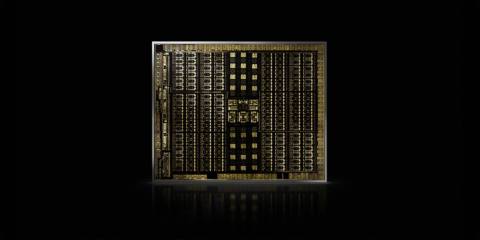
However, the RTX Titan, the most powerful graphics card Nvidia released with its first RT Turing GPUs, has fewer than half the number of shaders as the RTX 5080 and a ridiculous 91% less L2 cache. Sure, it has 24 GB of video memory, but the teeny GPU in a $400 RTX 5060 Ti fares a lot better with ray tracing than that old $2,500 card.
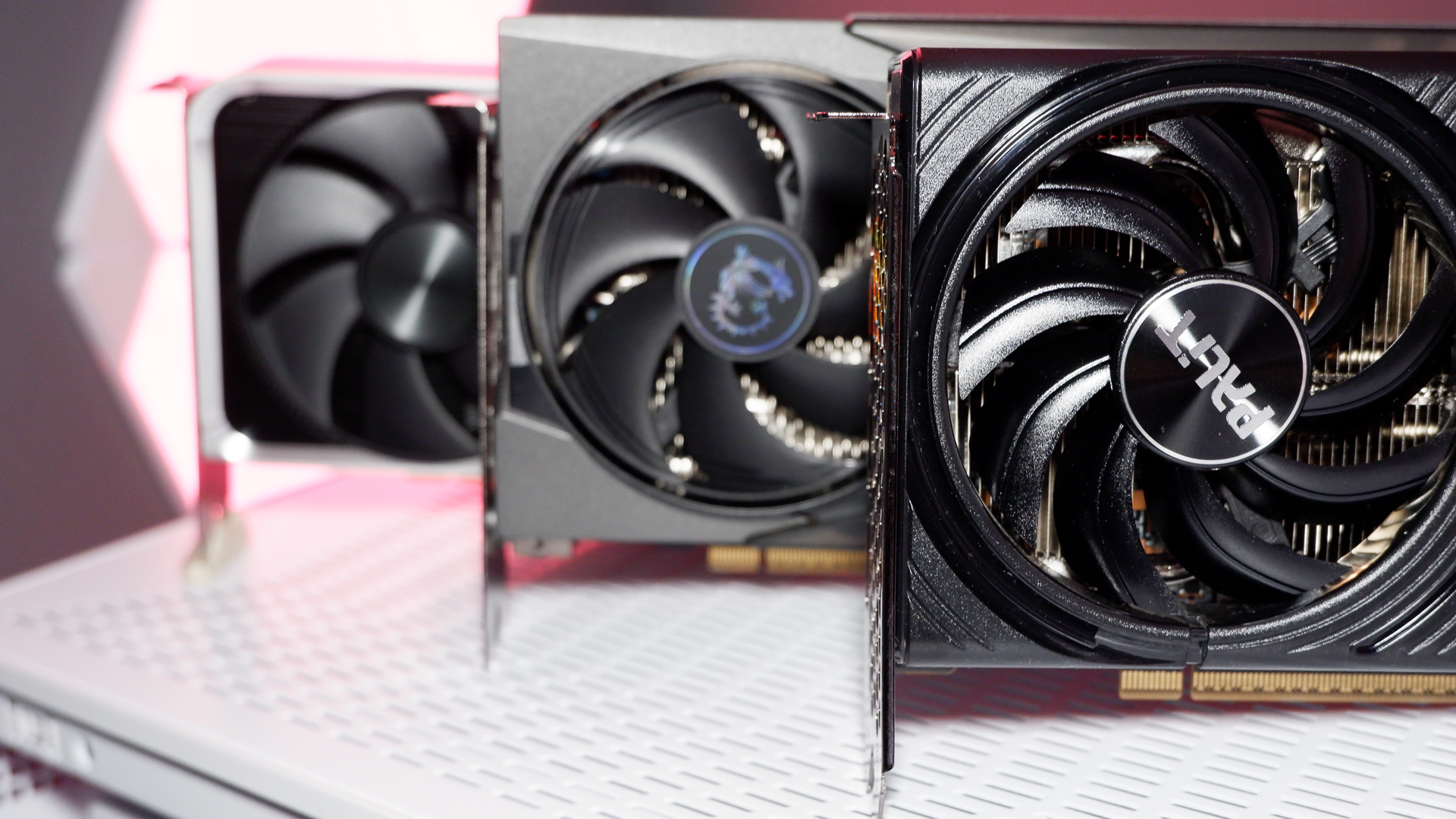
Whereas Turing was merely a tentative toe into the world of rays, BVHs, and tensor cores, the latest chips from Nvidia, AMD, and Intel are packed with all kinds of goodies for accelerating everything RT and AI.
And it’s the latter that will probably make the biggest difference in the coming years. We already have it now in the form of upscaling and frame generation, and soon enough, they’ll be joined by the mainstream adoption of other AI-powered algorithms like neural shading and neural texture compression. How much of this will be able to offset PT’s immense workload is anyone’s guess, though I bet AMD, Intel, and Nvidia have a pretty good idea.
Path tracing can make a game look absolutely astonishing, and although it will still hammer GPUs like nothing else for a good while yet, I strongly suspect that it won’t be too long before it’ll all run as smoothly as normal ray tracing does in so many of today’s games.
About Author