Last week, Tim Clark, PC Gamer’s resident Arc Raiders die-hard (seriously, he has 530 hours in-game), sat down and spoke with Embark Studios’ Virgil Watkins, design director, and Bence Pajor, audio director, ahead of the launch of its next major update, Shrouded Sky.
In the 40 minutes we had, we asked the team all about the so-called ‘aggression-based matchmaking’ (ABMM) that’s quickly become a boogeyman in the community, the seemingly impossible balancing act between PvE and PvP, Expeditions, and much more.
You can find the full conversation below, largely with Watkins, though Pajor speaks on audio design at the end. I recommend using the navigation bar (left on desktop, up on mobile) to cruise around to specific topics that interest you, since, as you can imagine, they had a lot to say about the current shape of their breakout extraction shooter.
Interview edited for length and clarity.
Matchmaking and PvE vs PvP balance
I think people do feel as though it’s incredibly binary, and even shooting one raider, one time, just automatically puts you into an aggressive lobby. But that’s not at all how it works.
Virgil Watkins
PC Gamer: In hindsight, do you regret talking publicly about ABMM? If feels like PvE-focused players now feel betrayed if they get attacked in their lobbies at all, whilst PvP players resent not being able to dine out on easy kills. How do you view the discourse, and how do you see the balance being struck going forward?
Virgil Watkins, design director: It’s been interesting because, I think in the way that came up, it was never even intended to be discussed in that manner, because that isn’t even correct as to how it works. Like, we didn’t coin the term aggression-based matchmaking.
We have been preparing comms around it. But it’s not nearly as binary as people think. There’s no such thing as a friendly lobby or an aggressive lobby; the system is still mixing everybody, and everything’s down to human motivation. Just because you’re tending toward the more peaceful end doesn’t remove the autonomy from other people making a choice about wanting your stuff.
So I think people do feel as though it’s incredibly binary, and even shooting one raider, one time, just automatically puts you into an aggressive lobby. But that’s not at all how it works. It’s far more nuanced than that. Your engagement with PvP is part of the situation, and it’s not as though one action does it. It’s a series of rounds together and things like that.
I’ve seen people saying, well, if you’re shot at, you should never even shoot back if you want to get into the safer end of the spectrum. But I feel like that’s not the case.
Yeah, it’s not. It’s not nearly that cut [and dry]. It’s something we’re continuing to tune but we never really wanted to apply this mentality of it being a hard split of you either play this way or you do not play this way. The game needs that element of tension and risk from other players to be good. And of course, we acknowledge that people are having a lot of fun with these safer lobbies, but it’s not prescriptive. We’re never going to say, ‘oh, because you play this way, you’re only going to experience these types of people.’
My assumption, as someone who’s covered games for a long time, is that you would want to keep the biggest cohort of players as happy as you possibly can. That includes both ends of the spectrum. So do you see this as something you’re going to continue tweaking and tuning, but you broadly think that it’s been a success?
That’s sort of what we’ve been asking ourselves. Because obviously, the game mode of extraction carries a lot of inherent elements and expectations with it, and even as we’ve seen it in live, it is not at all how it was working in our tests—either for ourselves or the previous [public] test. It was hyper, hyper aggressive in those tests; people never worked together. I think it kind of surprised us in exactly how many people [did] latch on to and are having fun with these elements of the game. So it certainly encourages us to lean more forward into giving opportunities to have friendly and fun interactions.
During the Shared Watch event, I’ve been chilling in Blue Gate on the top of buildings with six other players shooting Arcs, and we’re swapping blueprints, and people are playing music. It’s not what I expected from the game. I think a lot of people really like it. But how do you keep that very vocal PvP audience who just want to get in there, and they get their kicks from taking your stuff?
For me, that’s actually kind of the hope with all of it: letting players lead with their own motivations and create all those stories for each other. And that’s not something we can ever author or force to happen, and I’m glad that we don’t try.
Virgil Watkins
Well, I think we just have to primarily make sure that the PvP side of the game is as fair as we can make it and, obviously, there’s still things we need to work out with balance on some factors and giving them tools that are, of course, meant for player versus player combat.
We still have the mantra—and this is even regardless of the formation of this PvE-heavy audience—that the game never asks you to fight other players. That’s entirely your own decision. So you’re always going to have people who have the motivation to fight, because there are people who just like PvP. I think we need to keep making sure we’re providing them with the tools and means to do that in an engaging way. But you’re absolutely correct, we have this cohort of players who want to play more peacefully—or role play, even—and ensure that we don’t harm their experience either. So it is a precarious position.
This is a real example from a Stella Montis night raid: We’re all just running around chatting, and one guy did a heel turn and killed someone, and within seconds the whole lobby had descended on him and dispensed street justice. They call them the sheriffs of Stella Montis. But these guys don’t always get it right either. Sometimes they’ll just kill the wrong guy! How do you feel about that kind of emergent gameplay?
Well, I mean, for me, that’s actually kind of the hope with all of it: letting players lead with their own motivations and create all those stories for each other. And that’s not something we can ever author or force to happen, and I’m glad that we don’t try. I far prefer that we give players the means and the context and the opportunity to do these things, and then they do what they want to do.
I’ve even seen videos where people cause that kind of chaos on purpose, like they’ll have a silenced weapon and watch two people being friendly, and they’ll shoot at just the right moment. The guy turns like, ‘Why’d you do that?’ And they get in a fight, and then a third guy shows up, and punishes the first guy, and then no one knows what’s going on anymore. And yeah, I think those are some of the better moments you can hope to see.
How much weight do the end-of-game surveys have in the matchmaking?
Zero factor. Those are just to help us gauge how players felt about the round. They have no mechanical change on what happens to you. It is solely based on your actions in the round. Those just go to our data team and help us pair up like things that occurred in the server.
So that—and I understand why this sort of myth emerged—really messed with a lot of our PvP sentiment metrics, because it was meant to gauge “of the PvP that occurred to you. Was it good?” Not, “do you even like PvP or not?” So then we get really weird graphs that don’t match up with what we’re seeing.
Expeditions and blueprints
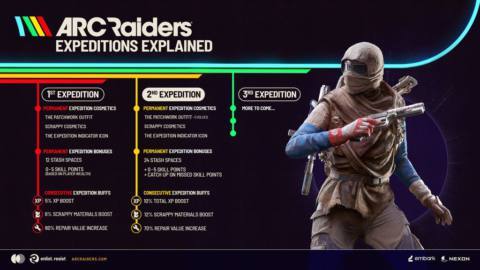
We’re midway through the second Expedition. How long do you see the loop of doing the Expedition and then re-earning blueprints remaining interesting?
I think I said this even early on when we did the initial blog post about the system; it is a bit of an experiment. Because we didn’t want to force resets on everyone, then now we’re on this road of ‘how do we make it interesting enough for the largest amount of people to participate in this?’
There are issues with the thing itself. The currency system we have today was just what we had time to develop. And we reduced it, of course, for Expedition two, just because, even though at the time we calibrated the 5 million [coins] around what the average player’s economy looked like, it still overshot in [terms of] how much people felt like they had to engage with it, or how much they felt compelled to chase that.
But because of other things that were actively in development, we didn’t have time to shift the system to what we intend to do next, and we want to tie more game loops into it, and not just make it about currency value. So, ideally, we’ll be able to talk about that fairly soon.
Do you think it’s something that’s likely to see major changes?
I wonder if we can address that particular pain point by additional changes or systemic changes to how blueprints are found, acquired, or learned, rather than needing to feel like they have to come along with the Expedition system.
Virgil Watkins
I mean, I wouldn’t say there’s going to be major changes in one giant drop, but definitely we’re going to try to adjust and shave off pain points, and make sure that the incentives we are providing are catching what people find compelling. So, like, skill points probably won’t hold forever. Of course, we don’t want people to be able to max out the entire skill tree. That’s not the way it’s designed. And then, of course, at some point, we’re very likely going to revamp parts of the skill tree. So then what other elements do we make part of the Expedition system to keep it enticing?
But by and large, it is there as an optional reset mechanic, so players who do want to go through the loop again have a means to do so, while still allowing players who want to just keep playing on their current character to do that.
Have you considered allowing players to bring a couple of their favourite blueprints across, almost like the safe pocket system, in order to prevent people from getting stuck trying to find one in particular?
That was an idea we even had before launch. It’s a tricky situation because the blueprints in particular are such a power elevation; now you have the autonomy to craft this thing very deliberately, and does that fit in? And then as well, if we ever make—and we have made—adjustments to the blueprint drop rates and things like that.
But I certainly don’t think it’s off the table. Of course, it’s a very rational thing for players to want to do, like, ‘I work really hard for these and please let me have a few of them.’ So yeah, I wouldn’t say no to any idea along those lines. It’s mostly about how you balance what is kind of part of the core run-up through progression, and blueprints are a significant part of that, of actually getting them.
I wonder if we can address that particular pain point by additional changes or systemic changes to how blueprints are found, acquired, or learned, rather than needing to feel like they have to come along with the Expedition system. So you know, giving you better or more autonomy over how you acquire blueprints, for example, might alleviate some of that concern on that side of things. So I don’t want to overburden the Expedition system with things that we might not want to do.
Running a live service
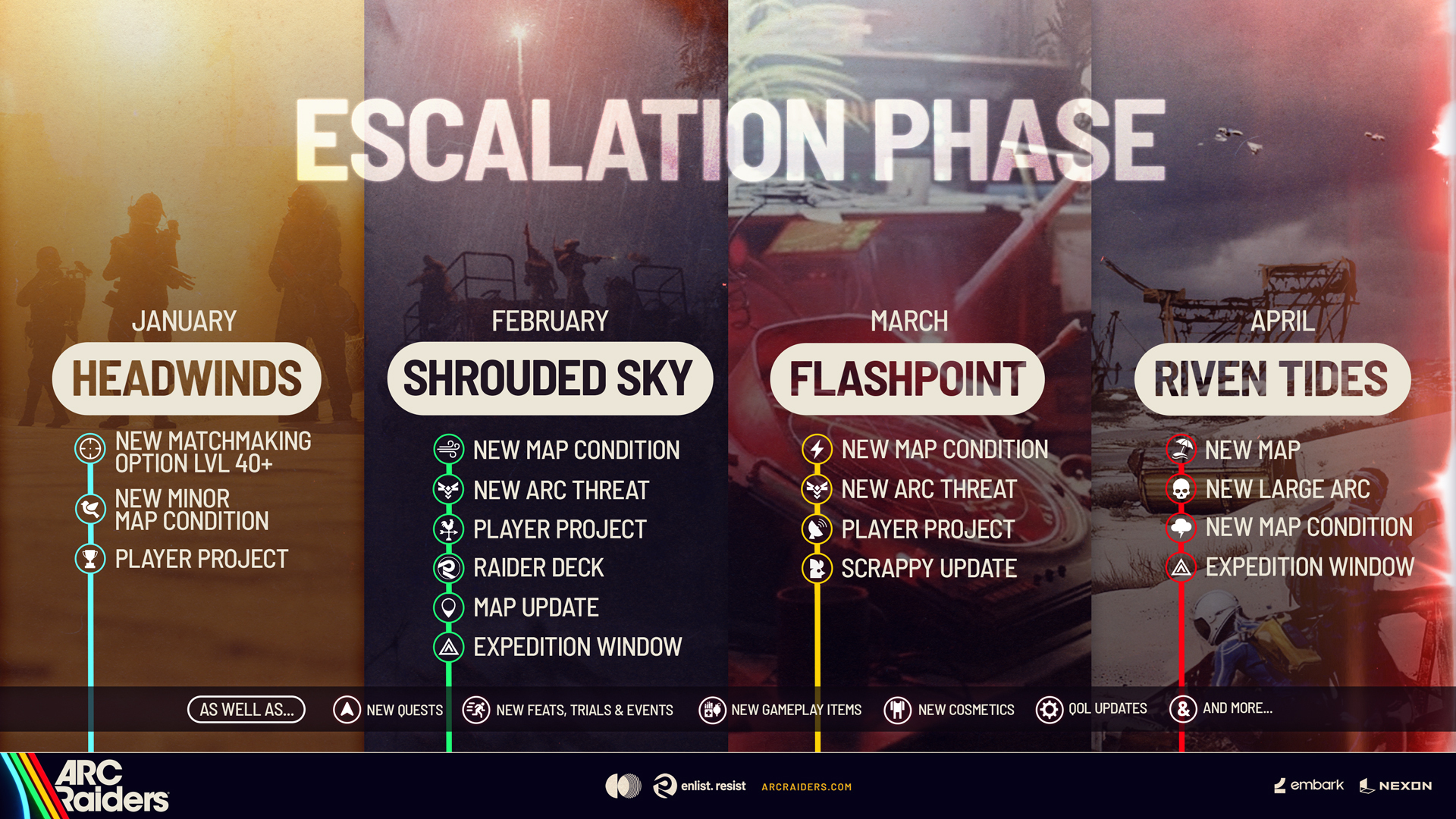
Embark mentioned in a previous blog post that, having spent years developing Arc Raiders, the studio is now having to build up the muscle of running this sort of a live service game. What have been the biggest lessons learned so far, and other than patch notes, where do you think you still need to improve?
I think one thing is the amount of times you have to drop what you’re doing and respond to an active issue—a really crazy bug is found, or you get a sudden massive DDoS attack for eight hours straight. I think a lot of our team wasn’t ready to drop what they were doing and respond to that. I’m working on this new feature and working on this thing, and now I have to respond to this, and that takes up, like, two days of my time to deal with that.
So I think that’s been a bit of the growing pains, especially at the scale we have now. Like, nobody whatsoever thought we’d have this many players. It’s a little, even for me, like deer in headlights. ‘Oh, wow. All right, let’s go.’
So that’s definitely the biggest one—just responding to the things that come out of live, whereas in dev we’re working at our own pace, essentially, and are just reacting to ourselves, not what the wider public is doing. And we could have tested the game for like three years straight and never even touched the amount of playtime we see in three days. So, yeah, [players are] finding wild things that we would have never even stumbled across, so that’s always been fun to see.
You’ve very rapidly built up this community of content creators, and there’s been quite a bit of discussion about how Embark should act when a prominent streamer, such as Burnt Peanut, showcases a glitch (ostensibly as a way of bringing it to your attention). We saw this with the recent duplication glitch. How do you avoid it seeming like those people are getting preferential treatment?
All I can say with this issue in particular is that it was more of a coincidence. We already had a fix ready to go for it when it kind of exploded. But of course, you’ll have things come to your attention in a very loud way through some channels, and then it becomes hard to gauge the level at which it’s being used. So I don’t feel as though there’s a two-lane thing. We respond to stuff the moment we know about it; it just takes time to patch certain issues compared to others.
With something like this, where we can see very clear steps involved, it makes it very easy for us to chase, versus stuff that’s far deeper into the engine. That’s why we have had such a long time dealing with the various wall glitching issues, because that is a super complicated thing. And I know everyone out there thinks like, “oh, just put volumes, or whatever”, but it’s like inherent, physics-level stuff and networking stuff, and it’s intrinsic to the way the game is built. And those things are very risky to patch rapidly. We have to test them very thoroughly. It just depends on what we can do and when we can do it. It’s not about who’s the loudest about doing whatever the exploit is.
Do you think Arc Raiders being a paid game actually did it a service because players had to commit to it, right? It wasn’t like they just played two rounds and went, “No, it’s not for me”, and kind of dipped out.
Yeah I have to imagine so. I mean, just using my own gamer brain, that’s how I tend to feel about stuff. You know, I do a bit more research into it. I’ll watch content creators or reviews that I feel like I align with and then, when I make the purchase, I feel like I’m generally more informed than, as opposed to, free to play games that I’ll just give a go because they’re kind of interesting. You lack that sort of personal investment. So I think that definitely did us some favours, and it’s part of the reason why we changed back then, from free to play to paid, because then we felt like we could build a product that was more appropriate for that.
PvE encounters and events
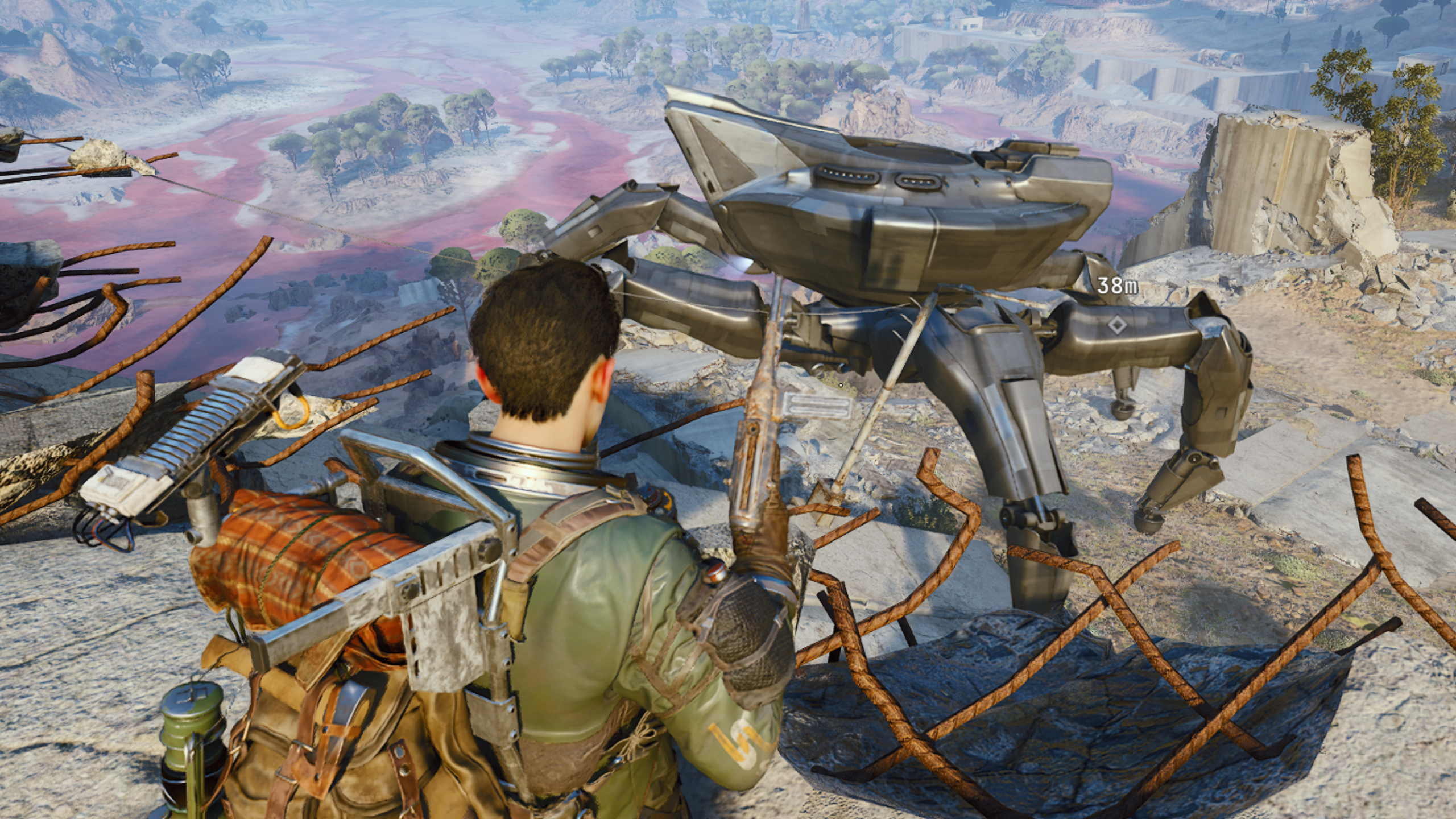
That’s definitely on us to an extent. I think we gave players too effective abilities to take down these things too early, perhaps.
Virgil Watkins
The Matriarch and Queen boss fights, at least in PvE-friendly lobbies, essentially seem like solved problems, in that they’re often over in just five minutes. I’ve also noticed players expressing frustration that they put a lot of effort and expense into killing the boss, but when the fight ends, the loot is gone in seconds. What changes to these encounters do you have in mind?
I mean, yeah, we keep evaluating how it’s going. But this is where that whole ‘who do we cater for’, or make happy or not happy thing comes in, because those enemies, even though they’re huge and deadly, they’re not intended for the full server to go up against and get equally rewarded. It is meant to be a couple of dedicated squads, maybe, working together while also dealing with other players.
It is pretty mixed. You get the players who do end up in the slightly friendlier lobbies, where you do see everybody working together, and then there’s that moment, like, ‘Ok, does everyone just fight it out now, over what loot there is?’ Or is the whole thing a PvP bloodbath the whole time? So it’s pretty spread for how people are actually engaging with it.
In my experience, that’s not how they’re being played, though. The lobbies I’m in, I’d say, there’s consistently a large group of kitted-out people these days, and the bosses are dead five minutes into the map.
And that’s definitely on us to an extent. I think we gave players too effective abilities to take down these things too early, perhaps. So they were tuned more for what I would call mid-game gear. And then we’ve looked at whether to tune the bosses up. We don’t even call them bosses internally. They’re more like encounters. They’re just large. Because I think ‘boss’ sets some expectations that they’re not even necessarily intended to live up to.
It’s tricky, right? Do we reward the people who are like you, who might pick their moment well, and go get some scraps from part of the fight and then sneak away? We try to look at it through the lens of, like, ‘what kind of raider is this person trying to be?’ And are you just clever because you can snag something and scoot off? Are you going to be the guy who capitalises at the end of the fight because everyone’s worn down and out of ammo? Or are you the one who’s trying to pull everyone together and have the fight on even terms?
I think it’s important that we try to make sure that those things are viable for players. But I completely acknowledge the frustration of trying to play the encounter what you feel is the right way, and not getting a reward out of that.
Likewise, events like Locked Gate and Hidden Bunker seem to heavily incentivise people to camp the entrances rather than actually complete tasks. I’m not doing the mechanical part of the event—collecting the keys or doing the antennae—because if I do that, I’m running all around the map, but then there’s a single point where I need to be once that’s done. Are there any plans to tweak how those work?
So that one’s a good use case for where revisions are probably required, right? Of course, when we built that, we had an idealised way of how we hoped people would engage with it. And then, you know, as players always do, they find this sort of meta throughline. A lot of the stuff that we launched with was very much a consequence of the capacity and time we had up to that point.
Now that we have tons of live data, we can go look at those existing map conditions, because there’s a few others that have similar issues. Like Locked Gate is another one that has kind of a similar problem. So it’s about us trying to keep the spirit of those, but adjust the mechanics so you’re not getting quite those moments.
What we thought at the time would be an ok mitigation factor for Hidden Bunker is that we tried to stack pretty deadly enemies near the entrance. But players, especially higher-end players or more engaged players, are so effective now at taking out the Arc that it didn’t become the mitigating factor that we initially intended.
We’ve seen those enormous Arcs plodding along the horizon for months now. My prediction is that when they actually arrive, we’ll get a map that actually is one of those, and we’re fighting inside and on top of it. On a scale of 1-10, how close am I to the truth?
I think it’s an easy idea to reach for. I can put it that way.
Damn. I thought I was a genius, but you’re saying I’m not?
I mean, the execution, it’s a lot of fun, but I think it’s a natural want to see those giant ones on the horizon and wonder what does the inside of that look like.
New weapons
You’ve mentioned new Arc appearing in the roadmap, but what about new weapons and items? What kind of cadence can we expect for new guns over the year, and what do you consider the biggest gaps in the current arsenal in terms of archetypes?
I don’t know if we have a set cadence. I think we’re striving to always try to have a little bit of something with each drop. And what we’re doing right now is trying to make it as cohesive as possible with whatever that drop is. So there’s some interrelation between the other things coming in those updates, and whether that’s how you obtain the item or what items are useful in that situation. So that would be the intent, I suppose, with how we drop those things.
Machine learning
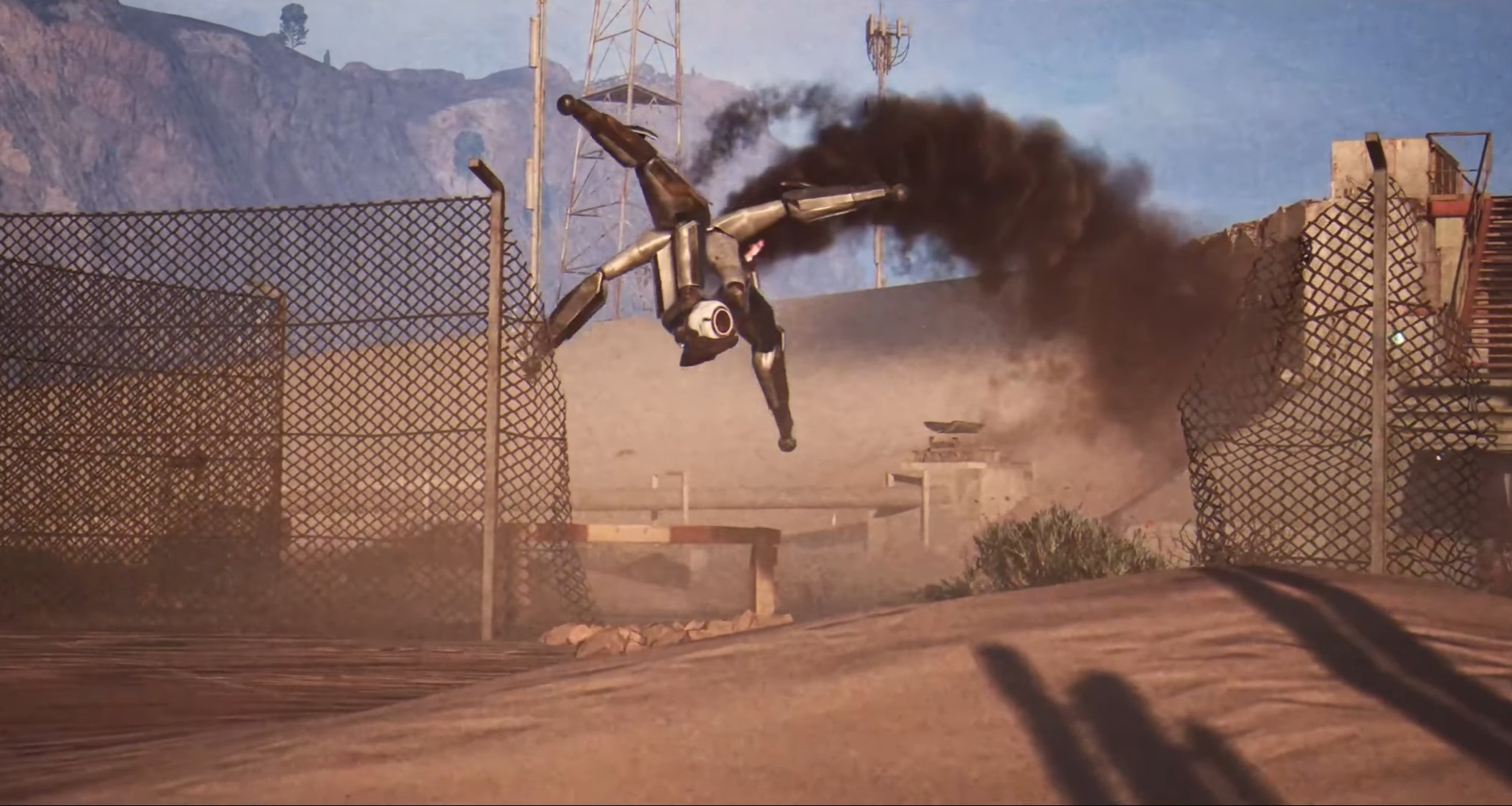
Back in 2021, Tom Solberg from Embark published an explanation of how you guys were using machine learning to teach the Arc how to move and animate. Since the game came out, people—and I’m sure it’s their imaginations—have been attributing the idea that some of the Arc are learning, like the leapers are finding their way into tighter spaces, or the ticks are banding together. Not wanting to attribute intelligence when it isn’t there, but is this the system that’s creating those situations? Are the Arc genuinely learning new techniques? Are you using any kind of AI-related tech?
None whatsoever. That’s just our AI designers and our AI engineers. To be specific, I mean AI in the game sense. It’s the ones who author our enemies, that’s their work. The machine learning is literally only for teaching them to walk and navigate the environment. It doesn’t do any of their behaviours or their attacks or anything like that. That’s just us in the way we author them.
Terminators and humanoid robots
None of the existing Arc are humanoid—they all either resemble drones or take inspiration from animals. Is that an internal design rule: no Terminators?
Yeah, at present, because I really think the distinction between that silhouette being a player is pretty important. And as well, once you have something that’s humanoid in shape, you start being way more critical of how it moves and behaves and acts near you. And then you run into situations where, like, it just kind of falls apart aesthetically or in behaviour once it’s a humanoid. And also, it’s kind of been done to death. So I don’t know what our ambition is there, but we get a lot more interesting gameplay and freedom with making a platform that’s purpose-built.
Audio design
PC Gamer: So the guns in Arc Raiders are essentially repurposed junk. It’s barrels made from pipes, improvised stocks and handmade bullets. How did those qualities translate to what you want to do with those weapons? Is it strange for you to kind of have to make the audio for a gun that’s supposed to be made of crap?
Bence Pajor, audio director: It’s quite inspiring, I think. We discuss this with the people designing them, and when we figure out the visual design, we talk about how it’s made, what the inner parts could be, and then I try to just make something out of that and add noises that could be appropriate to how it looks.
How has the process for capturing gun sounds changed over time? I remember, back in my early days of the industry, we would always be told the audio team were going out to gun ranges and shooting a bazillion guns. Do you still do that? Or is it more about using tools and creating sounds from scratch?
No, we record them. That’s the best way of getting something that sounds believable. We still do the massive gun records. Well, they don’t have to be massive, but once you go out, you want to record as much as possible. You want different calibres, different barrel lengths, different ammo, different everything, and then collect all that and break it down into parts. Then we tend to reassemble that in the engine to fit whatever kind of weapon it is [we’re making].
We’ve tried to stay away from them being too much like animals, because they’re not, they’re giant robots.
Bence Pajor
A lot of the Arcs seem to include animal sounds in their audio cues. It reminds me a bit of when people are creating the audio for monsters in horror movies, where they’ll take a lot of real-world animals and mash them all together in the mix. What has been the goal there?
It’s kind of the same thing. We look at the shape of the thing and try to figure out, ‘if this were to communicate, how would it sound?’ And especially for the larger ones, they are a little bit more animal-like; the flying drones are less so. But the really big ones, yeah, with all the legs and everything, they tend to look a little bit more animal-like, but we’ve tried to stay away from them being too much like animals, because they’re not, they’re giant robots. So we try to keep it very mechanical.
But at the same time you want some expression to it. You want it to express something. So it’s easy to go down the biological route, because that has a lot of expression, but we try to combine that with a lot of mechanical noises. So we do weird recordings for that as well. And then in some cases, we’ve mixed that with the heavily processed animal noises as well.
What kind of tricks do you use to create tension in the soundscape, where there’s not necessarily a player or a robot, but you’re trying to ratchet up that feeling of something going on around you?
I have an idea that if you try to capture ordinary things, like mundane, daily sounds that you hear every day when you move about, and try to get them in to create some kind of familiarity to what you hear, it’s easier to understand what’s going on around you. And then, hearing the slightly more concerning sounds, the contrast there creates quite a lot of tension as well.
And just as the game plays, there is a lot of downtime that creates pauses in the excitement. And I think those are super important for the tension, because you sort of know that there can be a very dangerous situation at any moment but you’re not hearing it yet. So it kind of raises the tension. And you keep listening for dangers and trying to understand, like, is there danger somewhere? And I think the contrast between boring, ordinary, mundane sounds and then you’re listening for the dangerous ones, creates a lot of tension.
It’s not doing my cortisol level any good. I’m stressed the whole time.
Yeah, me too. Actually.
Arc Raiders roadmap: New and improved
Arc Raiders best skills: Survive the surface
Arc Raiders best weapons: Just don’t lose them
Arc Raiders Expeditions: Retire your Raider
Arc Raiders quests: All the missions and how to beat ’em
Arc Raiders Field Depots: Where to find ’em
About Author