
In addition to our main Game of the Year Awards 2025, each member of the PC Gamer team is shining a spotlight on a game they loved this year. We’ll post new personal picks each day throughout the rest of the month. You can find them all here.
Okay, I do play some new games—Arc Raiders has my attention right now, for instance—but not too often. I’m someone who tends to return to the same handful of evergreen multiplayer games, the World of Warcrafts, the Hearthstones, the Counter-Strikes, the Overwatches. But occasionally there’s a new game that catches my cautious eye: The Finals, Escape from Tarkov, and Stormgate, to name a few. This year, that game was Killing Floor 3.
Actually, it was on my radar prior to this year, because Killing Floor is a series of games very close to my heart. The original wasn’t the first game I played on PC—that award goes to either Call of Duty 4 or Team Fortress 2—but it was close.
Killing Floor came out in 2009, when I was 14 years old, and I got hooked on it. I wanted a friend to play it with, though, so I convinced my console gamer friend to buy a gaming PC by giving him my old Nvidia GeForce 9600 GT when I upgraded my graphics card, and split the cost of the game. He got hooked on it too, so naturally we were both very interested in the successor games.
It’s been a decade and a half since the first game, and I was very happy to find that the basic formula hasn’t changed at all with the third iteration. These are the games I like: ones where the core gameplay is so solid and compelling that there’s little need for shaking it up in any fundamental kind of way. I mean, just ask Counter-Strike.
You might mistake Killing Floor for a horde shooter just like any other if you’re uninitiated, or haven’t spent much time with it. But there are fundamental differences that make it incredibly unique. The difficult but consistent and perfectible headshots, the difficult but perfectible kiting, the consistently exploitable enemy type weaknesses, the lethality of getting surrounded, the clutch zed (slo-mo) times, and so much more. It all makes for a game that feels like you can consistently improve at it.
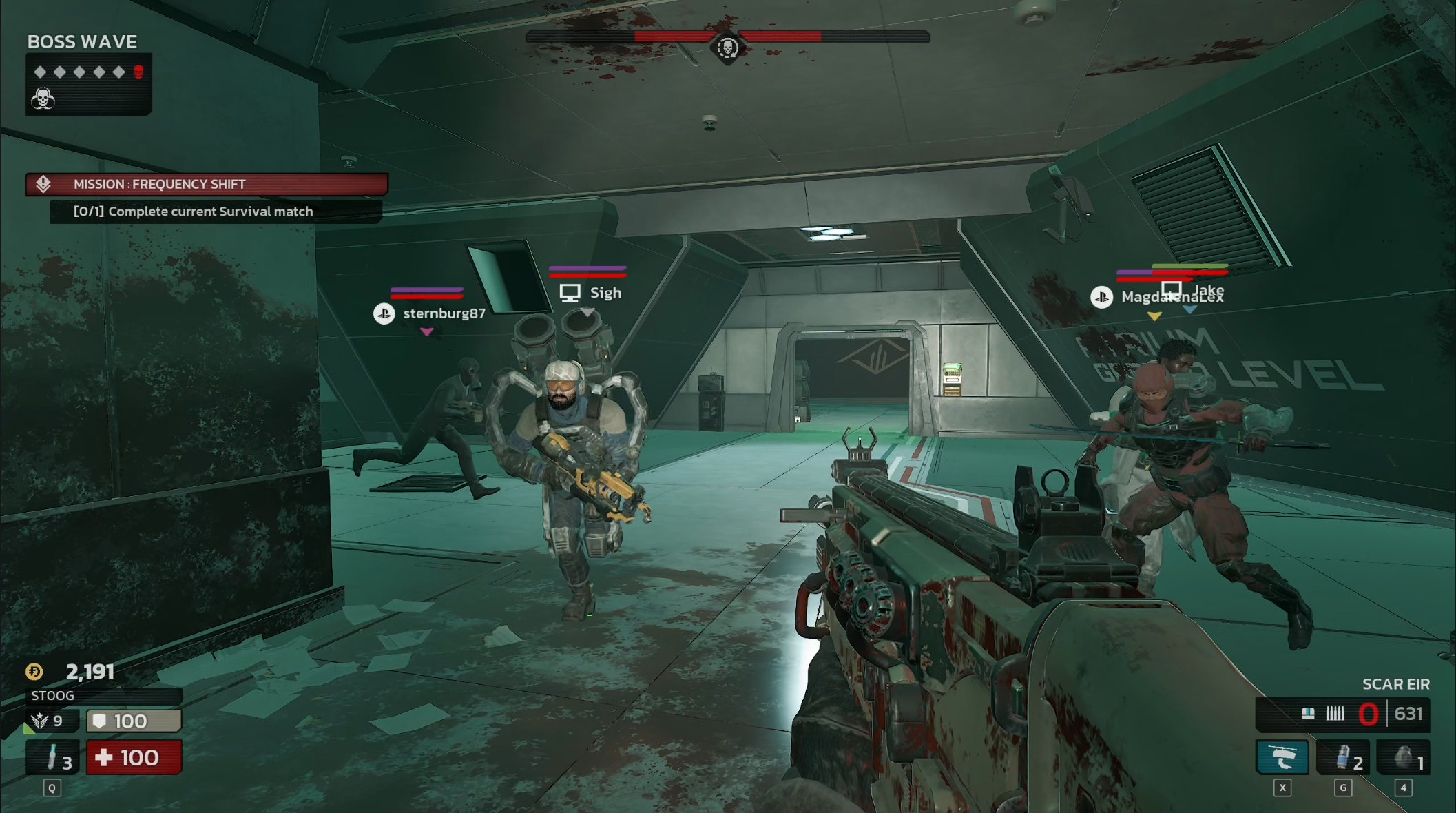
That’s what I think a lot of people who are new to the series miss: It’s not a game with tons of flashy and over-complicated systems, but its core gameplay allows for consistent mechanical improvement. And, perhaps even more importantly, those improvements are satisfying. There’s nothing more satisfying than nailing headshots with a rifle as a sharpshooter in Killing Floor.
Except for, maybe, getting good enough at crouch-slide kiting that you can solo the final wave of enemies even after your team has died. Or heck, even the boss. That might be just as satisfying as nailing those headshots (this doesn’t make the rest of the team redundant, by the way, unless you’re fine sweating and turning everything up to 100 every single round).
Then there’s the per-game progression and the economy arc. It might be that I’m used to this because of my Counter-Strike background, but I think there’s something compelling about adding in a monetary component throughout the game, as it not only adds an element of calculation to your gear each round, but also another incentive to do well: if you have a good round, you can do even better in the next one because you can get a better gun.
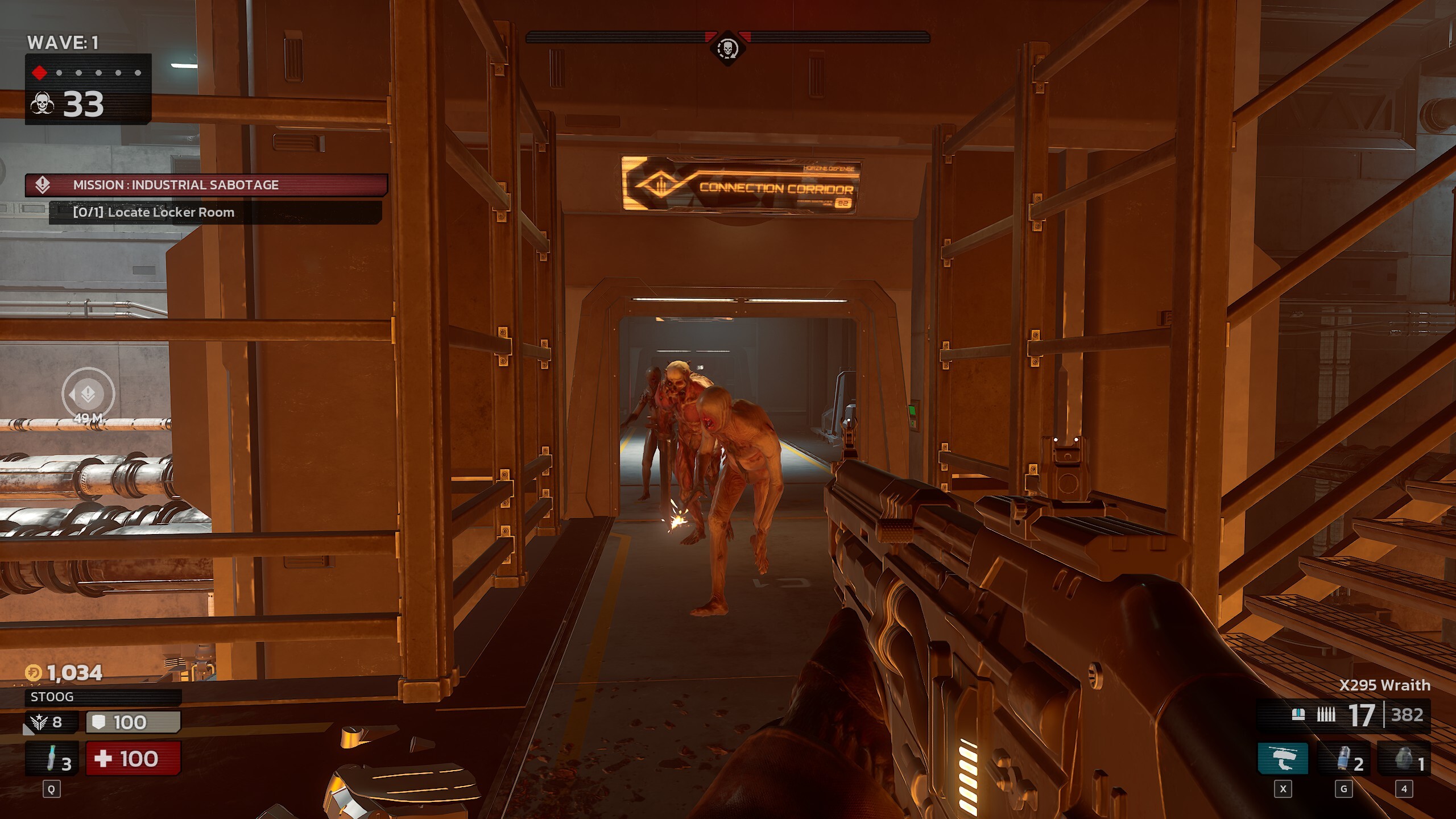
These are all very simple things, but they work so well together that there’s been little need to change much of anything fundamental over the course of the three games.
The elephant in the room, for those of you who know about Killing Floor 3, is that it’s not been received amazingly well by fans of the series. That’s for good reason, too. As my friend pointed out to me recently—shoutout to Big Gee—Killing Floor 3 has had server issues, bugs, and very little new content such as guns added in compared to the previous game. It’s also got weapon balance problems, no text chat, a dire need for a new difficulty mode between Hard and Hell on Earth, and a lack of communication about all this from the developers.
All these things, though, are problems for players who already know and appreciate the core Killing Floor gameplay. I’m not saying these complaints are wrong (they’re absolutely right, for what it’s worth)—but as far as I’m concerned, they’ve not shaken my love of the core gameplay underneath, which has remained largely unchanged.
There have been some changes over the course of the series, sure—sprint, crouch-slide, more classes, more guns, and so on—but the main components that sucked me into the first game are still there, and they’re enough to still have me enjoying playing it, even as someone who rarely tries new games.
Though I guess that’s the point. It doesn’t feel like much of a departure from the first two games, because there’s little fundamental that needs fixing or changing.
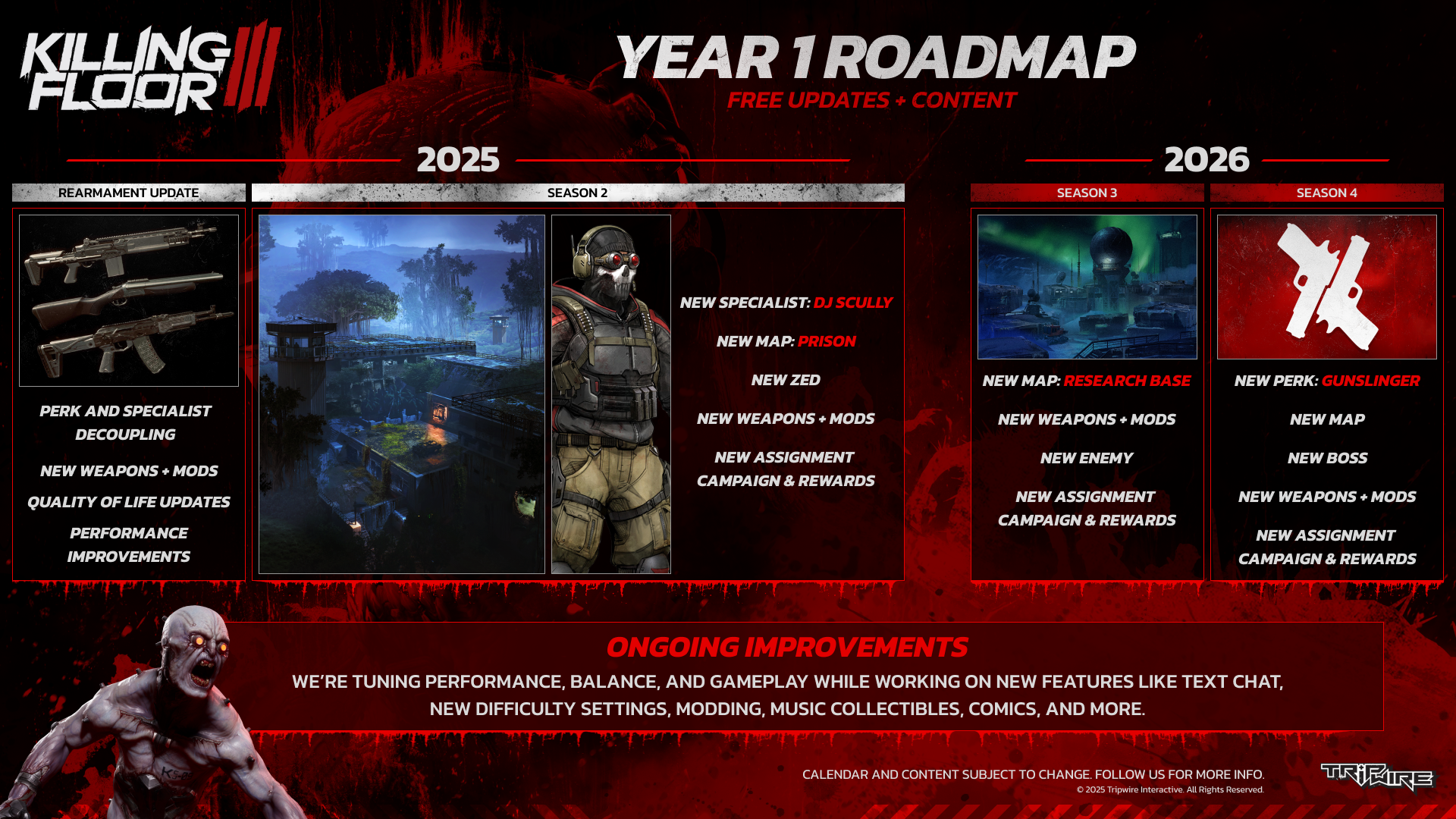
And if the roadmap and recent updates are anything to go by, things will only get better, just as they did over time with the second game post-launch. So, it might not be the most dazzling game to launch in 2025, but it’s the one for me, as the first one was all those years ago. For lovers of horde shooters and skill-based co-op FPS games, I’d peg it as a winner despite its flaws.
About Author