There’s a new Mechabellum season, which means I can get onto my tiny soapbox and beat my “PLAY MECHABELLUM” drum. Mechabellum is a 1v1 (and occasionally 2v2 or even 1v1v1v1) autobattler where you slap down giant mechs and then make them fight each other. It is probably one of the best strategy games I’ve ever played and yet hardly anyone has heard of it.
So, prepare to be convinced.
At a surface level, Mechabellum works because all of the mechs are blowing each other up. Your favourite mech is in here tearing it up. Do you want little Gundam-looking things with sniper rifles? They’re here. Tiny spider-bots? Yup. Flying saucers? You bet.
Drop 10 hours into it, and you’ll get past that and see that what makes Mechabellum genuinely good isn’t just that it’s a well-made strategy game. There are plenty of those. It’s that it understands something a lot of modern competitive games forget: the real pleasure of strategy isn’t execution, it’s interaction.
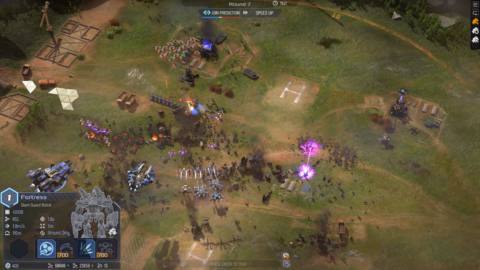
Mechabellum is at its best when it feels like a conversation between two players rather than a test of memorisation. You place a line of Crawlers; your opponent responds with area damage. You pivot into heavier units; they counter with air. Each round is a small negotiation. New seasons tend to restore that conversational feel because the “correct” answers aren’t fully established yet. It’s less about copying a meta and more about thinking on your feet.
That idea—strategy as dialogue—is what gives the game its edge.
A lot of competitive games drift toward optimisation. Over time, they become about learning the right builds, the right timings, the right sequences. You study, you replicate, and if you execute cleanly enough, you win. Mechabellum resists that pull, or at least slows it down. Because while there are strong units and known synergies, nothing exists in isolation. Every decision is contextual, tied directly to what the other player is doing right now.
That means you’re never really playing the game in a vacuum. You’re playing the person across from you.
Even at lower levels, you feel this immediately. There’s a constant back-and-forth: a probe, a response, a feint, a correction. You try something slightly greedy; they punish it. They overcommit to a counter; you sidestep it. The board evolves not just as a system, but as a shared space shaped by both players’ intentions. That’s what keeps it engaging. You’re not solving a puzzle—you’re co-creating one.
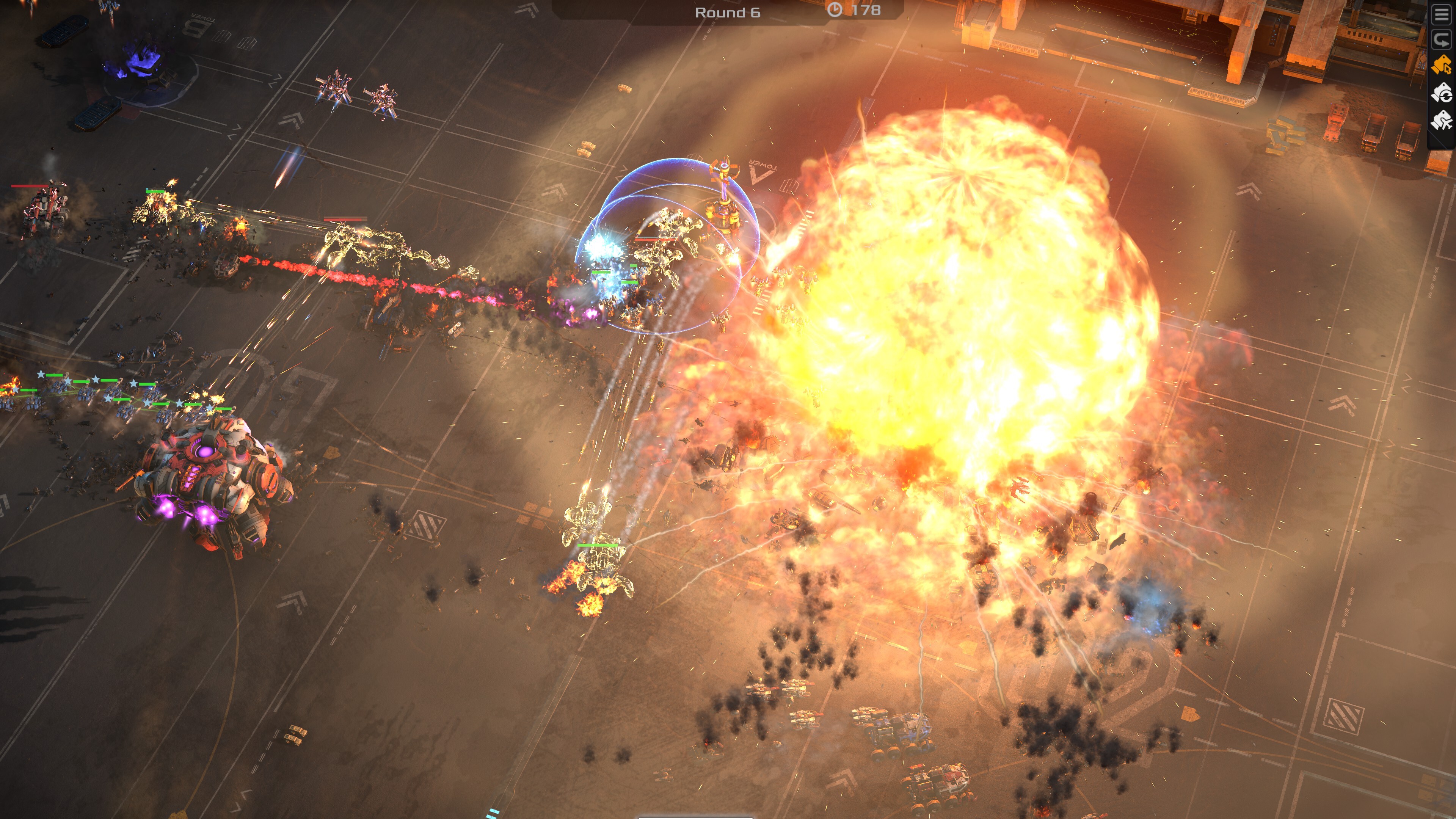
It also makes losing feel different. When you get outplayed in Mechabellum, it’s rarely because someone executed a perfect, pre-learned script. It’s because they read you better. They saw what you were trying to do and answered it more effectively. That kind of loss stings, but it teaches. You can trace the moment things went wrong, the decision that tipped the balance. It invites you back in rather than pushing you away.
Another reason the game works so well is how clearly it communicates cause and effect. You place units, you watch them fight, and the outcome is legible. If something fails, you can usually see why. Maybe your frontline collapsed too quickly. Maybe your anti-air came online too late. Maybe you misread their transition entirely. There’s very little hidden information, which means improvement feels fair. You’re not guessing—you’re learning.
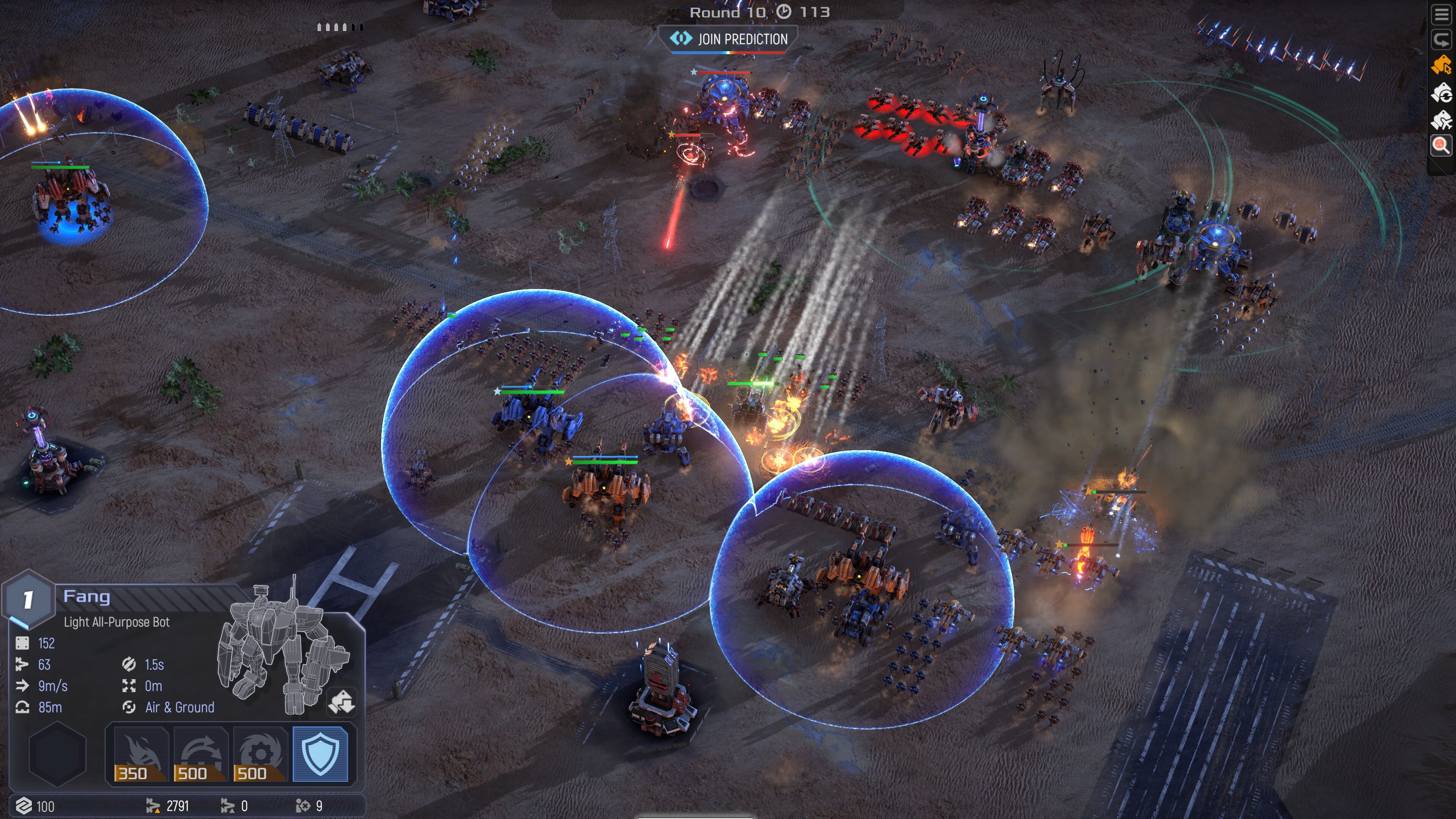
That clarity feeds back into the conversational aspect. Because you understand what just happened, you can respond to it. The next round isn’t a blind reset; it’s a continuation of the same exchange. You adjust, they adjust, and the game becomes a chain of decisions that builds toward a conclusion. It has rhythm in a way a lot of strategy games don’t. This new update has shaken up the low cost meta, adding a little robot crab that the Reddit is certain is horribly overpowered, but it’s just that people haven’t worked out how to play around them yet.
Crucially, Mechabellum also respects your time. Matches are tight, self-contained, and meaningful. You don’t need to sink hours into a single session to feel like you’ve had a proper game. I often play a round while I eat lunch, another mid-afternoon when my energy starts to flag and I need something to get my brain whirring to finish off the afternoon’s work. That makes it easier to engage with the deeper layers because the barrier to entry stays low. You can experiment, fail, and try again without friction.
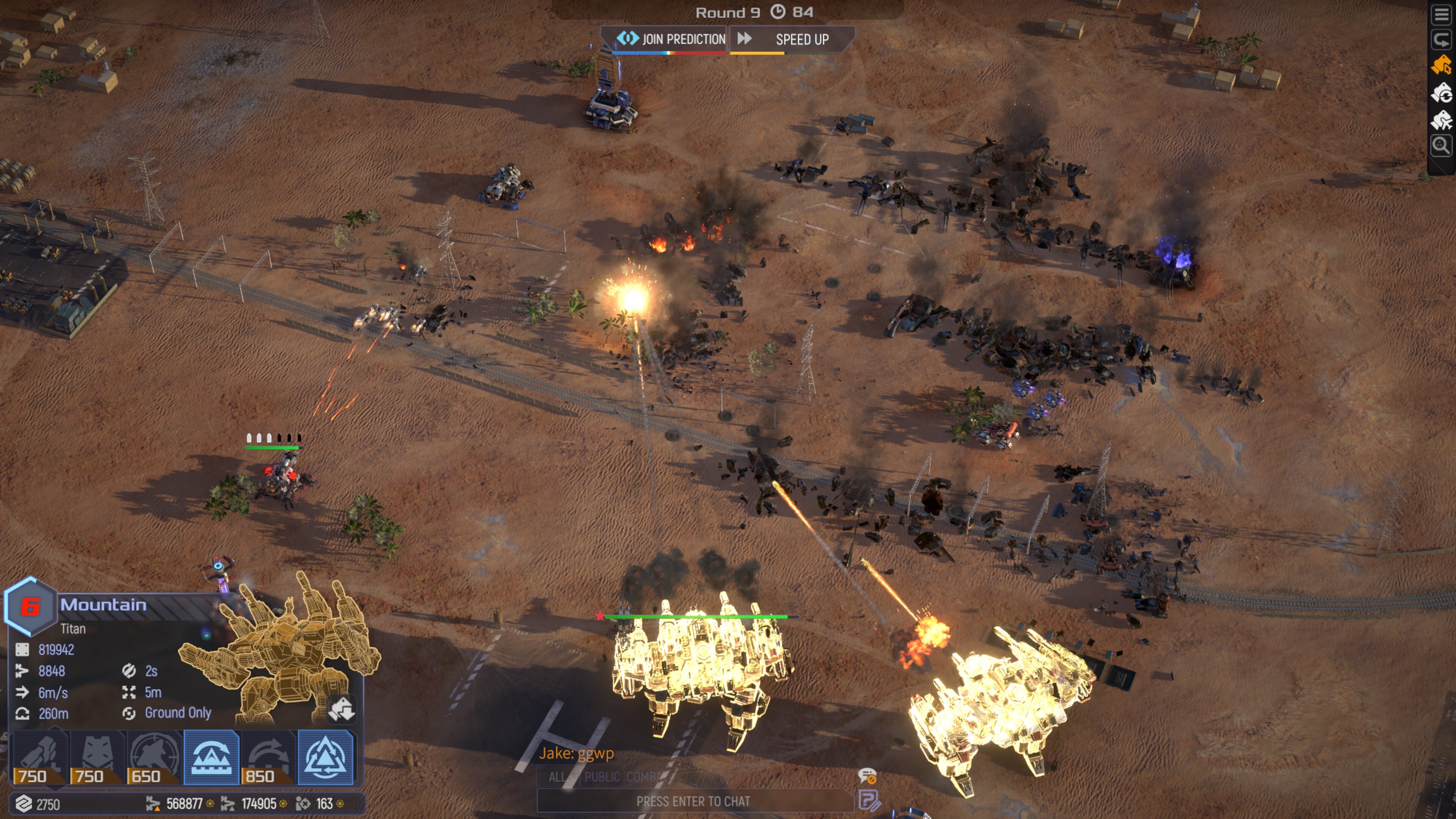
And then you come around, again, to the spectacle, which quietly reinforces everything else. The units are readable but impactful, the battles chaotic but understandable. When your plan works, you see it unfold in real time—your counters landing, your positioning holding, your opponent’s line breaking exactly where you expected it to. It’s not just satisfying intellectually; it’s satisfying visually but as you start to learn the game it’s not just about mechs smashing each other, but about you watching the carnage to see what your next retort should be.
Put all of that together, and you get a game that feels alive. Not because it’s constantly changing for the sake of it, but because every match is shaped by two people actively responding to each other. That’s a harder thing to design than it looks, and Mechabellum nails it.
It’s not about memorising the right answer. It’s about asking better questions, round after round, until one of you runs out of replies.
2026 games: All the upcoming games
Best PC games: Our all-time favorites
Free PC games: Freebie fest
Best FPS games: Finest gunplay
Best RPGs: Grand adventures
Best co-op games: Better together
About Author