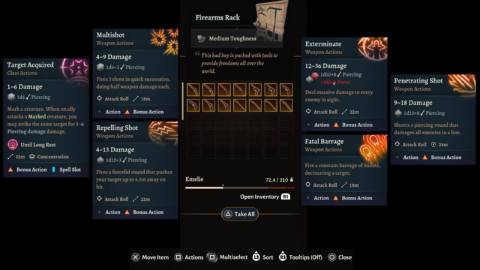
When Firaxis’s XCOM remake came out a constant complaint in the comments was that its random number generator was clearly cheating against players. Someone would miss a 95% chance, or God forbid a couple of them, and confidently declare that Jake Solomon was personally tweaking the probability to fuck with them.Of course, that wasn’t the case. As we later learned, the XCOM games do massage the math, but they do it in favor of the player—especially on lower difficulties. True randomness feels unfair, so XCOM cheated on our behalf. Which worked for most people, if not the ones in the comments section. I guess there’s always a chance someone will think they’re being hard done by even when you push the odds in their favor. It’s probably got like a 95% chance of working.Adhoc, the developers of Dispatch, followed the example set by Firaxis. Their superhero comedy’s dispatching minigame, in which you assign heroes to jobs that best suit their abilities, gives a percentage chance of success based on how well you’ve selected your squad—matching their abilities to the challenges they’ll face. Adhoc’s directors, Nick Herman and Dennis Lenart, discussed this at a GDC talk.”We knew that there were some tools to mitigate these frustrating experiences, like missing a 99-percenter,” Herman said. “As any hardcore XCOM fan knows, one of the tricks Firaxis implemented was to secretly boost the numbers behind the scenes so that it felt fair, even if it was unearned. Those guys are pretty smart, so we thought we’d do the same.”Adhoc tested different variants before finalizing the version that shipped. “This is going to make so many people sad,” Herman said. “We landed on anything that had over a 76% success chance would automatically succeed. Sorry!”That was only the case until you had a winning streak, however. “After the player benefited three times from this boost,” Herman went on, “we removed this auto win and gave them true odds again. As soon as they failed above 76% we enabled the three auto wins again to guarantee they didn’t have a string of bad luck and complained that the game wasn’t fair.”Lenart picked up the story from there. “On the other side of that, any percentage between one and 14% was always bumped up to a flat 15% chance at success,” he explained. “With these systems in place, people told us that the game felt fair, if a bit easy at times.”Which is why they made one last change to the final episode of Dispatch—when the shit hits the fan and everything that can possibly go wrong does go wrong, all at once. “When the city is on fire and your dispatching skills are being put to the test, we actually disabled all of these invisible helpers,” Lenart said. “For the first time in the entire season the training wheels are off, the result of which is that the game feels a lot harder at base level, which is exactly what we wanted from our finale.”It’s a fascinating insight into how much work goes into making randomness feel fair. I used to think that people understood probability, but playing any tabletop game that’s particularly dicey will make you realize that actually a huge chunk of the population doesn’t understand it at all, operating largely on superstition. I don’t know how big a chunk of the population it is, but it’s probably like 95%.

Best laptop games: Low-spec life
Best Steam Deck games: Handheld must-haves
Best browser games: No install needed
Best indie games: Independent excellence
Best co-op games: Better together
About Author