I’m rather excited for Starfinder: Afterlight, mostly because it’s the closest—beyond charming indie projects like Dawnsbury Days—I’m going to get to a fully-realised Pathfinder 2e videogame in the near future. It uses Starfinder 2e, but the base rules chassis is very much the same.
I was also rather taken by its visual presentation. It’s clear fledgling studio Epictellers, for whom Afterlight is its first game, is shooting for the stars—especially by snagging prodigious voice talent such as Neil Newbon (Astarion, Baldur’s Gate 3) and Roger Clark (Arthur Morgan, Red Dead Redemption 2).
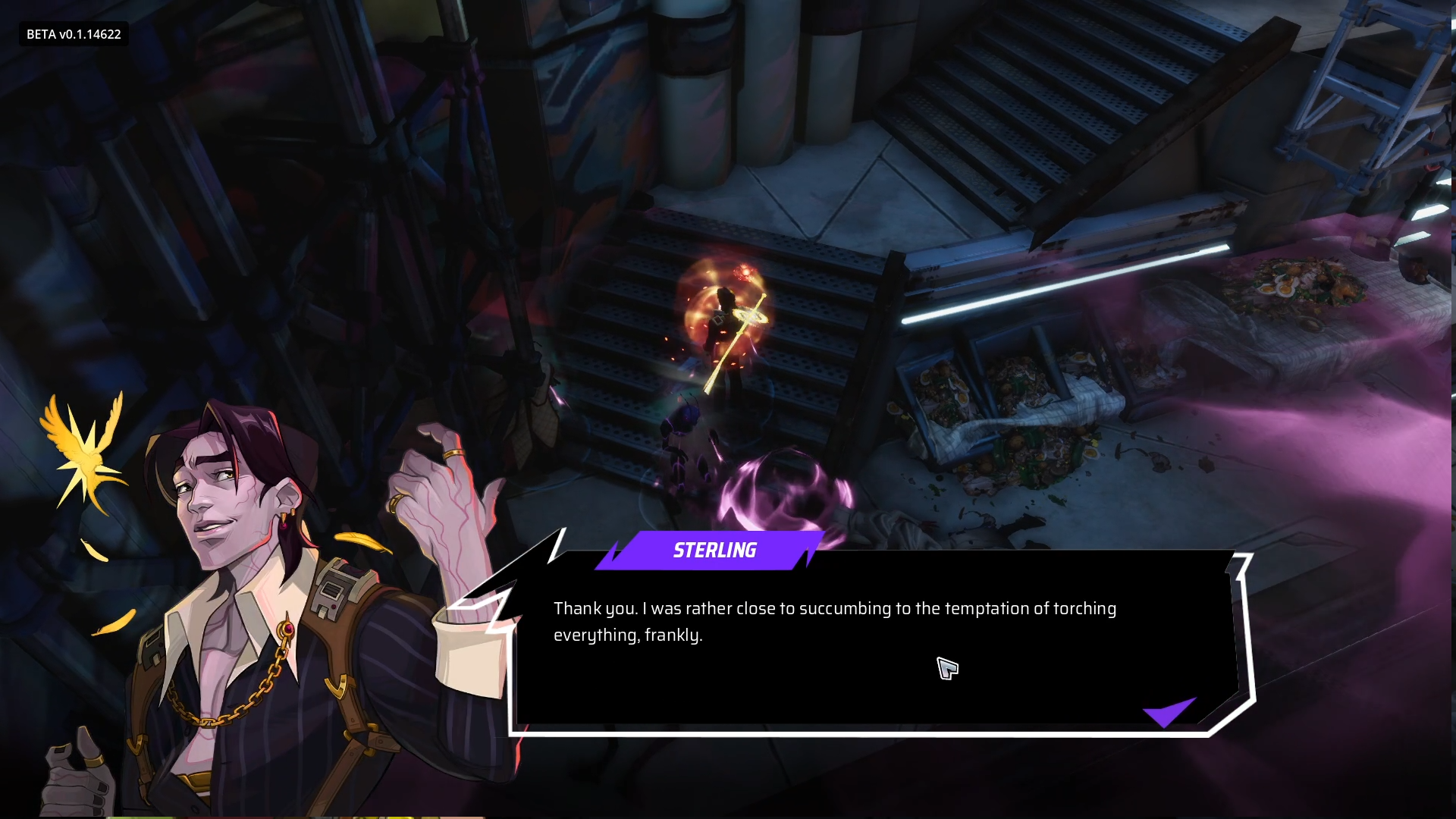
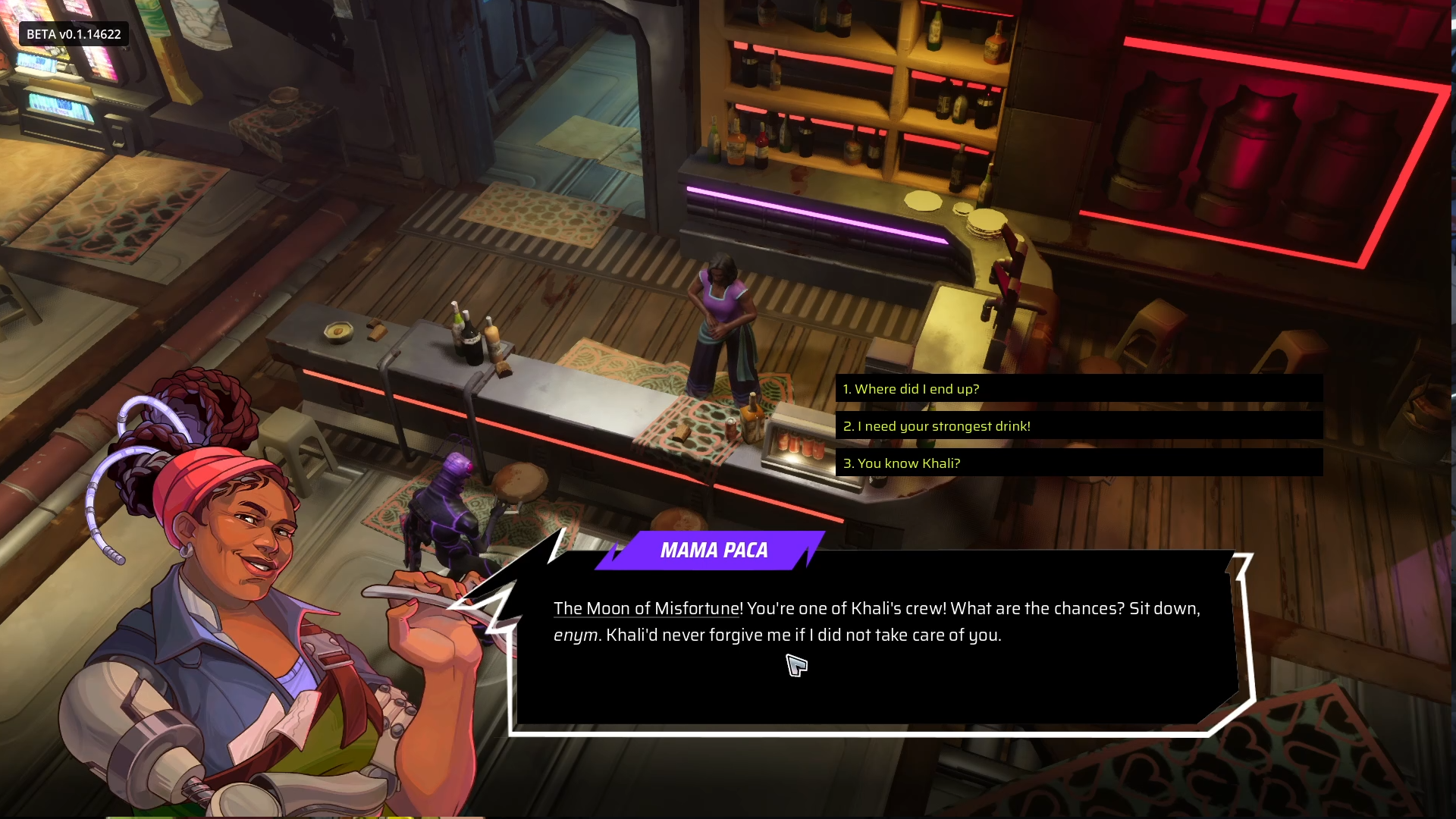
It’s also clear that it has a long way to go, but first, the good: Afterlight is immediately charming. While likely still requiring some polish, the hand-drawn cutscenes feel like the pages of a Paizo rulebook come to life, and are a nice alternative to the kind of budget Larian swung around with its Wizards of the Coast money.
In fact, Afterlight is already a very nice-looking game. Characters all have lively artwork, and the environment designs have a cel-shaded, Wildstar-esque personality to them that’s brimming with equal parts enthusiasm and talent from Epicteller’s artists. As for everything else? We’re in ‘wait and see’ territory.
I want to emphasise here that I’ve played an hour of a closed beta of an early access game—an unfinished product of an unfinished product. These are less criticisms and more signposts towards what Epictellers needs to fix or address which, hey, there’s every chance it will do that.
The Pathfinder/Starfinder 2e sicko in me was very pleased by the combat mechanics working as well as they do in their TTRPG counterparts. The combination of having three actions—and a stacking penalty for repeat attacks in the same turn—means movement and positioning is far more important than something like Baldur’s Gate 3.
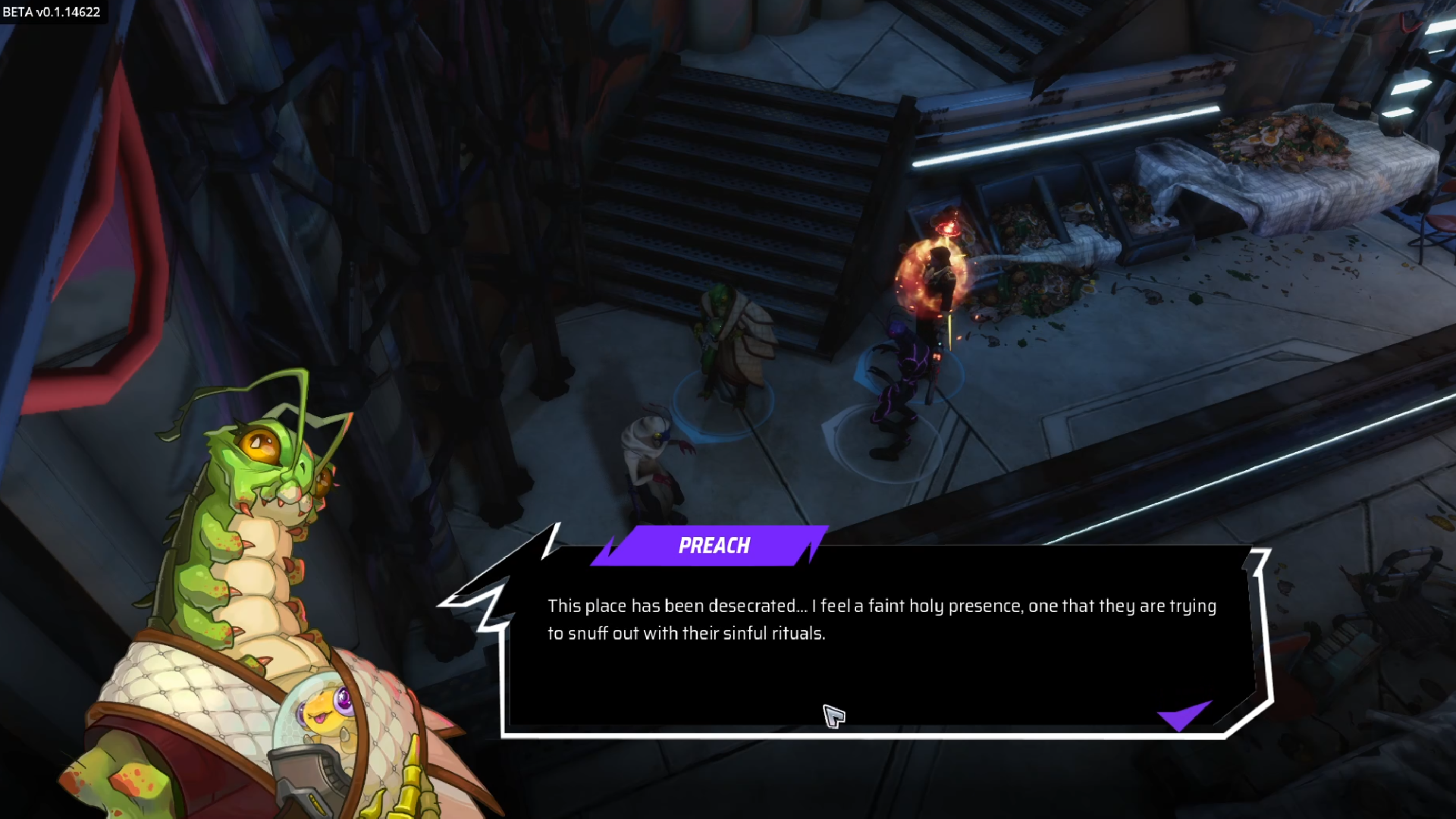
Just whapping someone three times isn’t advisable. Instead, you’re encouraged to move tactically, flank, or make use of other actions—Preach, the game’s priest, winds up being stronger than his other two companions by virtue of the fact he’s got a laser pistol AND a spell that forces a save, unaffected by the dreaded multiple attack penalty.

But these are all things I like about the tabletop system. In practice, Afterlight is, right now—again, the game is deeply unfinished—missing a lot of the actions that make the system interesting. Actions like demoralize, the athletics skills (grappling and disarming folks), or feinting/creating a diversion, are missing. And that’s a shame, because they’re what sets low-level combat in these systems apart from their contemporaries.
These actions are the real juice behind the system that Afterlight is using, giving people an alternative to just hail-marying two attacks that are deeply unlikely to hit. Which is probably for the best! Because right now Afterlight is explaining basically nothing.
This is a game in deep need of a solid tutorial. While I was merrily trucking along, familiar with the tabletop system it was built on and able to figure stuff out, I was wildly aware that anyone who isn’t and playing this closed beta is going to be extremely confused.
Take, for instance, flanking—which is present in Afterlight right now. Flanking enemies, that is, positioning them between two threatening allies, gives your opponents the “Off-Guard” condition.
How well it conveys all this info will be a key factor in whether it gets past the attention of already-invested Paizo likers like myself.”
This is a huge part of melee combat in both Starfinder and Pathfinder, since a -2 to your AC (the number you need to hit to whack somebody) more-or-less shakes out to an additional 10% chance to both hit AND crit somebody, since scoring 10 above the AC produces a critical hit.
This is not something Afterlight explains, I just found it out by flicking through tooltips. Similarly, as someone unfamiliar with Starfinder, I wasn’t able to inspect my allies’ abilities or feats—I don’t doubt they’re there and working as intended, and that the lack of a better UI to flit through them is simply a consequence of closed beta limitations.
I don’t doubt the full release will have tooltips a-plenty, but how well it conveys all this info will be a key factor in whether it gets past the attention of already-invested Paizo likers like myself.
All in all, I’m decently hopeful with my experience of Afterlight, but unable to make any kind of solid recommendation until I see more of a fleshed-out build—the art direction, voice acting, charming story, and lively world are all looking very promising.
But as far as the RPG elements go, there’s a long list of absent tutorials, missing actions, and character customisation that needs to be there before I can tell you with certainty that it’s gonna be good. I’ll be rooting for it, though—if Epictellers can polish this thing up before it’s time for the public demo this summer.

2026 games: All the upcoming games
Best PC games: Our all-time favorites
Free PC games: Freebie fest
Best FPS games: Finest gunplay
Best RPGs: Grand adventures
Best co-op games: Better together
About Author