
It looks like Amazon US is struggling to sell CPUs, as sales this February fall far under this same time last year. With 25,700 unit sales last month, that’s a decline of 23,400 units.
This is according to market analyst and creator TechEpiphany, who rounds up sales every month (via 3DCenter). According to their figures, AMD account for 23,000 units sold in February, and Intel account for 2,700 units sold. The two most popular CPUs, around 4,000 sales each, are the AMD Ryzen 5 5500 and the AMD Ryzen 7 9800X3D. In February 2025, the most popular CPU by far was the Ryzen 7 9800X3D with over 6,000 sales at an average of $510.
February isn’t the only recent month that saw a decline from the previous year. Amazon sold an estimated 26,100 units in January, 2026, which is a dip of almost 40,000 from a year ago It sold around 44,000 in December, 2025, almost 40,000 lower than December, 2024. Amazon is said to have sold 47% less inventory between December to February than a year prior.
There are multiple factors that could explain this decline. For one, Zen 5 X3D currently takes 21% of the market share (with Zen 5 grabbing 13.1%). The rather brilliant AMD Ryzen 7 9800X3D launched in the latter half of 2024, with the Ryzen 9 9900X3D and Ryzen 9 9950X3D launching in March last year. Extra sales from the excitement of new chips could be a factor in previous sales, but not so much today, as Zen 6 is just around the corner.
Zen 3 was the most popular chip architecture in February (at 37.1% market share), suggesting more users are creating budget builds. But, with reports that a CPU shortage could be on the way, one might assume panic buying would bring up sales stats somewhat.
Month | Estimated sales |
February, 2026 | 25,700 |
January, 2026 | 26,100 |
December, 2025 | 44,000 |
November, 2025 | 72,650 |
October, 2025 | 63,000 |
July, 2025 | 77,600 |
June, 2025 | 118,929 |
April, 2025 | 62,700 |
March, 2025 | 39,100 |
February, 2025 | 59,100 |
January, 2025 | 63,840 |
December, 2024 | 82,400 |
However, there’s one AI-based elephant in the room.
The memory crisis has sent the price of memory skyrocketing, but it’s also caused stock insecurity around storage and even GPUs. If I were thinking about upgrading or building a new PC right now, I’d likely hang on as long as I could, in the hopes that I could get a much bigger rig for much cheaper in the future.
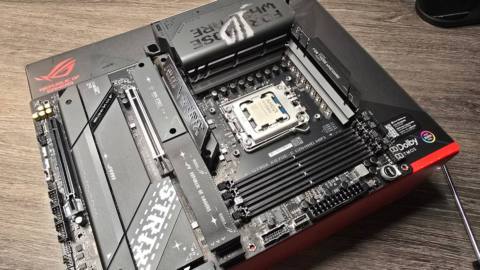
Adding to this, motherboard sales are also down 50%, once again suggesting the memory crisis is having a major knock-on effect for PC builders and home upgrades. A new CPU can only be so beneficial to a rig if builders can’t afford the memory or GPU upgrade to pair with it.
Micron recently revealed that demand for memory is “significantly in excess of our available supply for the foreseeable future“, and many of its plans to address this won’t come to fruition until 2027 or even 2028. SK Hynix has suggested the wafer shortage will last until 2030, too, once again suggesting the end of the memory crisis isn’t in sight yet.
I doubt a shiny new launch from the likes of AMD or Intel could convince people to make people upgrade at the volume they did last year, especially when that rig could need a shiny new SSD or a bit of memory alongside it. Intel has launched its Arrow Lake “Plus” desktop chips, and that may help its market share relative to AMD, but I doubt it will be moving that dial too much.
About Author