Weird Weekend is our regular Saturday column where we celebrate PC gaming oddities: peculiar games, strange bits of trivia, forgotten history. Pop back every weekend to find out what Jeremy, Josh and Rick have become obsessed with this time, whether it’s the canon height of Thief’s Garrett or that time someone in the Vatican pirated Football Manager.
Stalker: Shadow of Chernobyl is to Ukraine’s games industry what Doom is to first-person shooters, a cultural star so dazzlingly bright that it can easily blind us to what came before. Yet just as Doom was preceded by Wolfenstein 3D and Catacomb 3D, Ukraine’s game development history stretches much farther back than Shadow of Chernobyl.
GSC Game World had itself released several successful strategy games before it turned its eyes to the nation’s infamous nuclear power plant, while Sherlock Holmes specialist Frogwares was making detective games involving Arthur Conan Doyle’s sleuth as far back as 2002. And who could forget the legendarily janky open-world FPS Boiling Point: Road to Hell, a game that itself is surely due for a Weird Weekend.
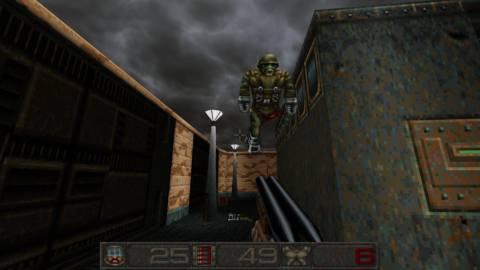
Yet even these games merely represent the twilight zone of Ukraine’s videogame ocean. Delving into the midnight zone brings us to the library of Action Forms. Founded in the same year as GSC (1995), Action Forms’ debut title was Chasm: The Rift, an early 3D FPS that was, in some ways, way ahead of its time.
If you looked at a screenshot of Chasm, you might find this hard to believe. At a glance, Chasm looks incredibly similar to Quake. The blocky 3D characters, the single-pixel blood spatters. Even its early levels boast a grungy industrial aesthetic clearly borrowed from id Software.
In fact, for the longest time I believed Chasm was built with the Quake engine, so closely does it replicate its look and feel. But this isn’t the case. Chasm’s engine is entirely homebrew tech, programmed by Action Forms’ founders Yaroslav Kravchenko and Oleg Slyusar, who were students at Kyiv Polytechnic Institute around the time Doom exploded onto the PC gaming scene.
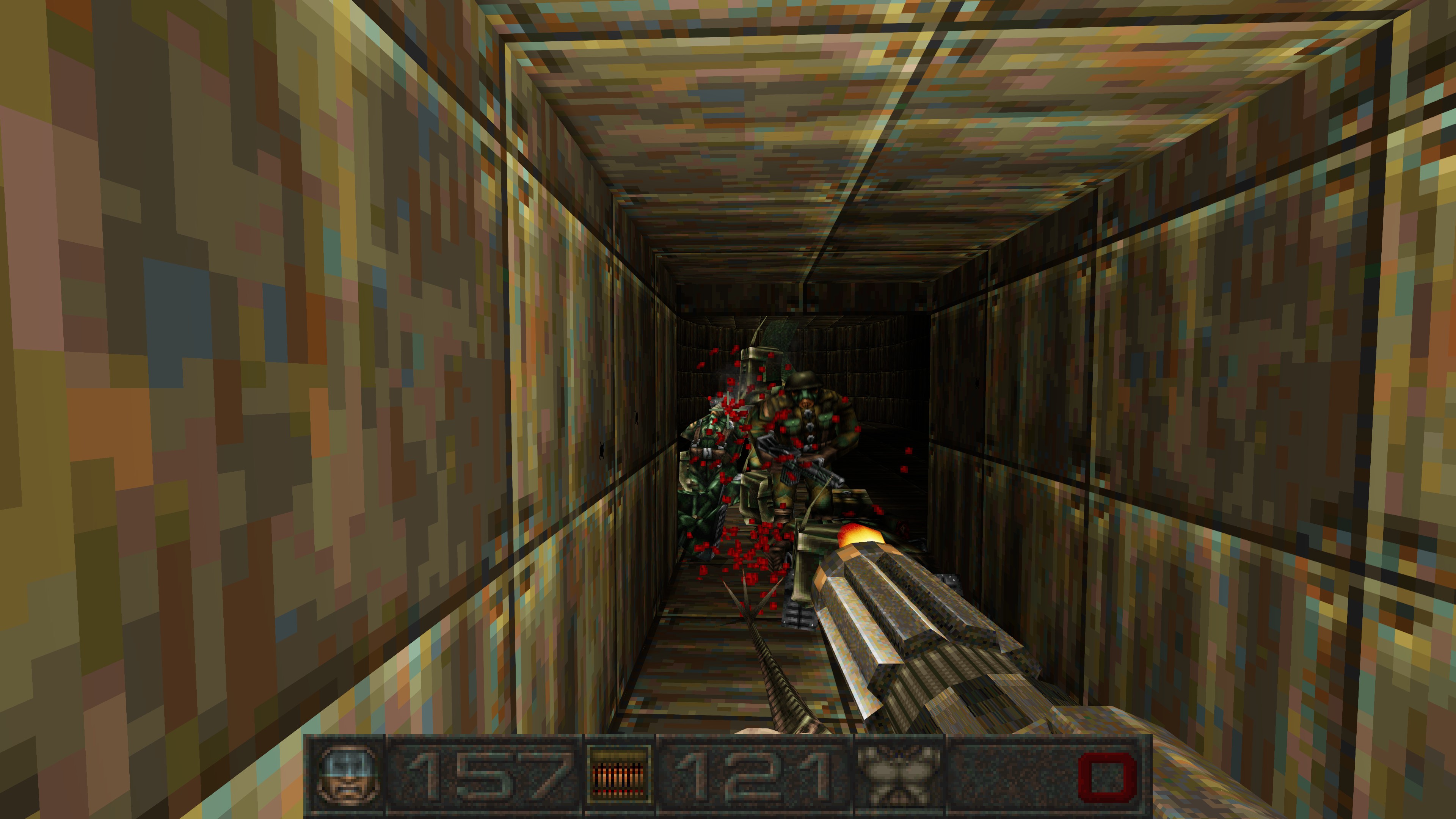
While it looks like Quake, the tech is actually quite different, and much weirder, blending 2.5D geometry with 3D polygonal objects. If you’re thinking “Isn’t that basically 3D anyway?” you would think so, but no! A true 3D shooter features both 3D characters and proper vertical traversal, letting you move up and down and side-to-side in a level without resorting to trickery.
Chasm does not do this. Its levels are almost entirely horizontal. The closest you ever get to travelling up or down is jumping onto a crate. This makes Chasm: The Rift an especially odd choice for a game title, cramming in not one but two nouns referring to a yawning fissure in a game that isn’t capable of rendering one.
Aside from rendering the name redundant, the limitations of Chasm’s tech results in a very different feel to Quake beneath the fingers. Quake’s combination of full 3D levels and native mouse support heralded the arrival of the twitch shooter, with its slippery smooth movement and rocket-powered acrobatics literally unlocking a whole new dimension of traversal.
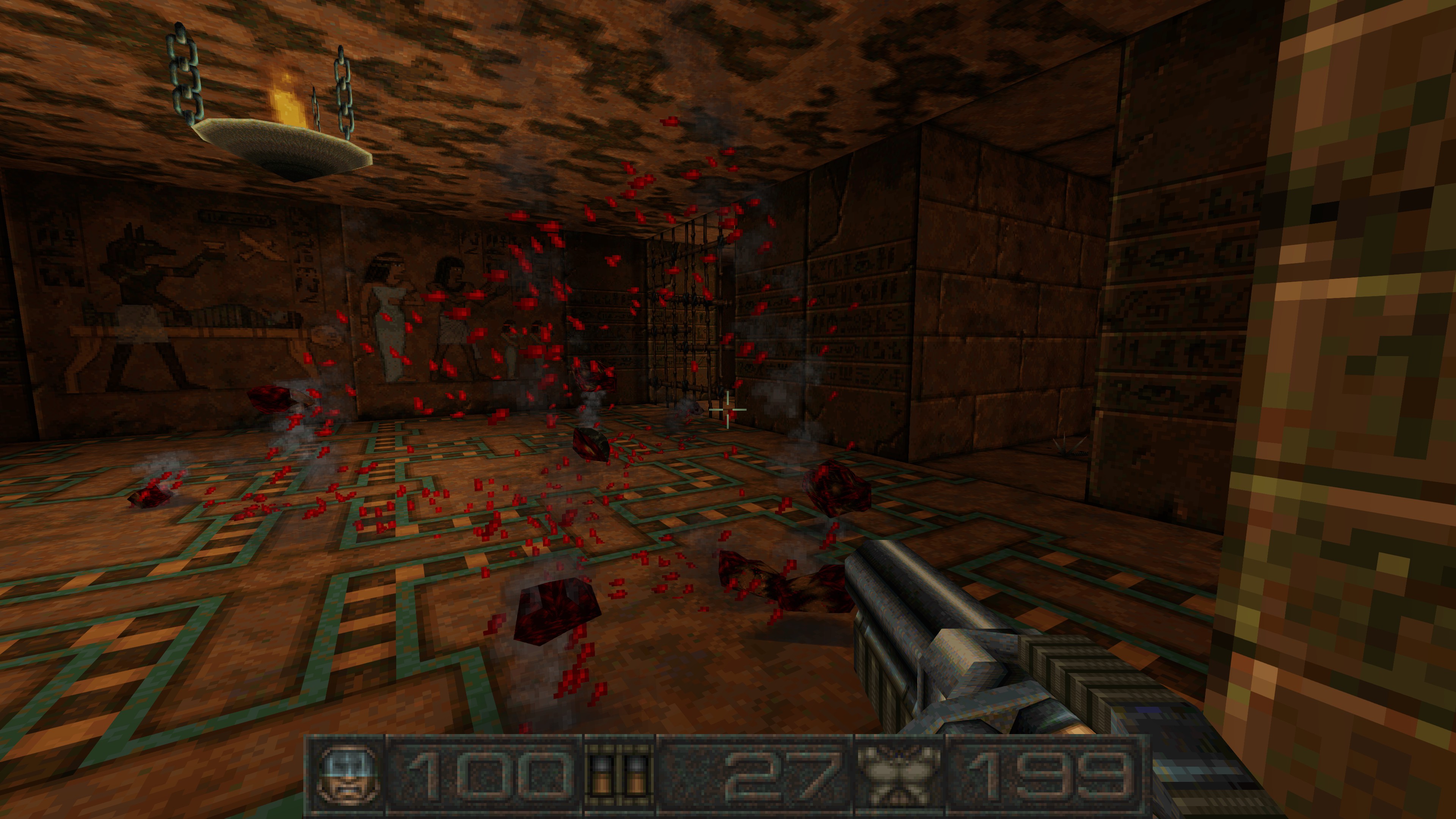
Chasm, meanwhile, feels much more like a game you would play just with a keyboard, far more methodical in its pacing and progression design. It’s a game of trudging determinedly through trap-filled warrens of corridors, peeking around corners to take potshots at hit-scan enemies and rapidly backing away from burly monsters.
To be up front, I don’t think much of Chasm as a shooter. Compared to both Quake and Doom it is plodding and clumsy. Its weapons are a scatterbrained mixture of FPS staples like shotguns and rocket launchers that sit awkwardly alongside throwable razor blades and semi-magical crossbows, none of which really change the dynamic of combat. This is partly because its rooms and corridors are too cramped to let the shooting properly breathe, exacerbated by laissez-faire collision detection that means corners and obstacles sprawl way beyond their visible geometric limits.
That said, there are numerous things that I admire about Chasm. For starters, its storytelling is surprisingly involved for a shooter of this era. Each mission is preceded by a fully voiced briefing that outlines your objective and how it fits in with the broader narrative.
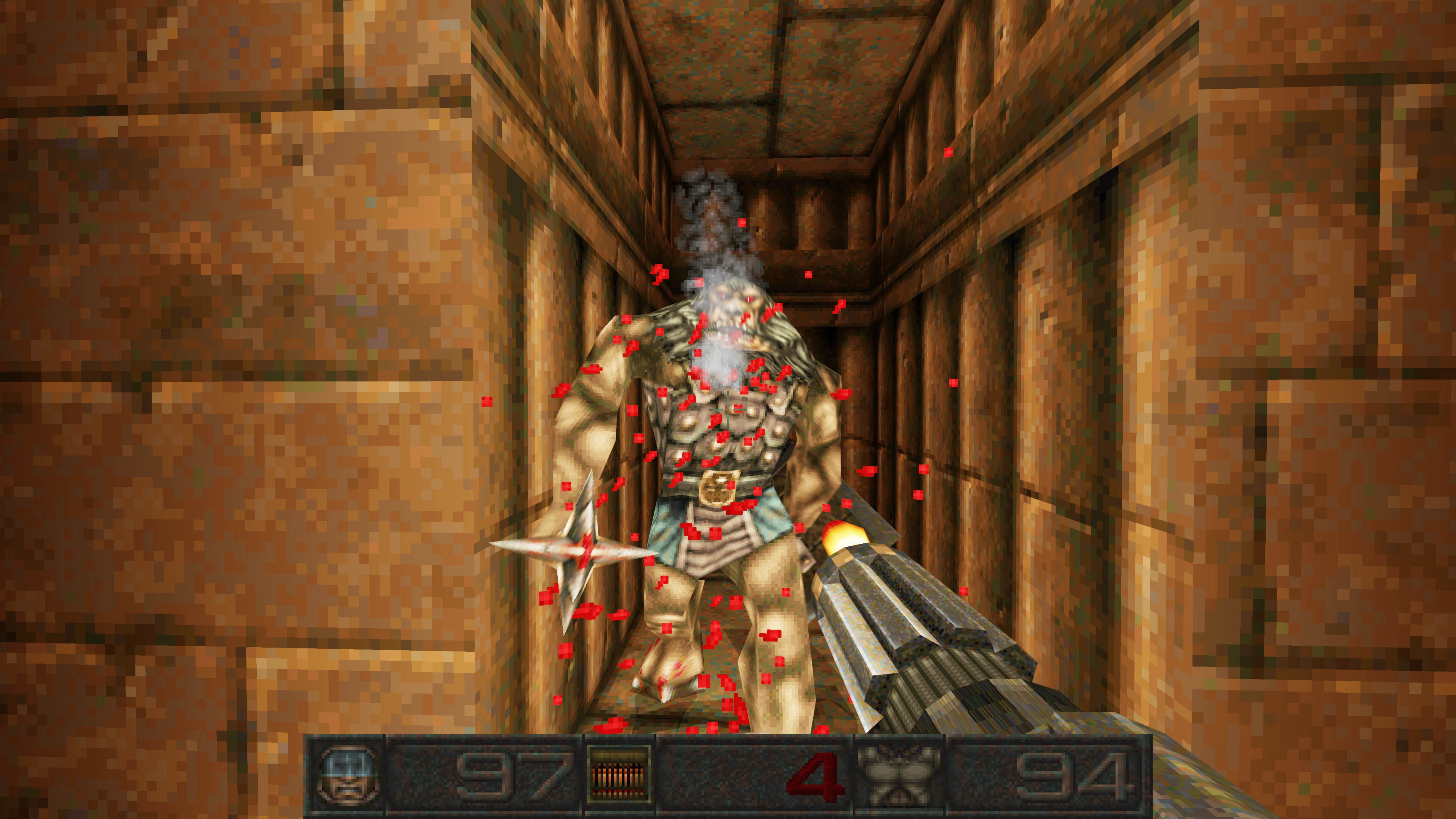
This, I should stress, doesn’t mean that Chasm’s story is good. It isn’t. But it at least acknowledges that the concept of a story could be significant in a shooter, which for 1997 represents significant progress. It also helps weave together Chasm’s wide variety of settings. While the opening levels take place in a grungy, nondescript military base, later scenarios see you delve into Egyptian tombs, medieval castles, and even alien worlds.
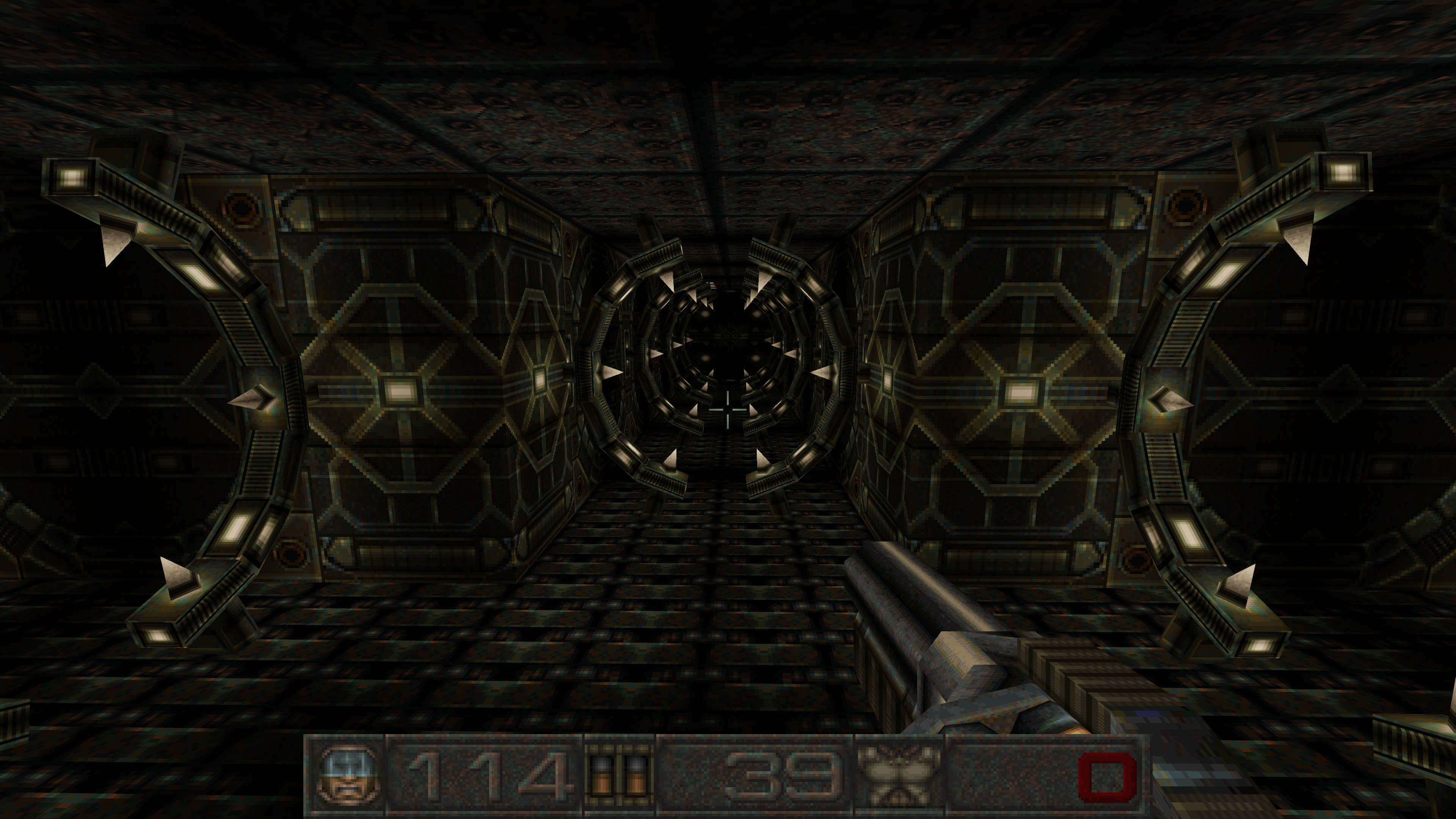
At a time when 3D games tended to keep their themes consistent to save on asset production, Chasm’s globetrotting adventure is quite impressive. So too is the intricacy of its deadly mazes. Rounding almost every corner triggers a crush trap or opens a false wall that vomits enemies. The dungeon crawler heritage of first-person shooters is more evident here than in perhaps any other FPS from this era. Indeed, treating Chasm more like a puzzle game than an FPS is a good way to both enjoy it and stay alive.
Finally, there’s the dismemberment. As with most shooters, blasting your foe will eventually cause them to fall to the ground or burst in a meaty shower of gibs. Sometimes, though, they’ll lose a limb while still remaining active, wandering around helplessly while literally disarmed. Most enemies can also be decapitated, while some flying enemies can lose their legs during combat.
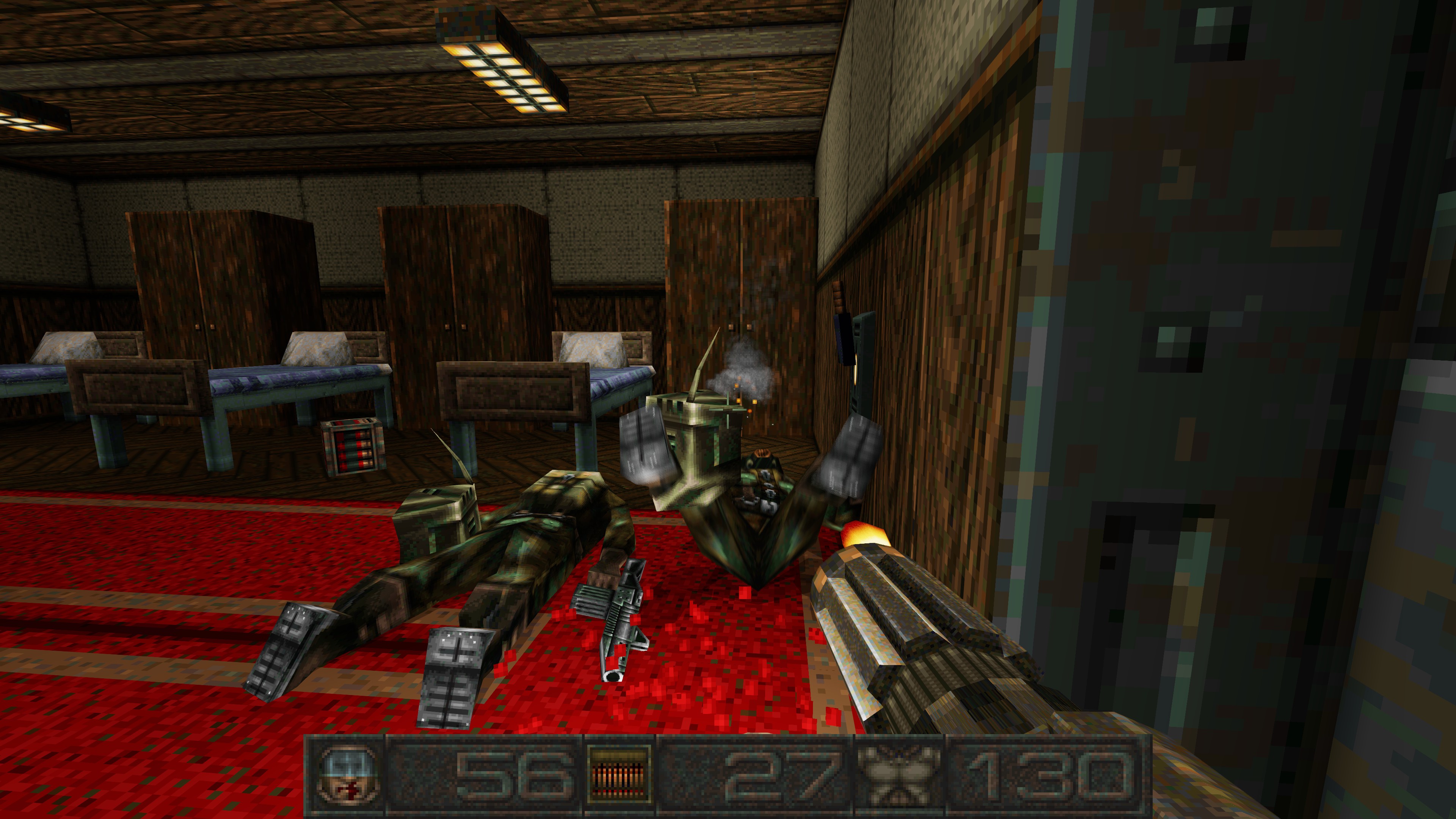
I’m not pointing this out because I’m a sicko (although I am, undeniably, a sicko). I’m raising it because the mere fact Chasm features dismemberment is kinda remarkable. Model deformation like that is tricky to pull off, especially at this primordial stage of 3D graphics rendering. As such, dismemberment isn’t something I associate with shooters until the Soldier of Fortune era.
As it turns out, Chasm isn’t quite the first 3D FPS to feature selective enemy dismemberment. Jedi Knight: Dark Forces 2 released just a few weeks before Chasm, allowing players to lop off stormtrooper’s arms with a lightsaber. Doing this would always kill the targeted space fascist, however. As far as I can tell, Chasm is the first FPS to let players selectively dismember enemies in a way that is tactically beneficial.
Chasm: The Rift is easy enough to pick up and play today, thanks to SNEG’s 2022 rerelease that dusts off Action Forms’ shooter off for modern machines. As for whether I’d recommend playing Chasm today, that’s a tougher question to answer. Certainly, Chasm is a fascinating amalgam of the shooter’s past, present and future as things stood in the latter half of the ’90s. I enjoyed playing it as an academic exercise, if blasting the arms off club-wielding homunculi can in any way be considered academic.
At the same time, there are so many FPS games around today that are more deserving of your attention, from shiny new shooters to indie fragfests, and even ambitious mod projects for the classics of yore. If you didn’t play Chasm at the time, I think you need that grounding in FPS design to appreciate exactly what makes it interesting. Then again, if you reside at the tweedier end of FPS fandom, then you might find its lethal labyrinths enlightening to unpick.

2026 games: All the upcoming games
Best PC games: Our all-time favorites
Free PC games: Freebie fest
Best FPS games: Finest gunplay
Best RPGs: Grand adventures
Best co-op games: Better together
About Author