Pasokon Retro is our regular look back at the early years of Japanese PC gaming, encompassing everything from specialist ’80s computers to the happy days of Windows XP.
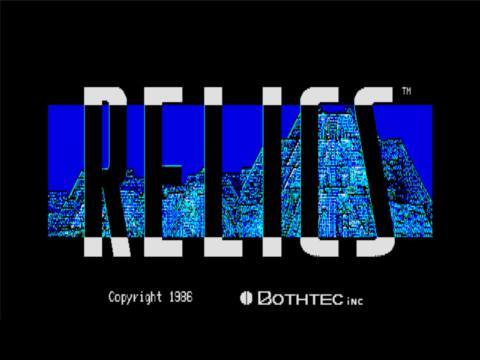
The contrasting blue/yellow tones often make it look like an optician’s colour blindness test, the frame rate is what I would generously describe as “present”, and the hardware it was designed for is now old enough to have a mid-life crisis. In spite of these admittedly tough-to-love qualities, the unexpected appearance of the thoroughly ancient action-adventure Relics on Steam today is definitely one of my PC gaming highlights of the year.
A lot of games are very good at showing me a strange land, but few are as capable of convincing me I’m actually standing in one as this one does. The slim manual spends more time talking about how mysterious everything is than it does saying anything useful. There’s the briefest bit of vague introductory fluff about the cosmic struggle between two forces, and after a quick skim I start the game and appear as a humanoid shadow floating within… I honestly have no idea.
A crumbling wall to the left reveals the shining sunset behind as an effective approximation of waves crashing against rocks plays over my speakers. There’s a hole in the floor. Everything I can see is all I know.
With all guidance deliberately withheld, I have no choice but to stumble about and see what happens, “spirit riding” from body to body as I go. I am a skeletal rabbit inspired by H.R. Giger. I am an armoured soldier with a gun. I am a sorcerer clad in gold. I am perpetually bewildered but never annoyed, because I can see there’s a consistent if alien sort of logic at work here, a bigger story I’m glimpsing a tiny part of, told in fragmented notes guarded by potentially deadly statues and by powerful beings who disappear without warning or explanation.
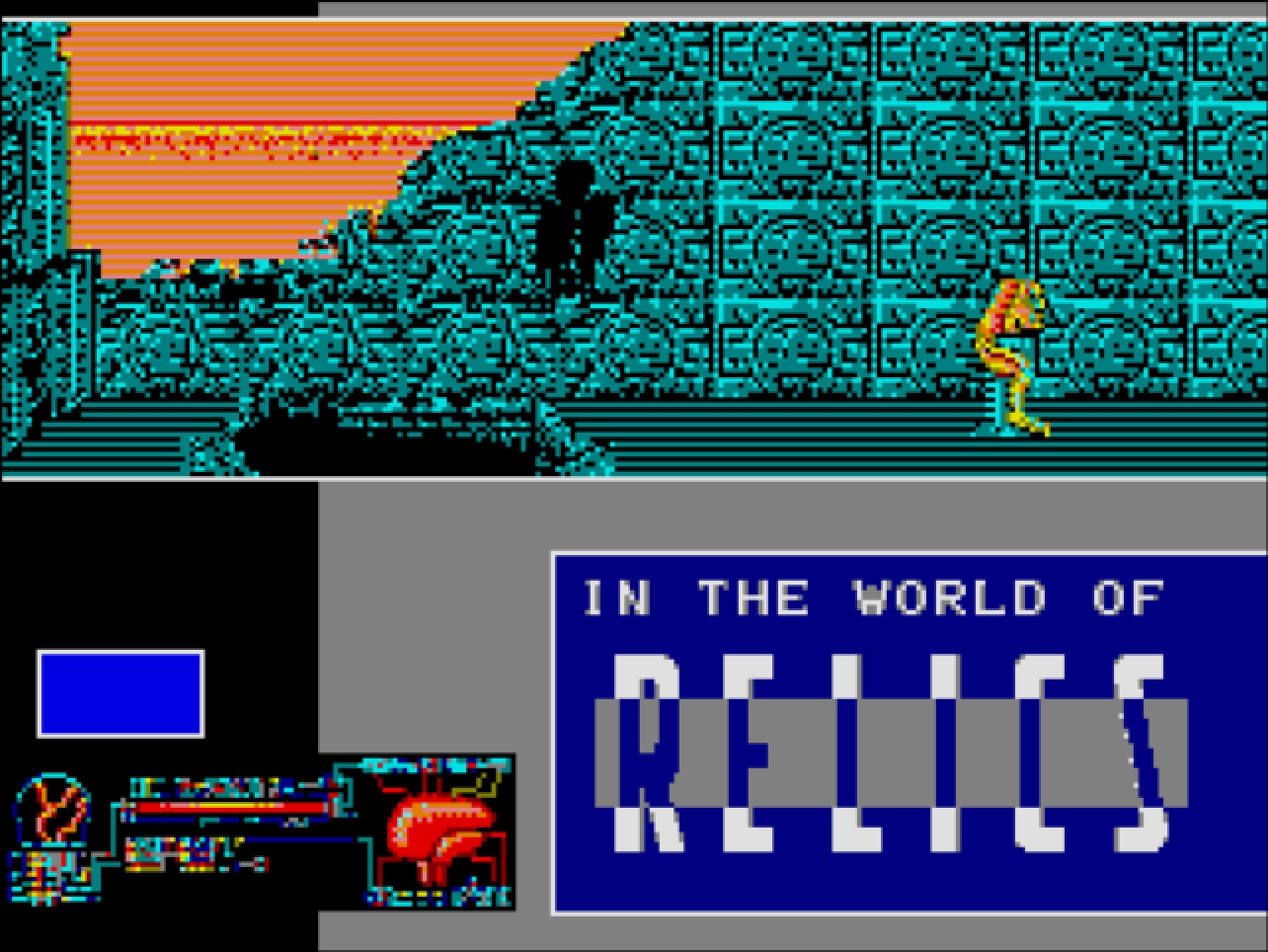
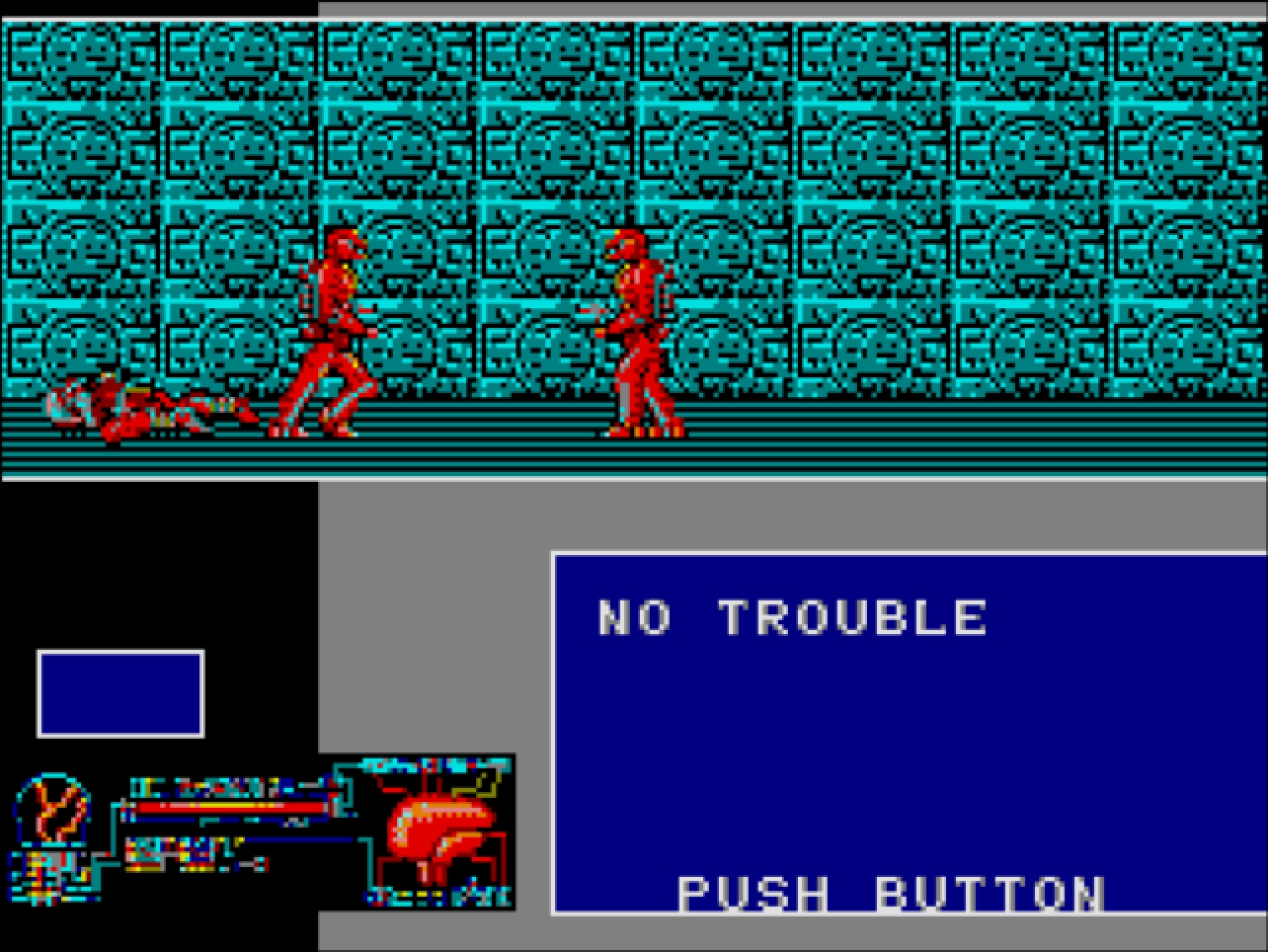
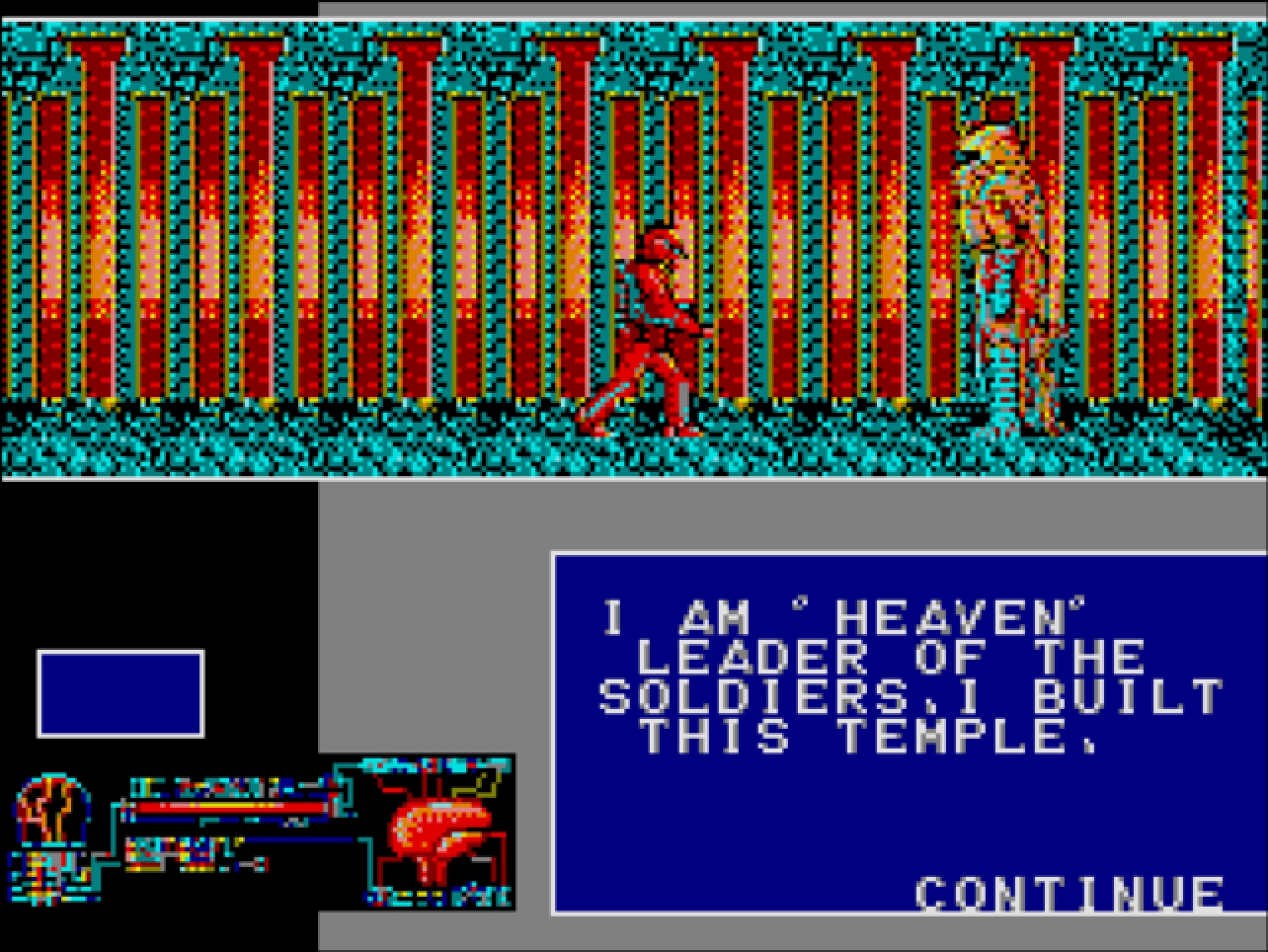
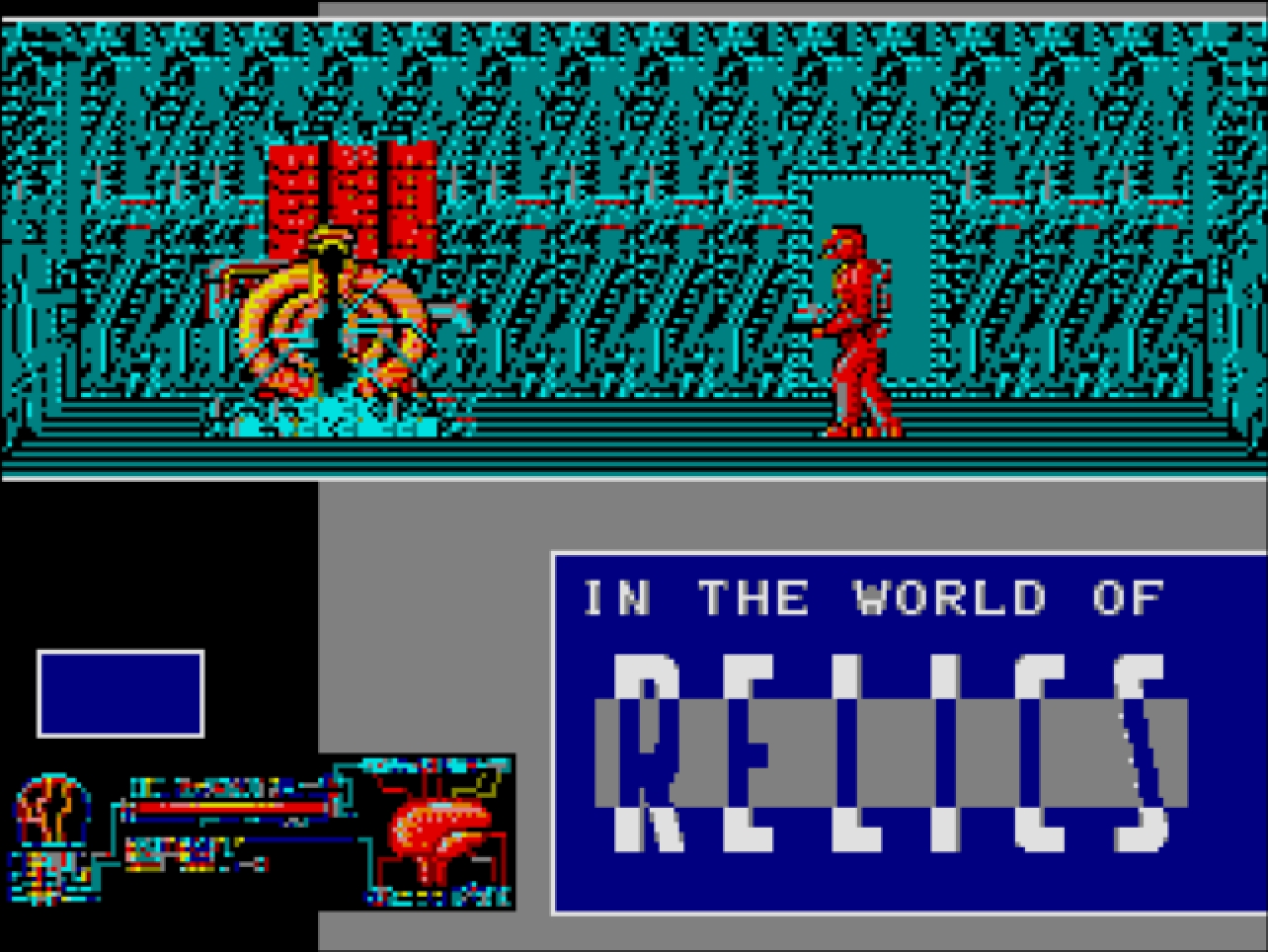
Happily, most of these messages are in English (and have been since Relic’s first release in the ’80s), and the few that aren’t are written in an English cypher I must puzzle out using an in-game key and good old-fashioned pen and paper.
Shifting from body to body doesn’t just grant me new attacks or tougher forms but also offers a little abstracted insight into how everything I see interconnects, allies and enemies determined by an ambitious tangle of relationships and behaviours. So that nightmare bunny I started out as is viewed as an annoying pest by the soldiers, something to be eradicated if it doesn’t “GO AWAY” when yelled at. Soldiers stop to greet each other with a relatively friendly “NO TROUBLE”, as equals stuck in the same weird boat. If I possess one of their superiors a “SIR” will appear at the end of that greeting, as a sign of respect… or perhaps fear, after experiencing officers attacking soldiers who refuse to return to their positions when gruffly requested first hand.
The combat that can follow these encounters is as unexplained and intricate as everything else I’m pleasantly puzzled by. My health is always ???, vaguely represented by a beating organ that is neither quite a heart nor a brain. The number of beings I have to kill in cold blood to reach one of the game’s multiple endings is zero, making violence an active choice on my part. And I’d rather not fight, because my opponents are so reactive and well animated (for the era, of course), that it does feel uncomfortably messy and brutal.
Heavy blows can cause either of us to stumble, to the point of getting caught off-balance and ending up on our hands and knees, attempting to crawl away or get back up. They can decide they’d rather not fight at all, and try to run away, and whether I chase them down or not is left up to my conscience. Sneakily attacking an enemy’s knees from behind brings them down faster than hitting them from the front. That’s positional attack damage in a decades old game whose everything is smaller than most modern screenshots—singular.
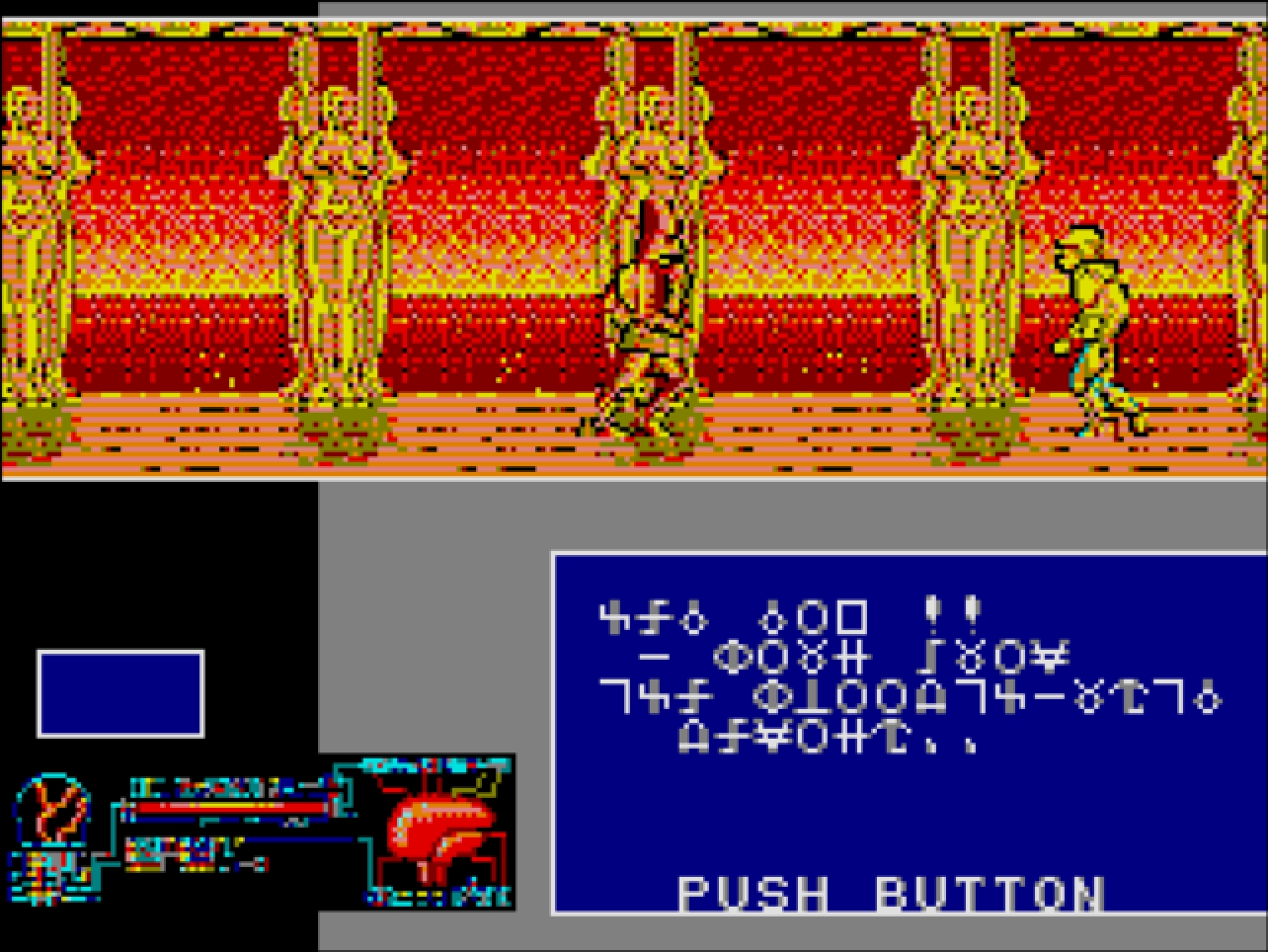
I’d expect that sort of mechanic in a modern FPS, not a game old enough to buy its own beers (or be sold on cassette tape).
The game only gets weirder and more impressive the longer it goes on. People shout at me in code before sprinting across a room lined with golden figures, ready to fight. There’s a woman held in some kind of stasis pod, who I may or may not free from her imprisonment. Hell’s covered in organic pulsating walls. I barely have time to register the five screen high statue of something as I drop down a hole, but whatever it is looks a bit like an exposed skull-like face with a single teal eye, and holds a sword as tall as a house. I have no idea why it exists—but I do know I can’t stop thinking about it.
Under these strange circumstances the game’s, ahem, “interpretive” graphics help rather than hinder the mood, presenting another fascinating inkling of a truth I can’t quite grasp even though the object in question is right in front of my face.
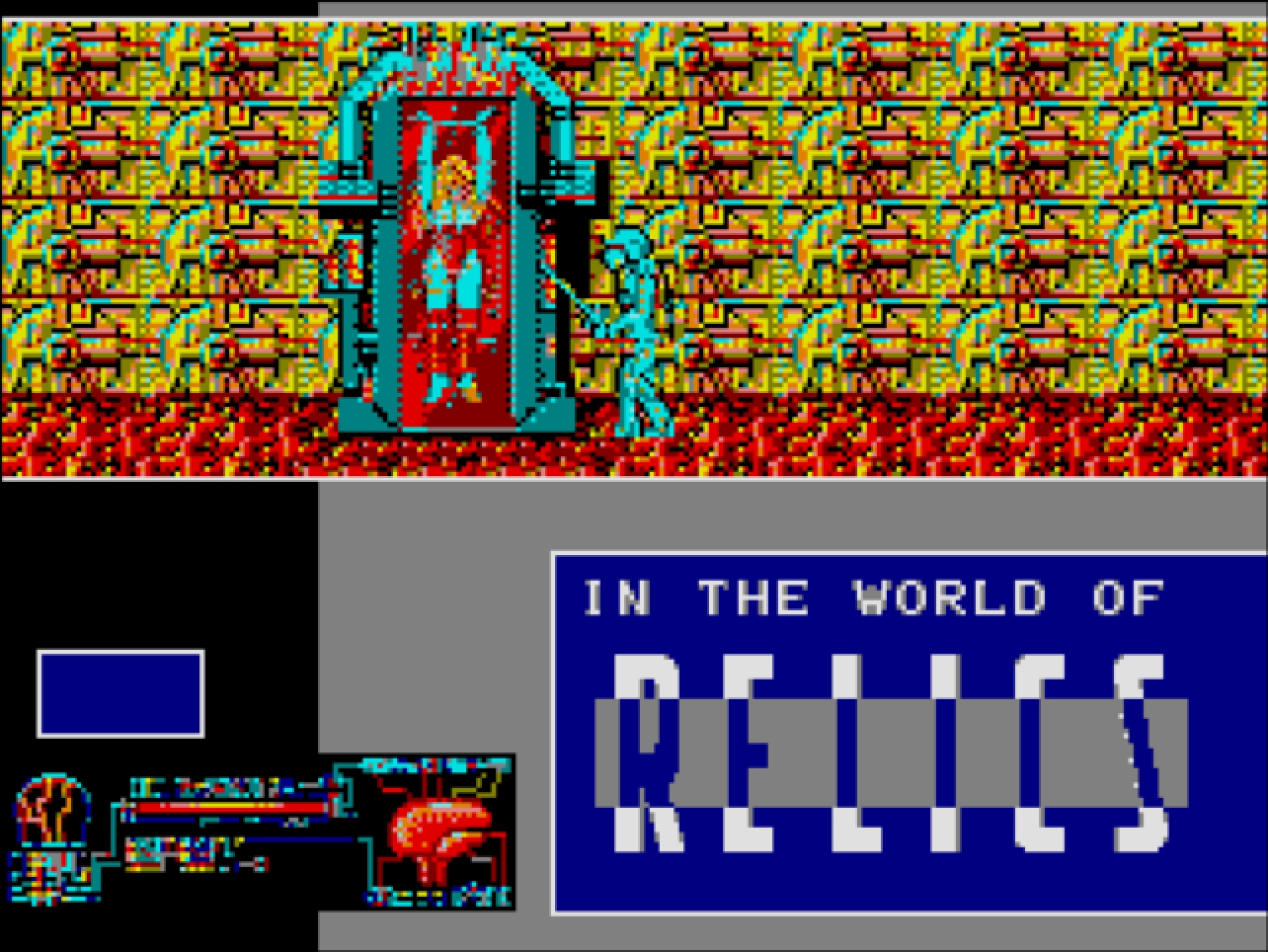
Exposing myself to these barely comprehensible wonders/horrors inevitably leads to many, many deaths, forcing me to restart the technically quite short game (it can be comfortably cleared in under an hour if you know what you’re doing) from the beginning every time—and run headfirst into another of the game’s many clever tricks. Unless I’m very careful, no two runs are alike. Depending on a wide variety of silently noted factors directly linked to my curiosity and behaviour, what were once mortal enemies might appear on their hands and knees, seemingly willing to be possessed, or not appear at all. Sometimes key items just don’t show up. Attacking people who need help or would give their assistance freely always has wider, unspoken consequences beyond altering who wants to hit me back.
And the brilliant thing is that my repeat runs and fatal mistakes are all part of the game’s master plan. There is no such thing as a perfect, complete run here. It is by design impossible to learn everything I need to succeed in one deathless go and then head directly for the best ending—I’m expected to prod and poke and piece it all together, a code learned in one “life” used in the next cycle, a document I risked everything for one run completely ignored the next, a map jotted down and kept safe for later use.
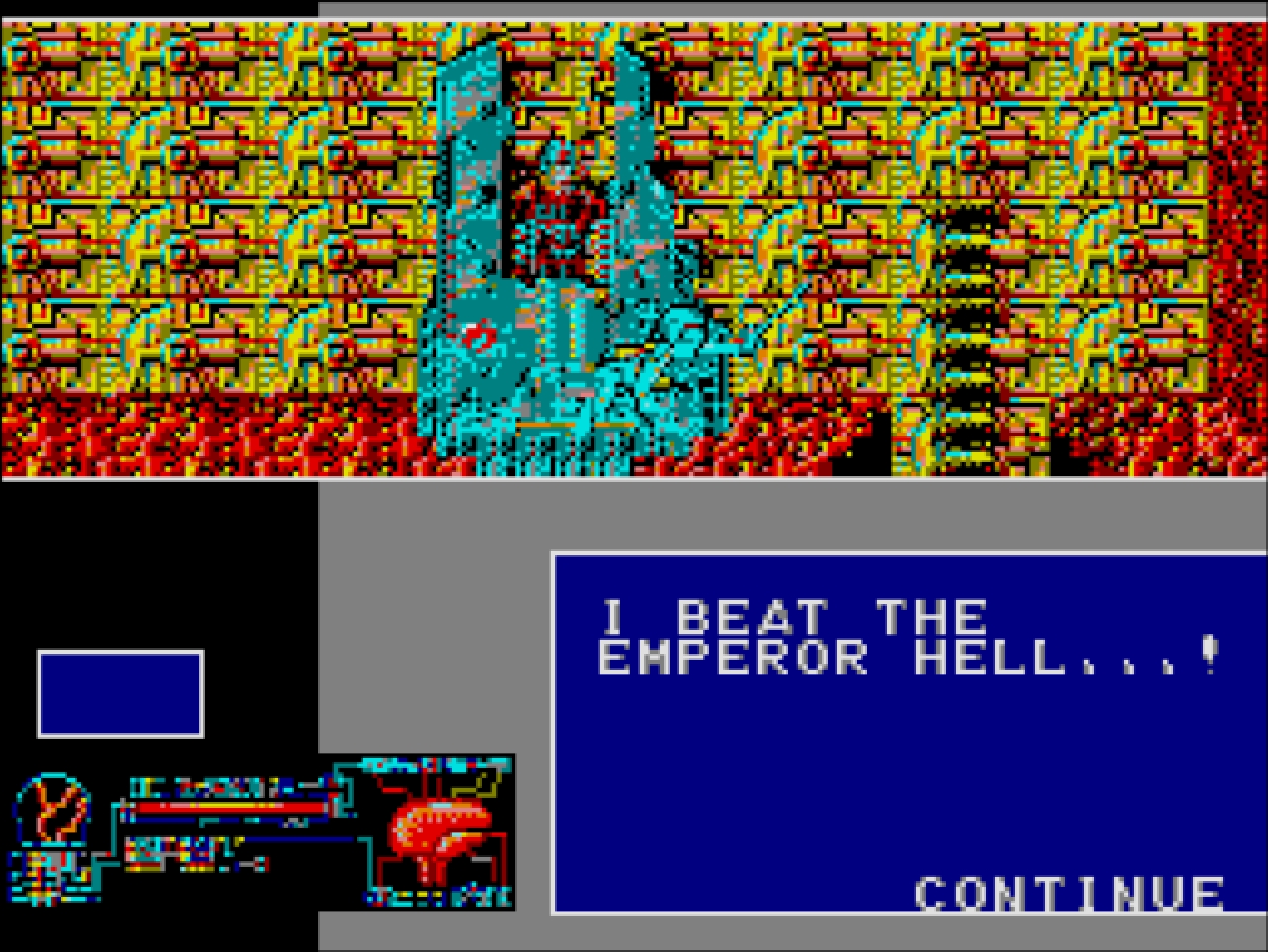
Beautifully, the game ends exactly where it begins, the entire experience forming a flawless loop. I was already in the right place, I just wasn’t the right person back then. I didn’t know who I could be or what I could do. The journey was the important bit. The journey made it special.
The journey still makes it special. Don’t be put off by Relics’ looks or its language warning. Give it a try now that it’s on Steam, and you may be shocked by what the developers pulled off with 4 MHz, a handful of colors and a couple hundred kilobytes.
About Author