Speeding through Shibuya Crossing in a souped up kei truck, Babymetal blaring out of the stereo, it’s easy to fall in love with the fantasy that Forza Horizon is selling. Recognisable locations stitched together across a large open world, a huge number of cars picked from multiple eras and disciplines, and a seemingly endless suite of events and races to help you make the most of your ever-expanding garage.
What is it? The sixth sandbox racing game about a festival that encourages acts of vehicular recklessness.
Release date May 19, 2026
Expect to pay $70/£60
Developer Playground Games
Publisher Xbox Game Studios
Reviewed on Ryzen 7 3700X, 32GB RAM, RTX 5070Ti
Steam Deck TBA
Link Official site
It’s slick. It’s polished. It’s consistently fun. It’s also a continuation of what the series has been doing for over a decade.
Forza Horizon 6, like every Forza Horizon before it, is another big, bombastic racing festival, featuring mostly the same event icons but on a different map. It’s a game of small, marginal changes; sometimes meaningful, but always subtle. If you have played any of the previous games, you inherently know how this one will feel. It’s the same, only now it’s in Japan.
Fortunately the setting makes for one of the better locations in the series’ history. As a collection of biomes it’s less varied and dramatic than Forza Horizon 5’s Mexico, instead feeling more reminiscent of Forza Horizon 4’s version of the UK. It turns out that island nations with a rich automotive legacy are a great fit for what the series is trying to do—giving plenty of opportunities for Playground Games to express its deep love of car culture.
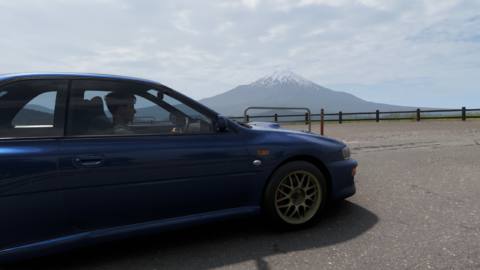
As with the previous games, the map is highly interpretive—a patchwork of real-world Japanese locations strewn across the map. Here, Hokkaido’s flower gardens are south of Toyama’s snow walls. Irabu Bridge—in reality part of the Okinawa prefecture—lives northeast of Tokyo, which itself is truncated down to its most recognisable sites and expressways.
Big in Japan
The point isn’t realism, it’s vibes. The various points of interest—be it the multi-story spiral of the Kawazu-Nanadaru Loop Bridge or the scenic view of Mt. Fuji from the Izu Skyline—are all in service of a memorable driving experience; something pretty to look at as you build skill chains across the open world, or something challenging to master as you race. And while there’s still many miles of generic country roads, there’s enough flavour throughout to do justice to the setting.
One small but somewhat notable change for Forza Horizon 6 is the splitting of campaign progression into two separate ranking systems: One for the festival itself, and another for extracurricular activities dotted around the map. This second collection, Discover Japan, contains everything from street races to sidequest stories—things more directly tied to the setting and open world exploration.
As you tick things off from its checklist, you earn points and rank up to unlock new barn find rumours. I actually like this as a way to stop the general shape of the campaign from feeling so homogeneous. It’s not revelatory by any means, but as a small nudge towards a more purposeful reward path, it works.
The best activities in the Discover Japan path are the new touge events—head-to-head races down narrow, winding mountain roads. These are tight, technical routes that make for an enjoyable challenge, and limiting the competition to just a single opponent keeps the action focused more on the driving than on fighting against the pack.
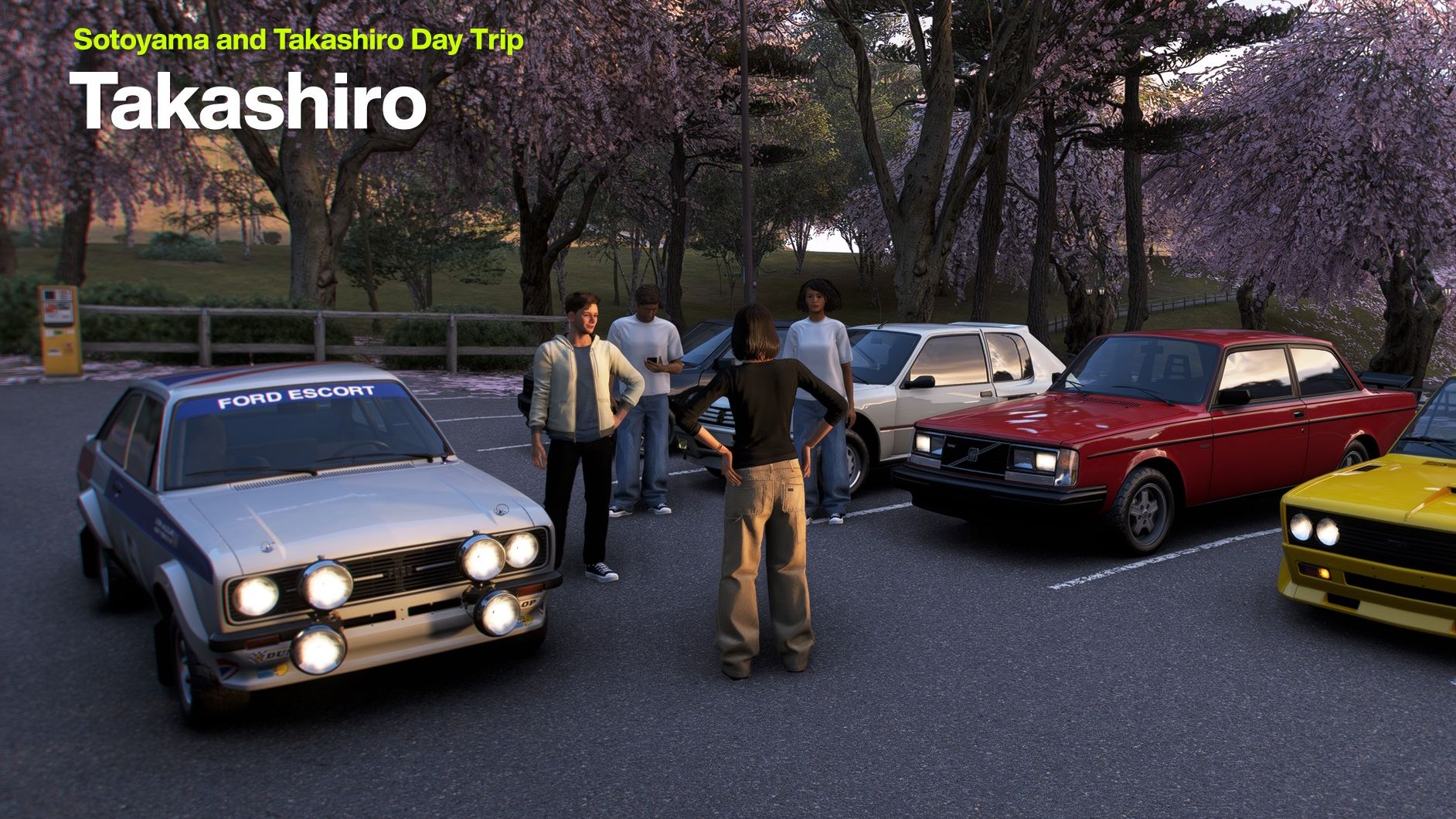
As for the sidequests, they range from day trips to notable locations to a whistlestop tour of Japan’s drifting scene. Thematically they’re all fine, but they suffer from repetition. Most involve driving to a place, watching a short cutscene, and then completing some concluding challenge for a rating out of three stars. Do a big jump. Get to the checkpoint before the time runs out. Go fast through a speed trap. Get to the checkpoint before the time runs out while also keeping your speed above 80mph.
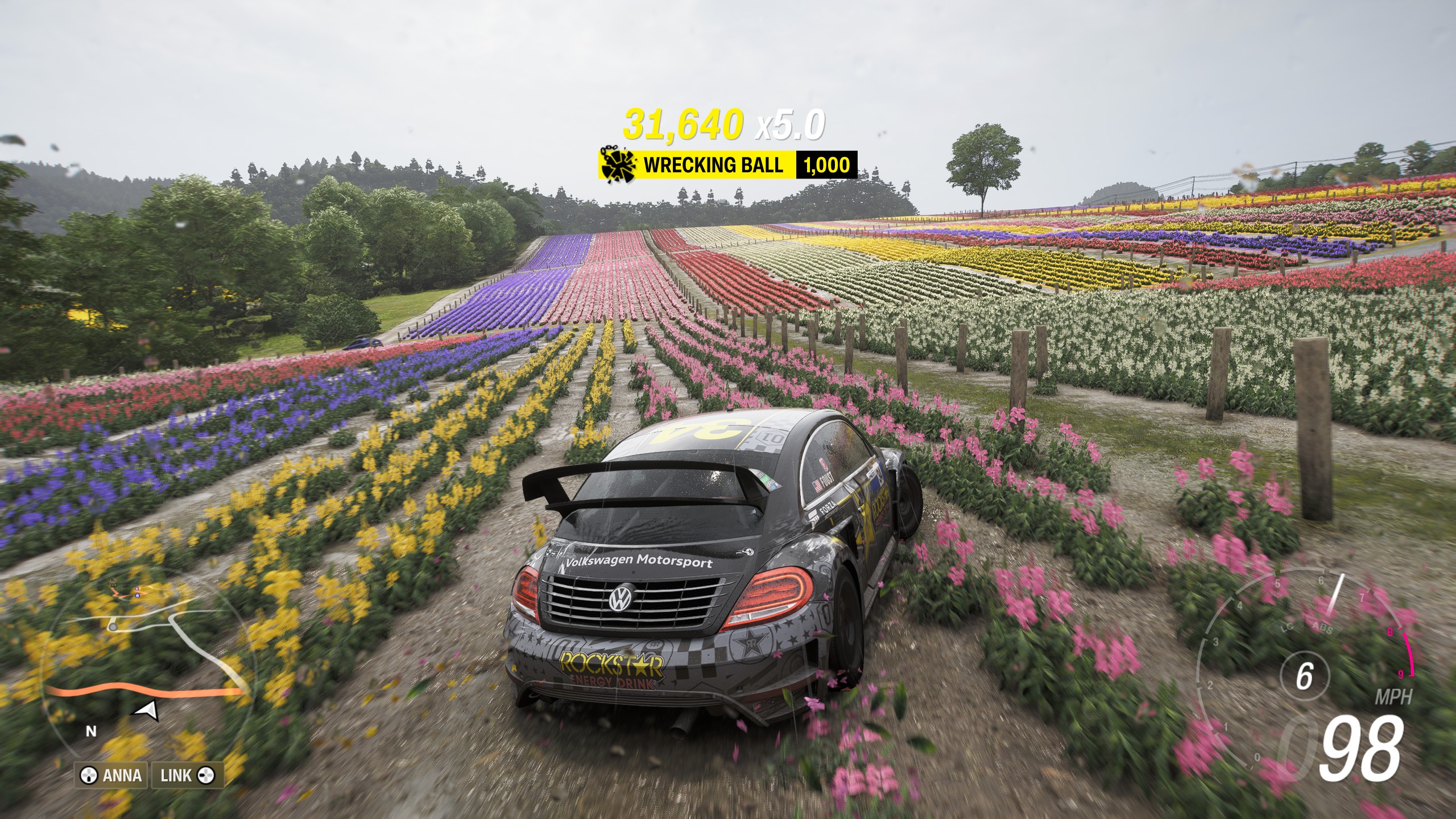
If you have played any of the previous games, you will have done all of this many times before. And while it’s not a major issue—going fast in cars is, after all, why we’re here—it’s made worse by how bland the dialogue is. It’s all trite platitudes and empty positivity. Everyone’s having an amazing time, which they are constantly explaining to you with the same superficial tone that my local supermarket’s in-store radio uses to tell me about the latest deal on tinned tomatoes.
Seasons return, but I didn’t get a good chance to see how drastically they alter the map. Only the spring and summer seasons were available during the review period—yes, there’s cherry blossoms. The seasonal playlist also wasn’t enabled, so we’ll have to see how those events shake out.
My favourite series of quests focuses more on the cars, and a local mechanic who’s been asked to custom tune a fleet of iconic Japanese vehicles for a festival parade. It’s the same rotation of basic challenges, but with the added twist of driving the car both before and after it’s been tuned. It’s an effective showcase for the potential of the game’s own tuning options, which let you dramatically alter the feel of a car—for instance turning a usually quite skittish Mazda MX-5 into something that better holds traction for fast cornering.
It attempts to use dialogue to explain the specific tweaks being made and the reasons behind them, but the amount of information imparted is dwarfed by the constant reinforcement of what a gosh darn privilege it is to be here. It’s peak second-screen gaming, words that simply wash over you in all their banal triviality. We’re all having so much fun! Are you having fun? Well? Are you?
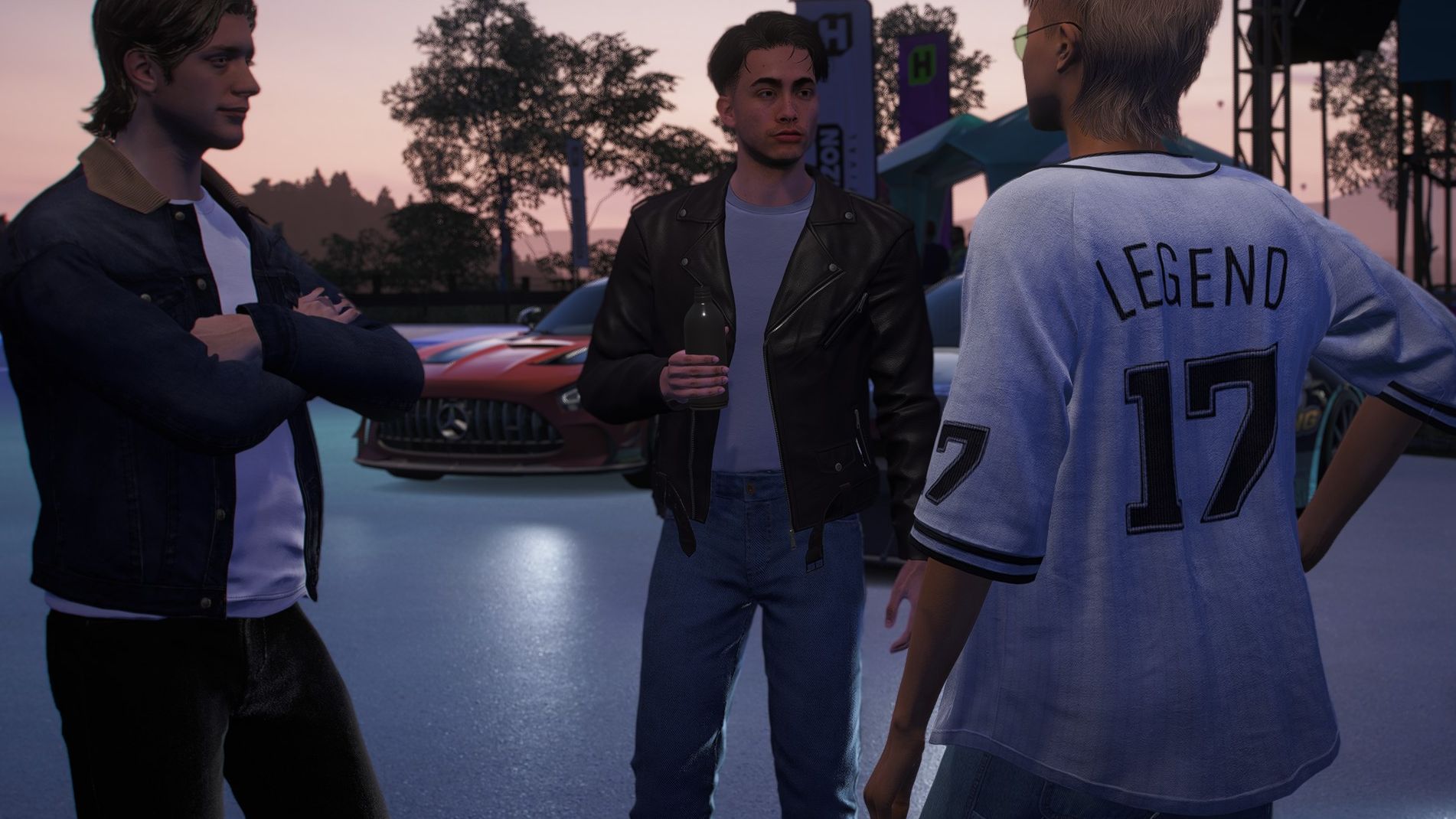
Yes, I am having fun. As always, the driving is peerless—an arcade sensibility given just enough realism to trick you into thinking you are good at handling these vehicles. Even with limited assists, the cars, by and large, do what you want them to do. For the vast majority of my time in the game—in a race or just driving across the world—I’m still loving what Forza Horizon offers. It’s just that, eventually, a character will open their mouth to pull me out of the moment.
Maybe I’m the problem for expecting more from a team that seemingly has no interest in improving its unconvincing dialogue. Except Forza Horizon 6 clearly cares about the lore because it features driving cameos from characters pulled from previous Horizon games, which I only know because a) the game told me, and b) I double checked a wiki. I recognised none of these people because this series does not have characters, only delivery mechanisms for insipid chat.
Back to basics
At least this time there is an arc to your main progression through the festival proper. Rather than entering as a returning superstar, immediately given the best and coolest things to do, you start out as a nobody—traveling to Japan with your pals to make a name for yourself. After completing a series of qualifying events, you’re invited to compete in the festival—competing to earn points to gain entry to a capstone event that unlocks a new tier of wristband and the new races that it brings.
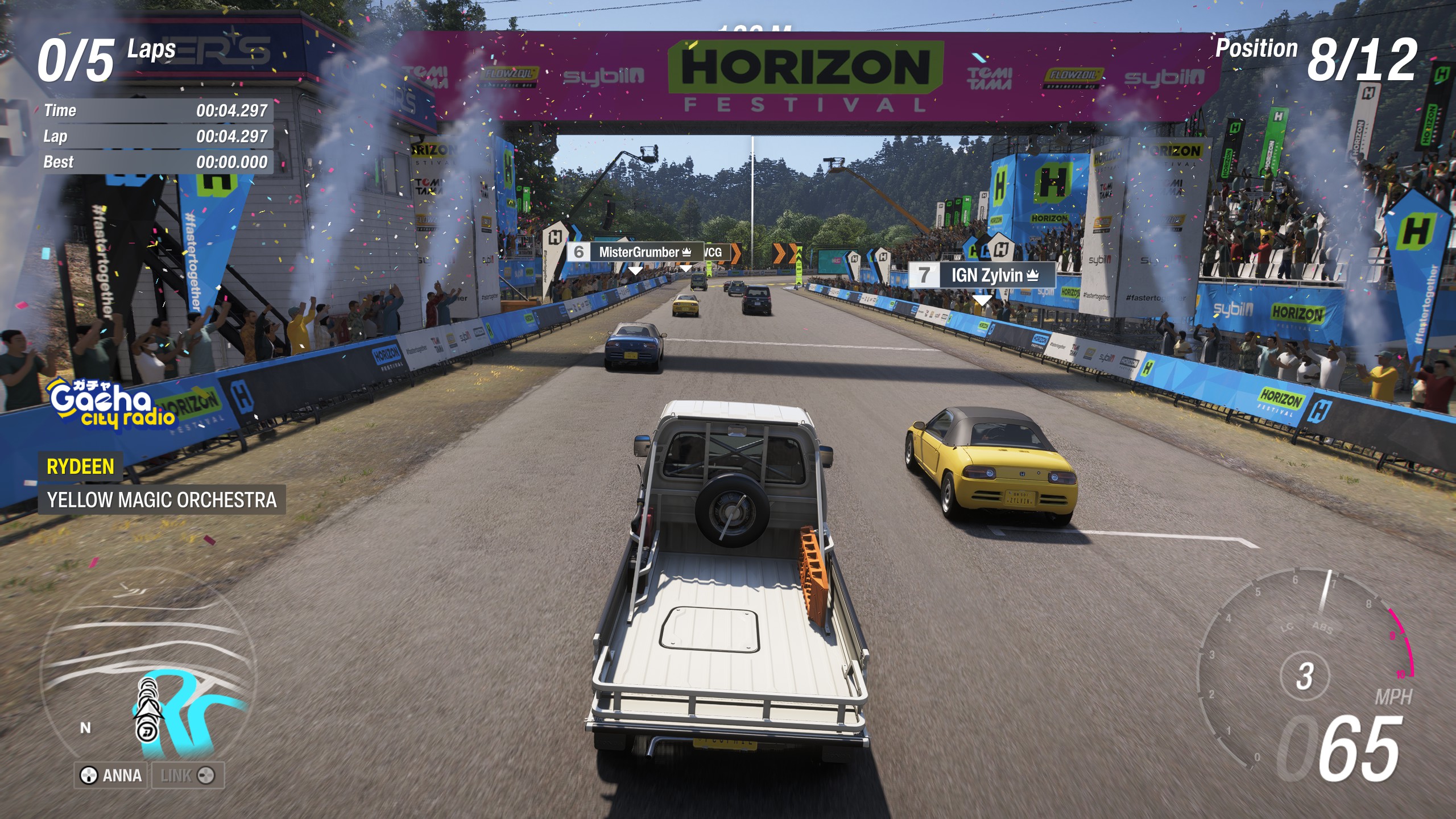
Those opening qualifiers restrict you to C-rank vehicles, with each successive wristband increasing the performance cap. It’s an obvious move—it’s how basically every other racing game works—but this is the first time since the earliest Horizons that the series is even attempting any sort of progression curve. And yeah, obviously it works; it’s tried and true. It’s also nice to have a proper excuse to wheel out some modestly priced classics, better utilising the full scope of Horizon’s roster of vehicles.
Forza Horizon 6 is a modern PC game, which means on first launch be prepared to wait while its shaders are optimised. When I first played I had some light stuttering, but this quickly cleared up. Since then, it’s been smooth running on my 5070 Ti. Click through to our full performance and settings report, where our expert hardware analyst Nick has been taking a look under the game’s hood.
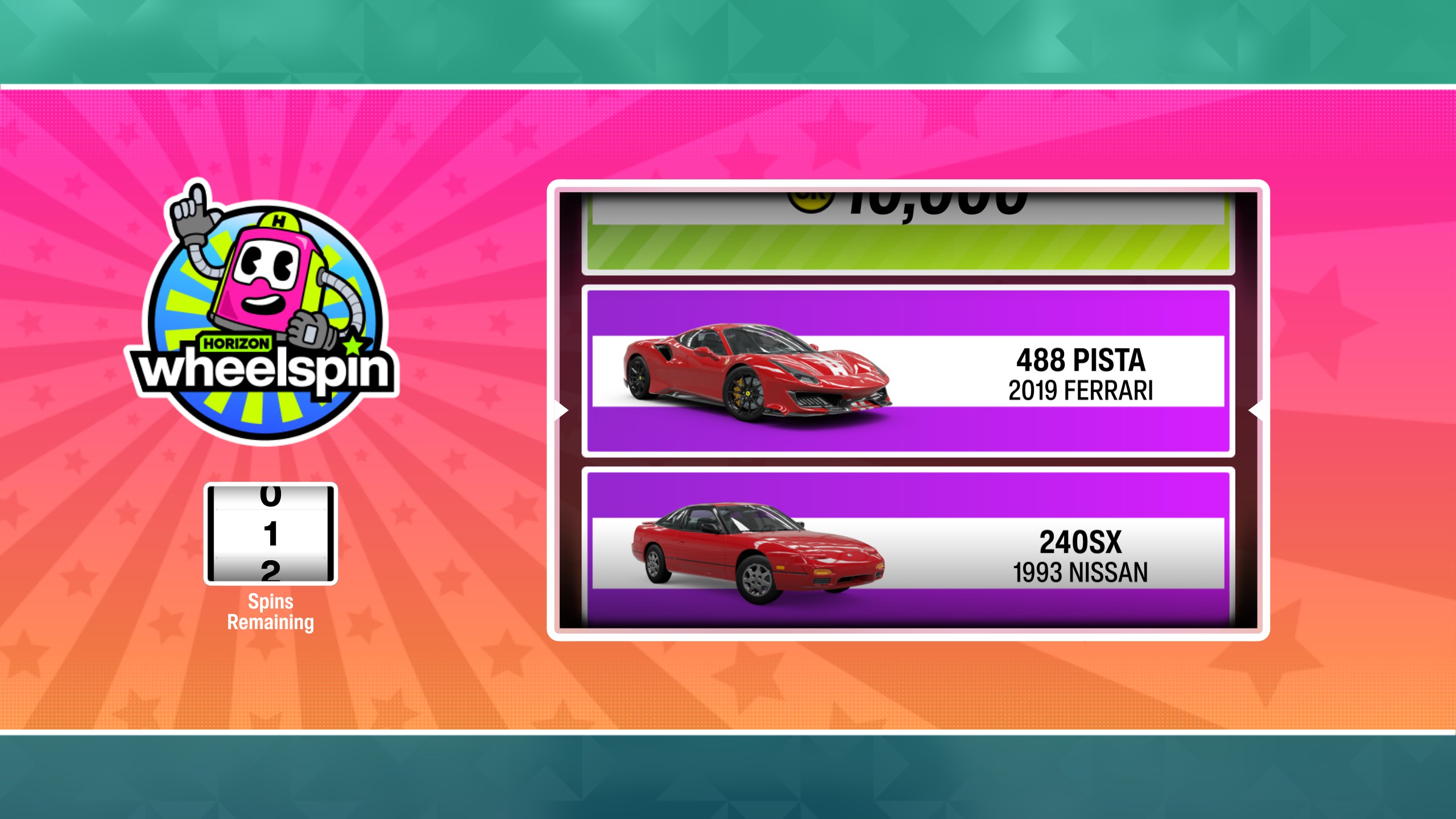
Not that these restrictions actually prevent you from earning or driving more powerful cars. As a reward for playing the previous games, my garage was instantly gifted a small collection of higher-tier vehicles, and between wheelspin rewards, collection completion rewards and the cars you buy from the credits you earn, your available selection will quickly balloon. The game is constantly throwing new (and old) cars your way.
I think that’s fine, as is the fact that the Discover Japan street races feature no class restrictions. After all, Horizon in its totality is more about the sandbox than the campaign. With its pokedex style approach to cars—550 available at launch—there’s no sense in holding back. It also means that, by the time you unlock the highest tier wristbands, you’ll have plenty of S1 and S2 performance options to let loose with.
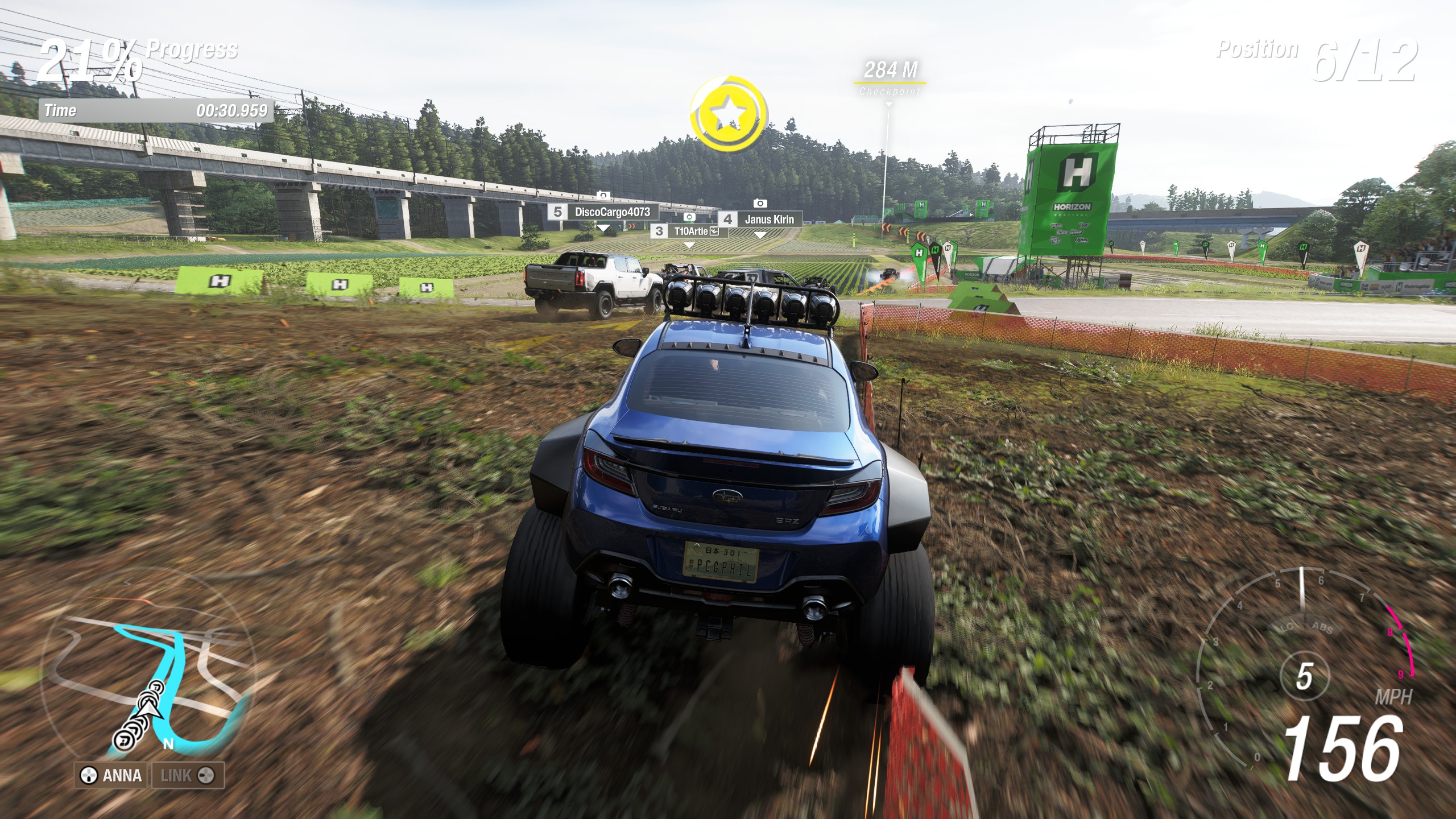
In terms of Horizon’s races, the action is firmly in familiar territory. Road, dirt and cross-country races once again make up the bulk of the action, and play out much like they do in any other game in the series. Courses are, for the most part, constructed from the game’s open world—courdoned off to limit the action to the 12 racers on the track. That makes their quality pretty variable throughout. Some have enough personality to stand out, but many blend together across the hours you spend with the game.
It’s another reason the touge races shine so brightly—those feel constructed for their purpose, with the winding paths to support them. The broader, more general races struggle to match that clarity of vision.
Nevertheless, the racing feels good once you’ve tuned the difficulty a bit. The AI opponents are generally clean racers, but not afraid to fight for their position or trade paint during an overtake—a level of aggression that suits the type of racing Horizon prioritises. I found a good level of challenge on road and drift races particularly, with some quality mid-race jostling eventually leading into an exciting fight for first place.
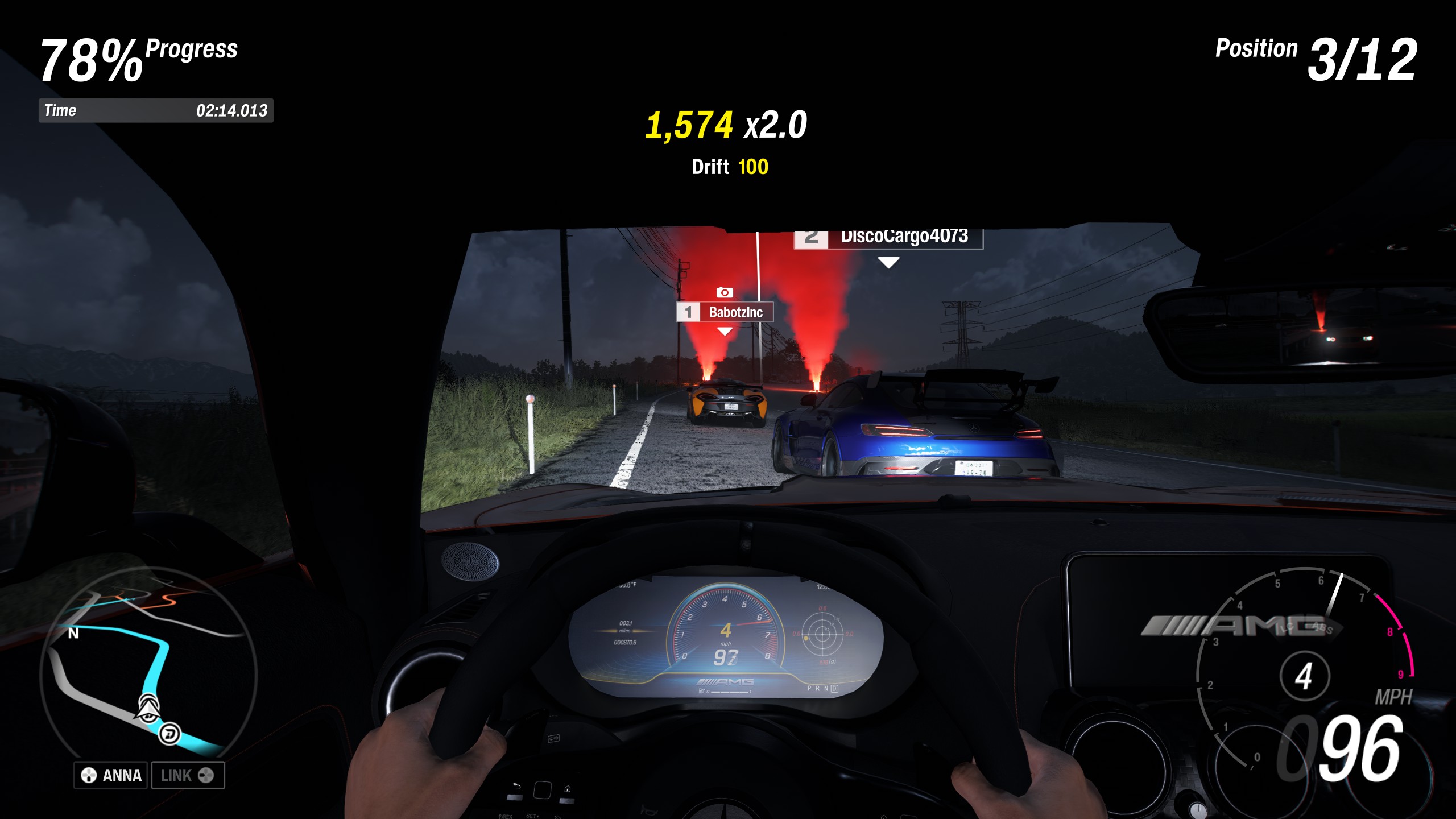
That’s the ideal, at least, although it can be inconsistent—with difficulty spikes in both directions depending on race type and track restrictions. AI drivers in cross country events have an annoying tendency to clump together in the mid-pack, leaving first and second position free to forge ahead. Spend too long fighting through the crowd, and that distance becomes insurmountable given the lack of technical corners to make up time.
The sandbox nature of Horizon at least means that even the most punishing conditions and harder difficulties can be overcome with the right car choice. After struggling with a series of A-class cross country buggy races, I eventually found a modified Subaru BRZ that instantly chewed through all competition. Even if you don’t want to splash the cash for a new ride, new upgrades and tuning set-ups are relatively cheap, and offer a significant boost to your race capabilities.
In fact, Horizon 6 does more than any previous game to get you in the right car for the job. Sure, you can head to the festival site or one of your purchased houses to browse the extensive showroom. But you’ll also find plenty of cars for sale parked out in the open world. Drive up to one, and you’re given the option to buy it at a discount, and many of the cars you’ll find will come with upgrades pre-installed. Inevitably these cars are placed right next to race events that they’re perfectly suited for. That Subaru? It was sitting next to the very event I’d been struggling with.
It all fits together into an experience that offers an incredible sense of forward momentum, to the point where I had to turn off the automated event recommendations that pop up after you finish a race. With them on, I entered a sort of hypnotic flow state of progression, always on the move towards the next thing on the checklist—the game constantly pushing me towards more as if it was scared I might stop for a second and lose interest. But Forza Horizon is just as much a game about dicking around—doing a big slide in a field through trees that split apart under the smallest amount of pressure. A big silly world where everything that isn’t relevant to having fun in a car is exorcised from existence.
Don’t mech me laugh
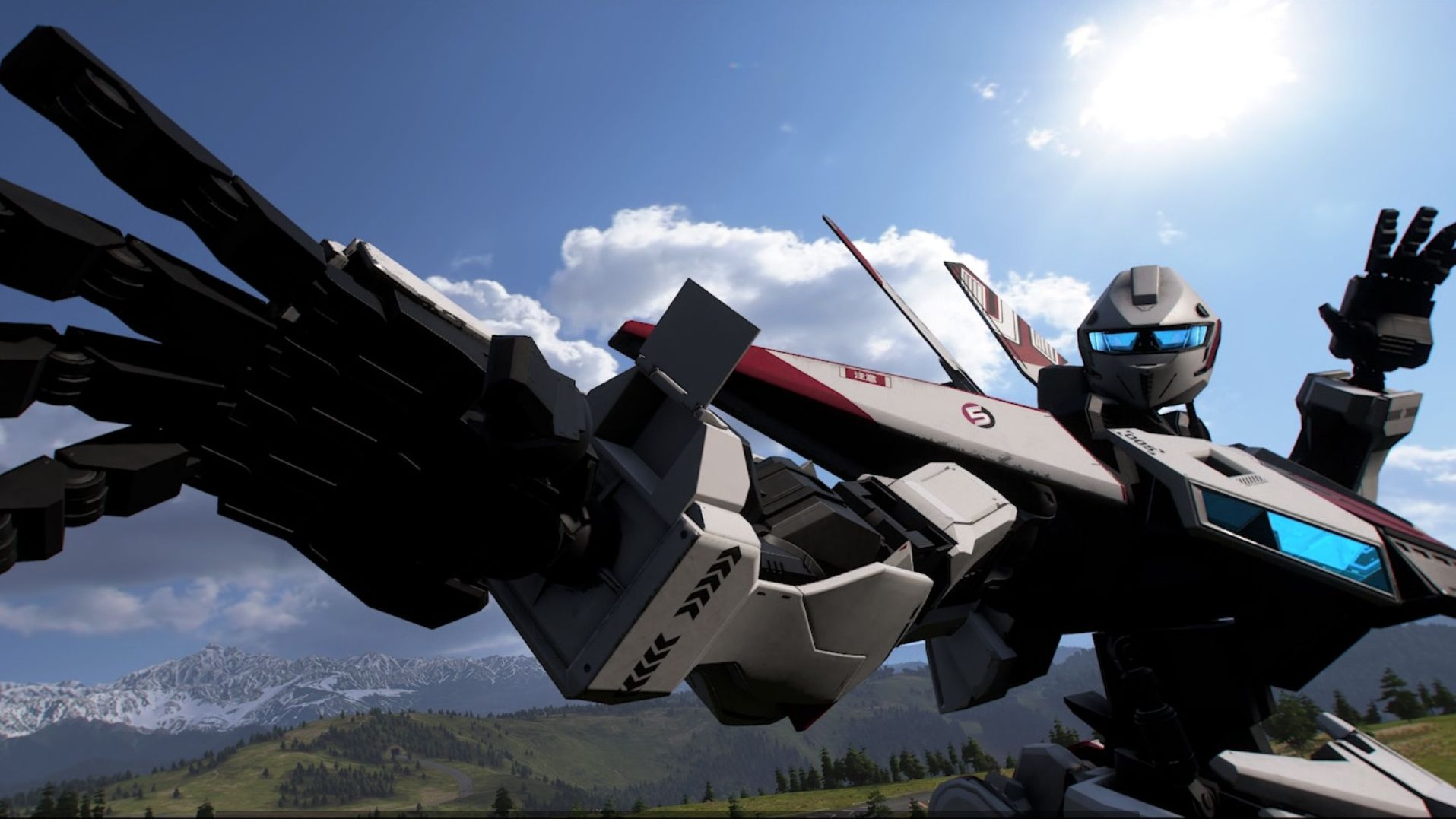
On the topic of silly, let me derail this review to gripe about the bit of the game where you race a mech. As in other Horizon events, new campaign tiers are placed behind big showcase events—usually a race against something that isn’t a car. Hot air balloons in Horizon 1, for example, or a steam train in Horizon 4. There’s a lot of potential here for a game set in Japan. I was looking forward to racing the bullet train or the Shonan Monorail or, you know, something real. Instead, I get a mech.
It is, by some distance, my least favourite moment of the game. An incredible opportunity squandered for some sci-fi nonsense. For a series that, underneath its inherent ridiculousness, displays such a deep love of engineering and craft to waste fully half of its showcase races—there are only two, the second against some stunt planes—is such a missed opportunity. I’d almost understand it if this was some big crossover, like Horizon 4’s Halo race. It certainly has the soul and execution of a brand deal. But no, it’s an unlicensed knock-off Gundam. They did this because they wanted to. Maybe you think mechs are cool, I won’t begrudge you that, but my disappointment was profound.
The reason there are only two showcases this time around is because they’ve been intermixed with a new capstone event type, Rush. These are time trials on custom built courses that have a little visual flair to them but are mostly focused on technical driving. I loved them. What they lack in spectacle they make up for by being some of the most interesting routes in the game. I’m starting to realise I might just be a freak for precise cornering, but still I’d love to see Playground expand this concept more.
None of Forza Horizon 6’s weaker points are particularly new things for the series—if anything, many are born from just how resistant these games are to change. But its lack of ambition around reinventing itself is more than offset by just how absurd a proposition it remains at a basic level. There is a staggering amount to do, and an absurd number of cars to do it all in. No other racing series operates on this scale, with this much sandbox freedom.
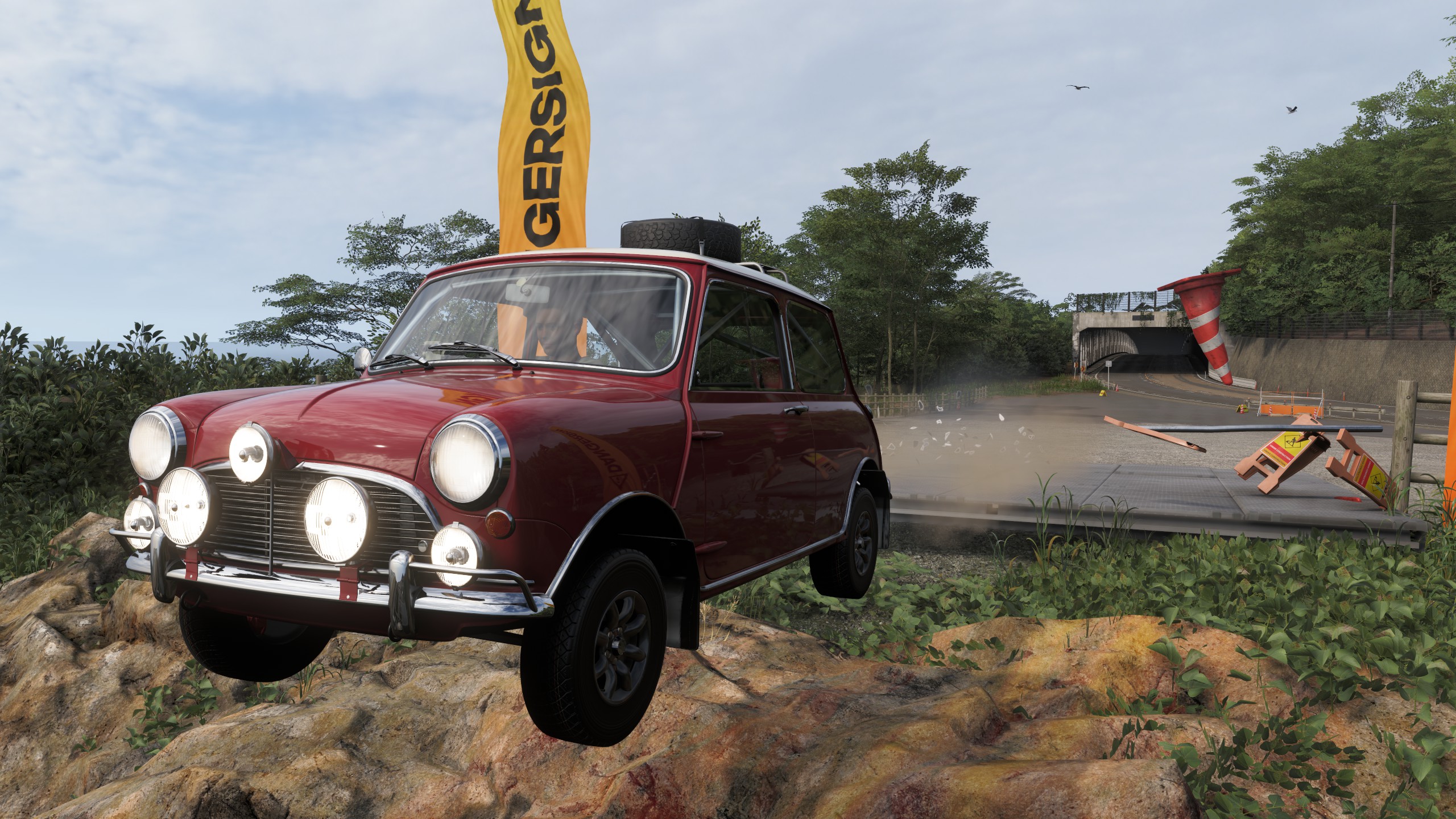
It’s a fantasy that travels from the sublime to the ridiculous. From the sheer thrill of tearing down the expressway in a souped up hypercar, to the nostalgic joy of the unspectacular but iconic. As a kid, my dad drove a Mini Cooper S. At university, my flatmate had a beat down Subaru Impreza that bravely soldiered through the last undignified miles of its life. As an adult, I got to ride in a Radical track car as it did laps around Castle Combe circuit. That there’s a racing game—not just a dry sim, but something so big and audacious and approachable—that can bring together all these disparate memories is nothing short of miraculous. There’s simply nothing else like it.
Ultimately, Forza Horizon 6’s only competitor is the previous Forza Horizon games—itself a scary thought given the regularity with which Microsoft removes them from sale. While I’d love for the series to flex its creativity a bit more, that desire doesn’t dampen my deep appreciation for what Forza Horizon 6 does achieve.
About Author