It’s a given that the question “What’s the oldest computer you can run modern Linux on?” would produce a more gratifying answer than “What’s the oldest computer you can run modern Windows on?” given Windows 11’s draconian hardware requirements. But I have to say I had no idea the answer to the former question dated back to the 1990s—or, depending on your perspective, the 1980s. Alas, all computers must eventually make their way to the great e-waste center in the sky, as Phoronix reports that the Linux kernel maintainers are beginning to phase out support for Intel’s legendary 486 platform.
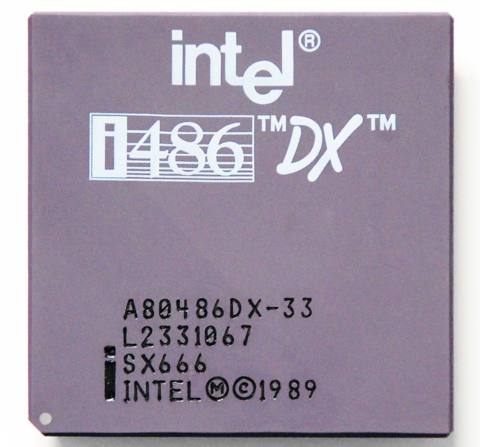
The i486 debuted in 1989, with some of the later chips in the line dramatically improving performance over the prior generation i386 despite still being measured in double-digit megahertz. The final desktop 486 CPUs were released in 1995 and ceased production in 1998, as Intel moved into the Pentium era. But Intel actually kept manufacturing 486 chips for embedded systems until 2007, technically making it merely 19 years past its true end-of-life.
That’s still, uh, pretty old, which makes it hard to argue with the father of Linux, Linus Torvalds, when he says it’s time to drop support for the 486. “I *really* don’t think i486 class hardware is relevant any more,” he wrote. “Yes, I’m sure it exists … but from a kernel development standpoint I don’t think they are really relevant.
“At some point, people have them as museum pieces. They might as well run museum kernels.”
Torvalds actually wrote that back in October 2022, but it took a few years for the kernel developers to get around to dropping it. But it’s finally happening. A patch expected to be merged into Linux 7.1 will begin rooting out the remaining code dedicated to the i486, which developer Ingo Molnar says will be beneficial to future kernel development.
“We have various complicated hardware emulation facilities on x86-32 to support ancient 32-bit CPUs that very very few people are using with modern kernels. This compatibility glue is sometimes even causing problems that people spend time to resolve, which time could be spent on other things.”
According to Molnar, this likely won’t even affect a single Linux user, as there’s “no recent [486-supporting] kernel package for any mainstream x86 32-bit distribution available” that he’s been able to find.
That doesn’t mean no one in the world is running Linux on a still-kickin’ 486 PC; it just means that if they are, they’re likely doing so on a much older version of the Linux kernel.
If you’re still rocking a ’90s or ’00s Pentium, though, worry not—it seems likely the Linux kernel will still support that generation of chips for years to come. You don’t belong in a museum just yet.
About Author