This might be the most interesting case I’ve reviewed in the past 11 years. It’s not particularly revolutionary by modern standards, nor is it the most cost-effective chassis on the market, but what it does do is tap into this deep-seated nostalgia that I know a lot of us have for PC gaming and the early internet of the 90s and noughties.
The Silverstone FLP02 is unabashedly riffing on that very ethos. It’s a bold mix of modern case design hidden away inside a beige chassis aesthetic that’s more at home two decades prior than today in our AI-filled, glass-panelled cuboid epoch, that’s for sure.
The concept of sleeper builds has been around for a fair few years now. It’s nothing new, but if you’re on the hunt for a beige chassis like this from the golden era, you’re typically looking at eBay and the likes for something second hand, and at a minimum that’s going to set you back a good $100-200 at least and come complete with probably a full refurb and a crap load of modding needed to get it compatible with today’s hardware, without all the mod-cons we’ve come to know and love.
What Silverstone has done, is basically industrialize that market desire. And, if I’m honest, it’s a bloody smart play because this thing is dripping in sex appeal for me. Is that weird? Probably. I’m not saying it’s the best PC case of all time, but it’s arguably the coolest case I’ve had the pleasure of reviewing in the last decade, that’s for sure.
Form factor: Mid-tower
Dimensions: 23.2 x 49.4 x 47.2 cm
Motherboard support: SSI-CEB, ATX, M-ATX, ITX
Expansion slots: 7 horizontal + 2 Vertical
Front IO: 1x Power Button, 1x Reset Button, Key-lock power, 1x Turbo button
Total fan support: 6
Fan count: 2x 120mm FRONT 3x120mm or 2×160/140mm TOP, 1×140/120mm REAR
Radiator support: Up to 360mm TOP
Graphics card support: 386 mm length
Storage: 4x 2.5-inch; 4x 3.5-inch; 3x 5.25-inch
PSU support: ATX
Weight: 9.79 kg
Price: $230/£220
There’s no nonsense here, no panel modding or cutting required. This isn’t just Silverstone pulling a budget item out of their back catalog and chucking it through the foundries again, no sir. There’s more to the FLP02 than that. A quick glance on first unboxing reveals that.
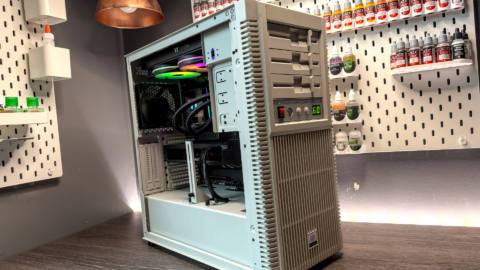
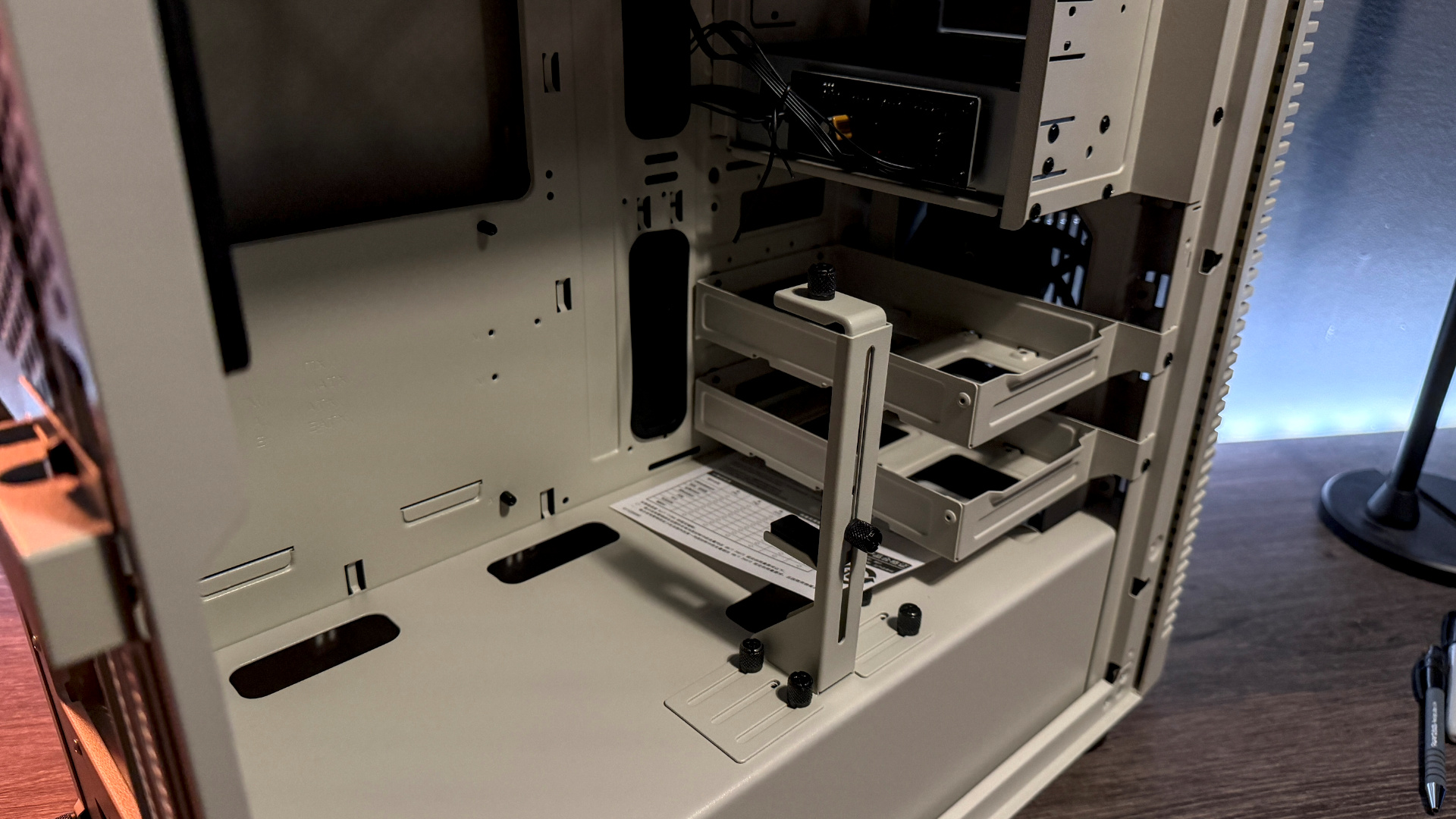
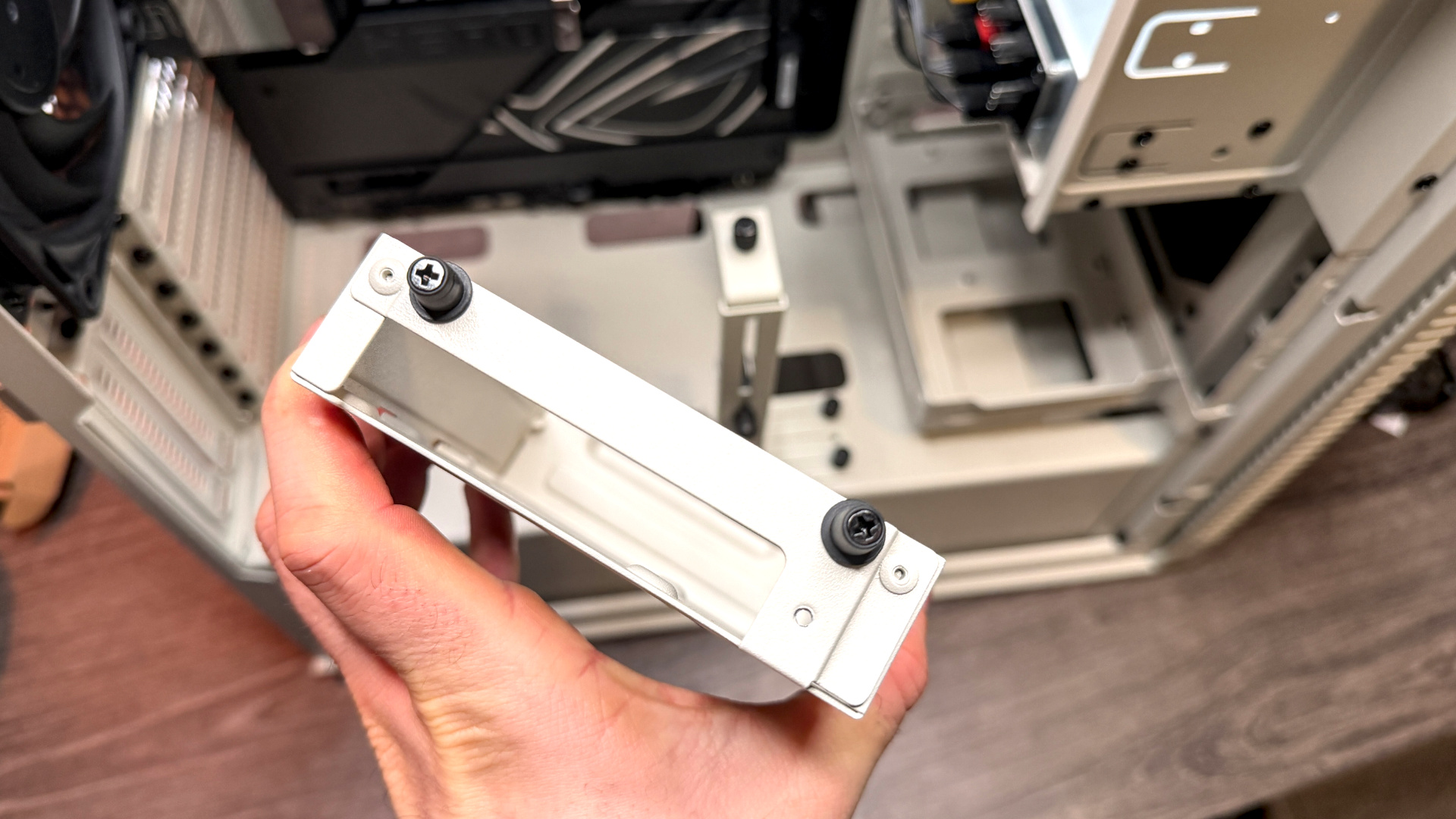
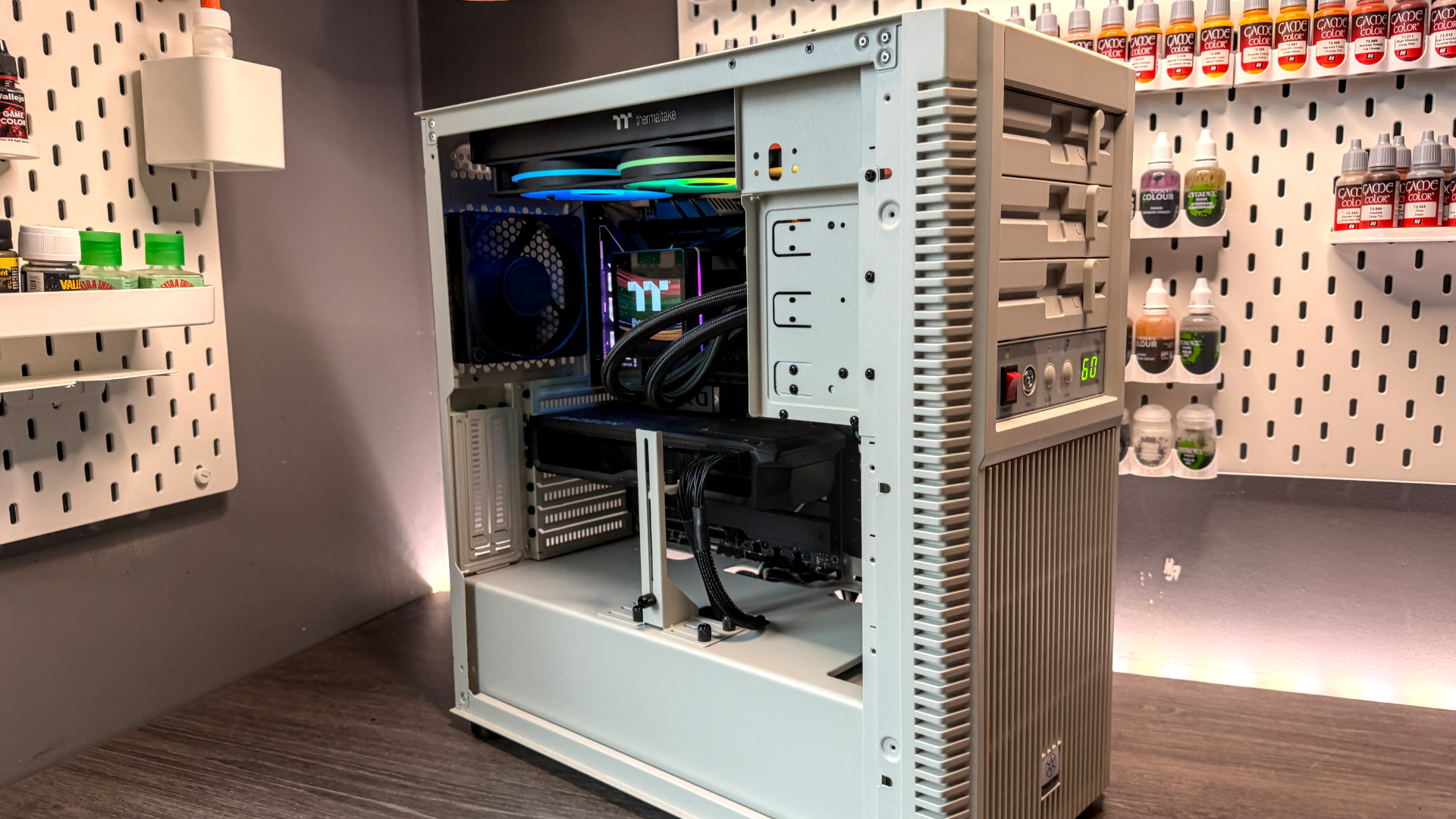
Look inside, and you’ll spot a remarkably spacious interior with a full PSU cover, support for E-ATX motherboards, full-sized graphics cards, vertical GPUs. There’s an anti-sag bracket built in, a fan controller, multiple 2.5-inch SSD enclosures, 3.5-inch enclosures, and amazingly even 5.25-inch enclosures for if you want to crack out the old CD and floppy drives.
Jump around the back behind the motherboard tray, and you’ll find even more enclosures, along with plenty of cable management passthroughs complete with rubber grommets, and it’s all fairly modular too, with thumb screws and standard Phillips heads securing most of the good stuff in place.
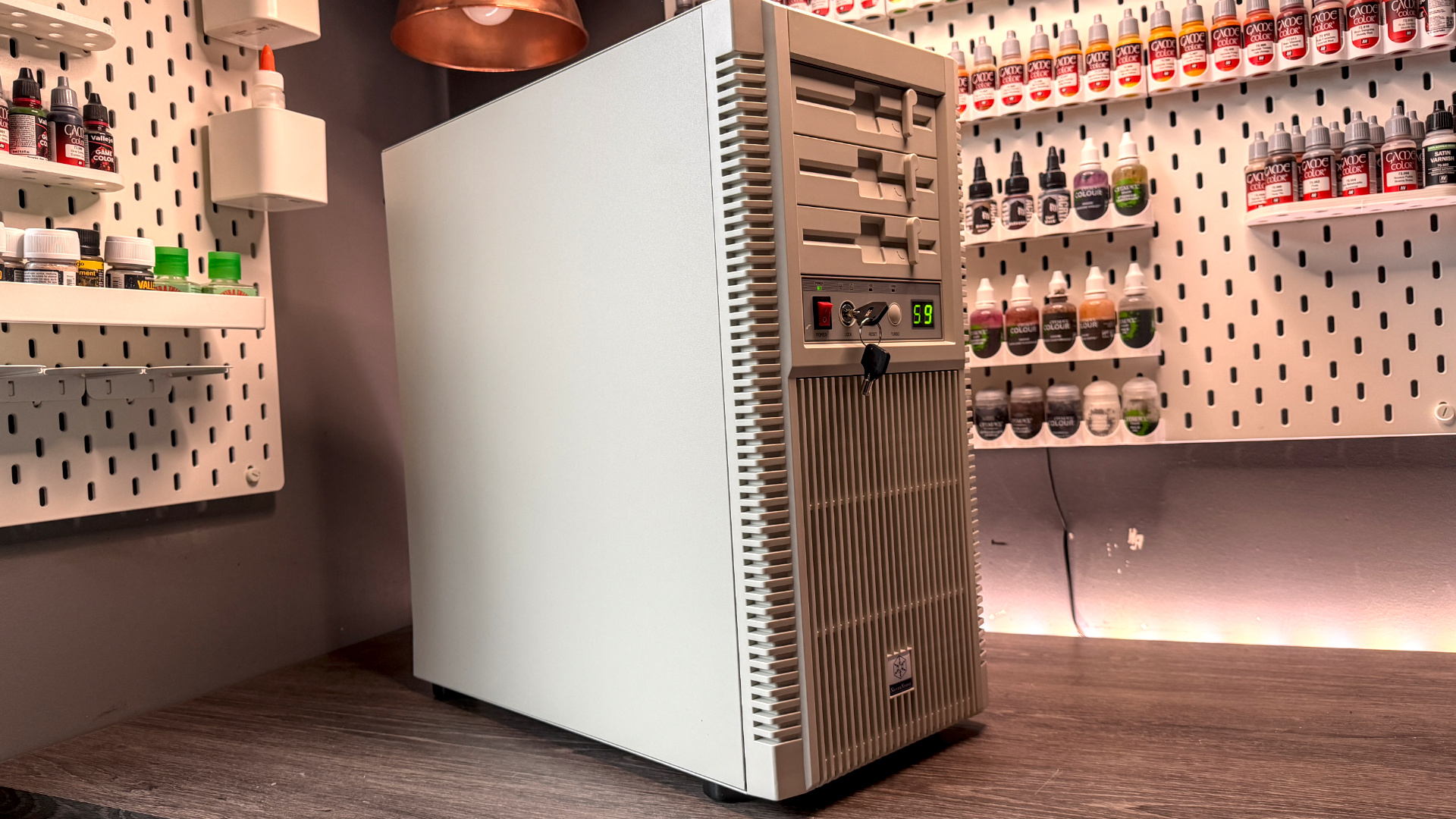
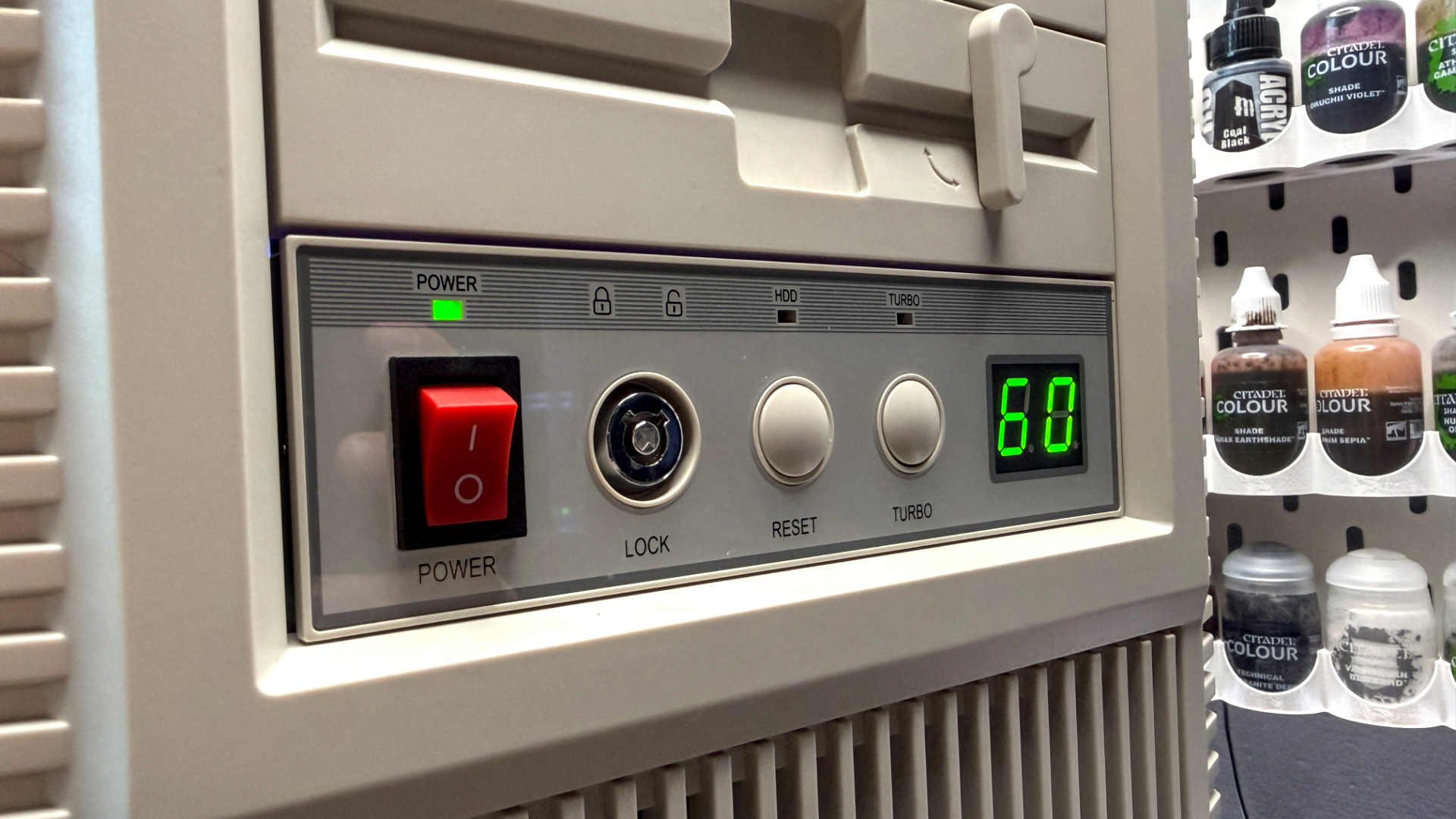
The front is where things get really interesting, though. You won’t miss the massive power panel slap right bang in the middle. It’s sickeningly cool, with a number display for fan-speed control percentage, a flippy power switch, reset button, turbo mode for the fan controller, and even a key-lock to disable power with the accompanying tiny LED lights as well. It’s completely glossy and fits in with the aesthetic beautifully, although I am worried I’ll lose the two included keys, accidentally locking myself out of my own rig.
Above that you’ve got quick latch release covers for those 5.25-inch drive bays, then at the very top, in what’s absolutely a killer 90s throwback, there’s a flip-down I/O cover, secured with magnets, which reveals access to your USB 3.1 Type A and Type C ports, along with a 4-pole input as well. It’s nuts. You’re almost shocked when you see the little USB-C port there.
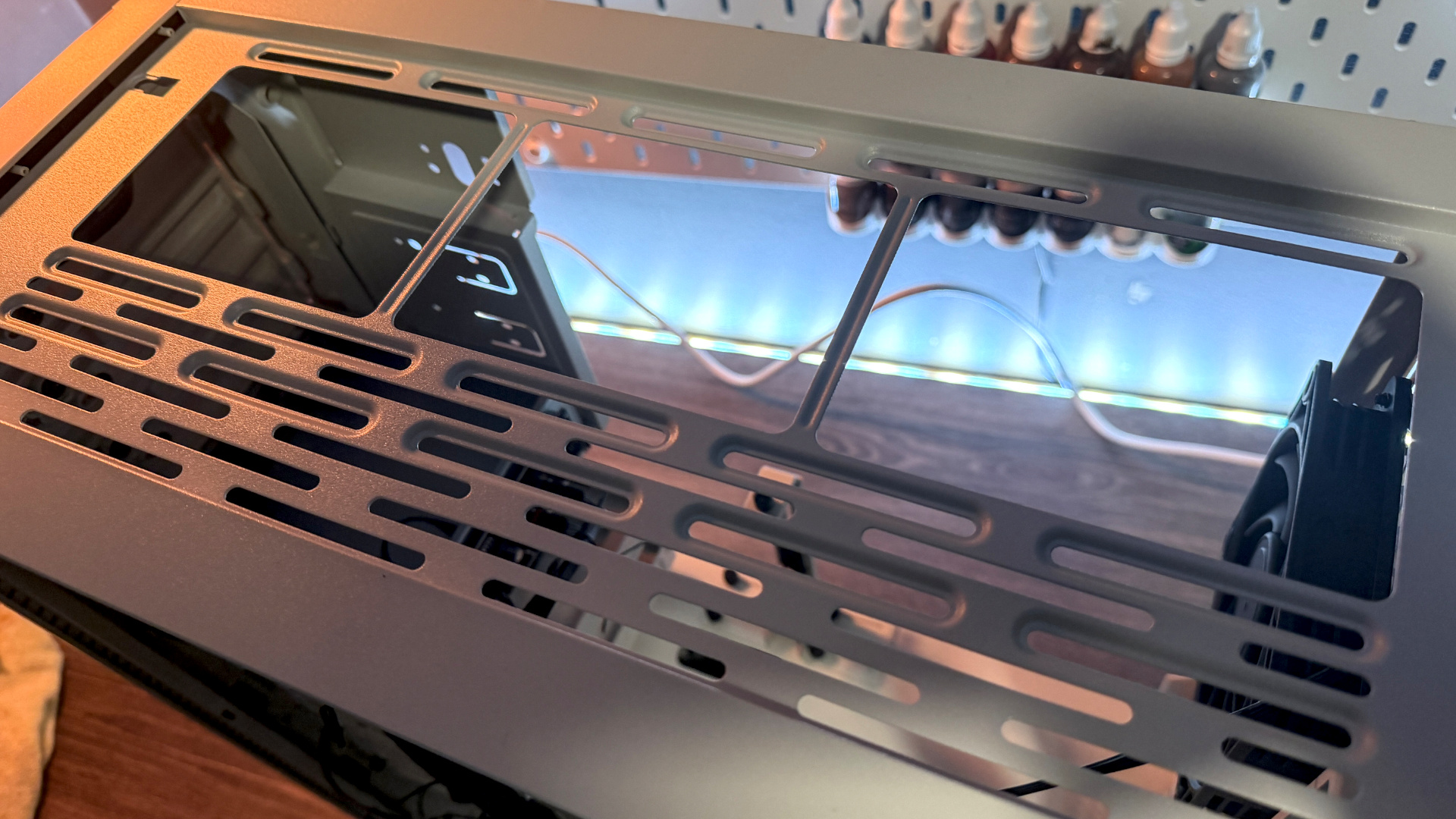
It’s just remarkably well equipped for what it is. Cooling’s pretty decent too, and there’s support for up to a 360 mm AIO in the roof, and you get three fans included as standard, two 120 mm in the front, and one 120 mm in the rear.
Build quality is top-tier, but it is what you’d expect. The front panel is that beige plastic nicely color-matched, and you get steel panels everywhere else, including the entire internal frame, all nicely powder-coated.
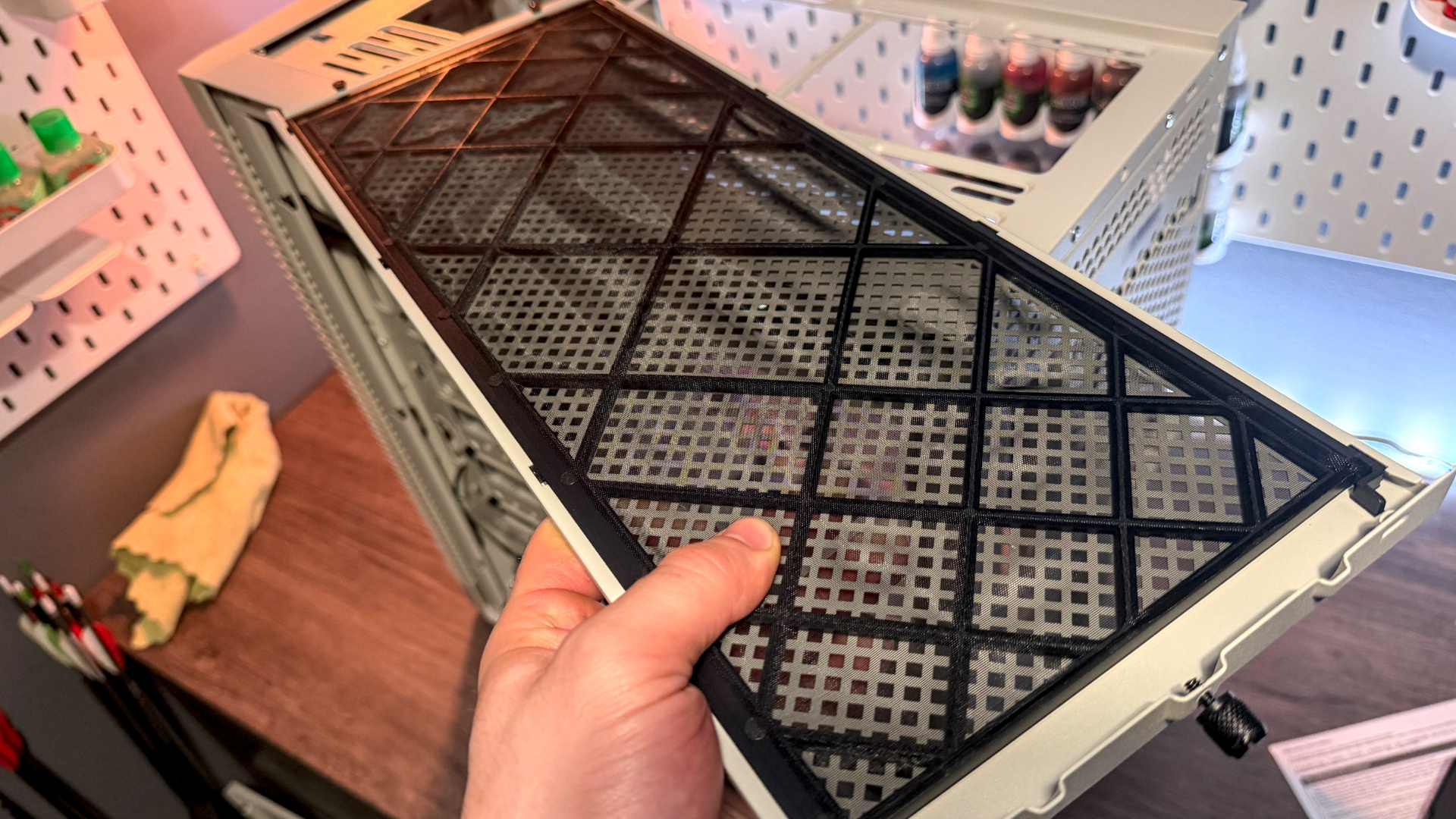
There’s removable dust filters and panels both in the front and the top for easy cleaning (although the front is glued into the plastic removable frame), and I can gladly report that after your build, you don’t need to lean on the back of the rear panel to secure it.
As for the build process, it’s actually fairly seamless all-in-all. I built out a classic sleeper build, of course, with Intel Core Ultra 9 processor, Asus ROG Maximus Z890 Hero motherboard, 32 GB of DDR5, and an admittedly rather small Radeon RX 7800 XT, and it did good all-in-all. I didn’t hit any major snags that made me stop and think.
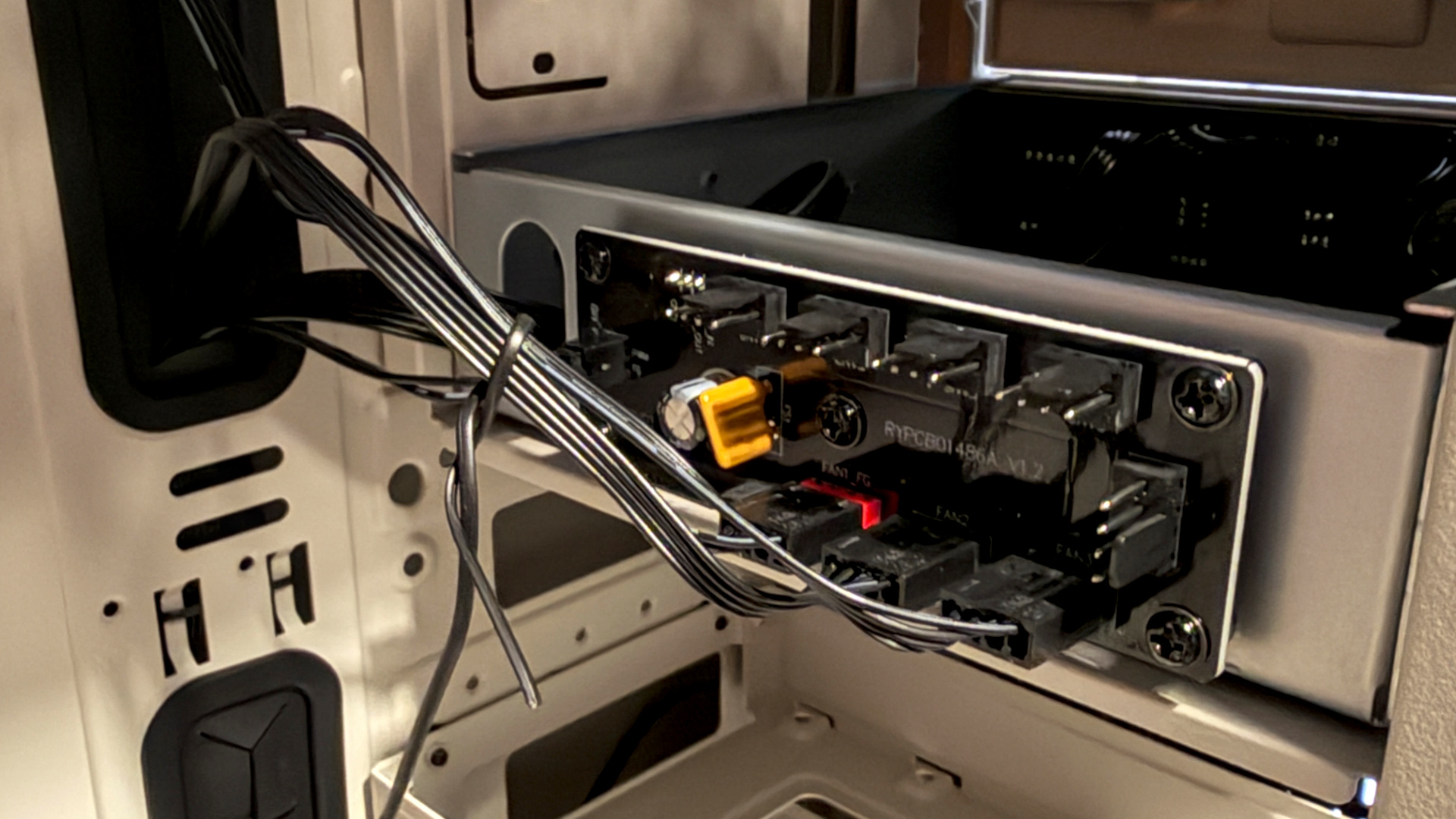
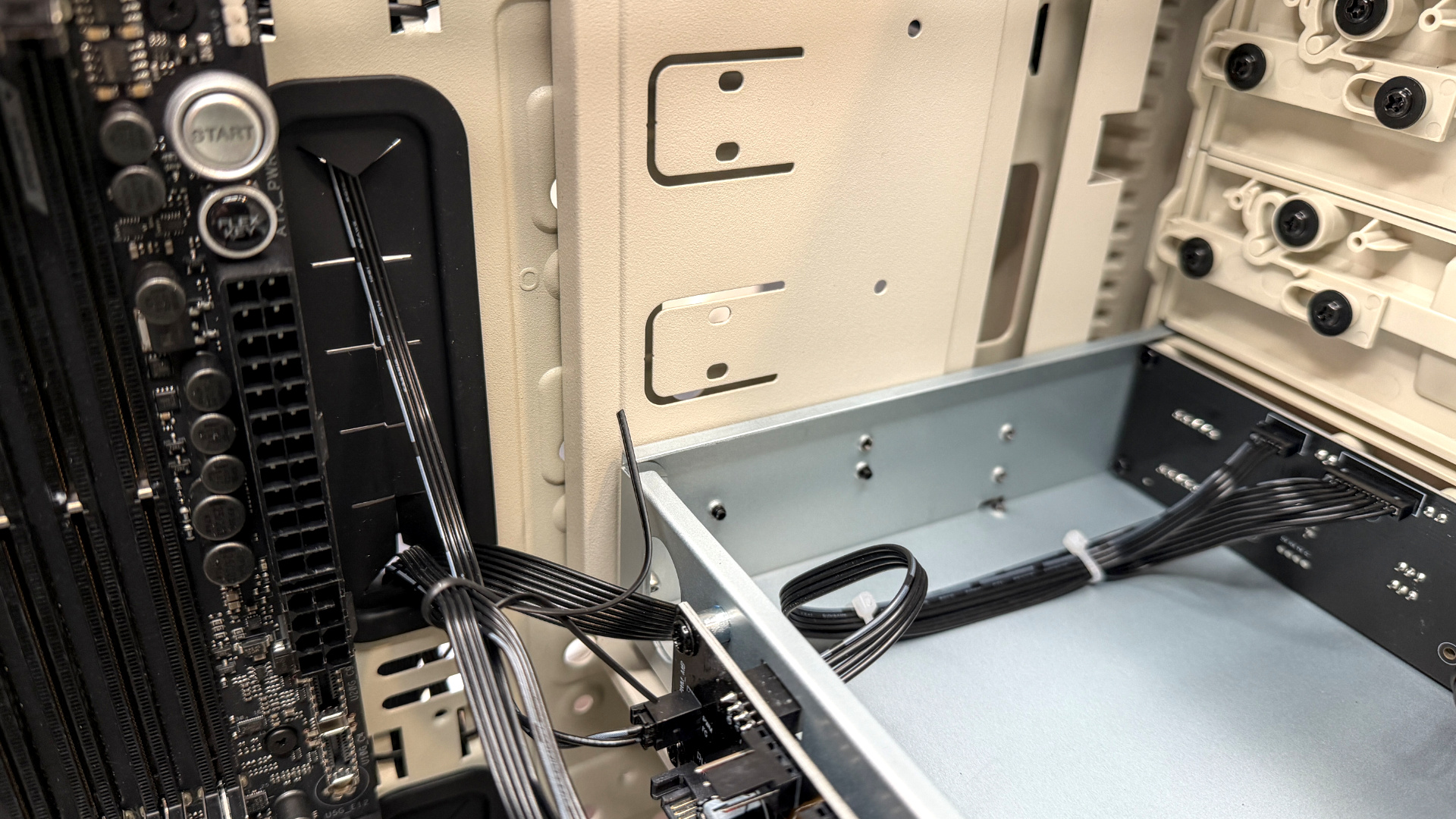
The only minor bug bears I had basically stemmed from both the GPU anti-sag bracket and the fan controller. Rather bizarrely, the controller’s cabling was routed straight out from where it sits (attached to one of the 5.25-inch bays close to the 24-pin on your motherboard), and in past the rubber grommet for the 24-pin cable.
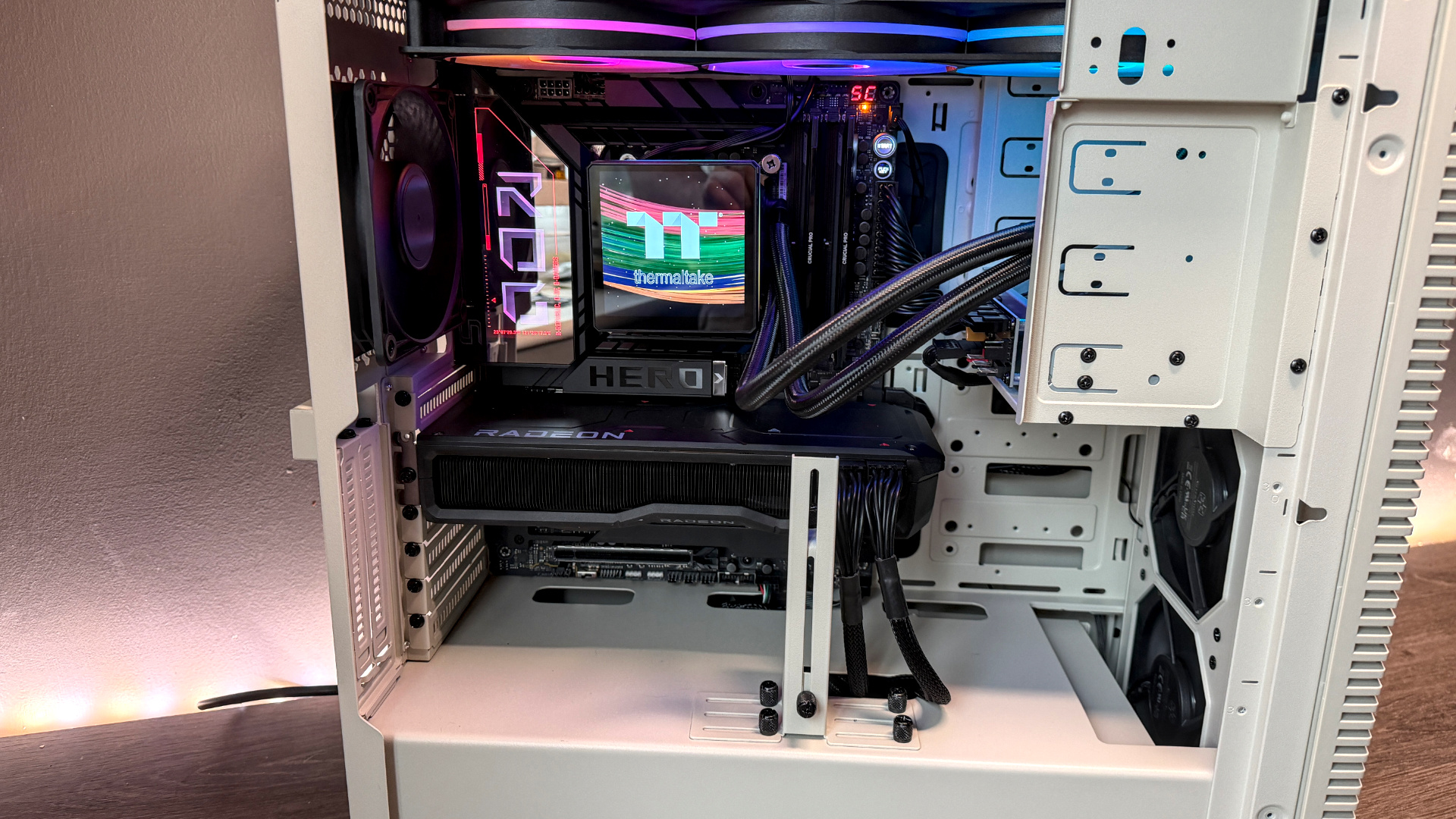
I think the internal fans would’ve been better suited if the cables were routed behind it and near the front of the case, as it did feel a bit too nostalgic (aka you just drape cables across the internal structure, because who cares you don’t have a window). You can fix that, of course, just by unplugging and re-routing those included fans, and Silverstone does include one fan extension cable, allowing you to do the same with the rear fan, but I do suspect that’s not really what it had in mind for that.
And then there’s the GPU anti-sag bracket, which is a bit of an oddity in terms of its positioning, as it doesn’t really reach shorter cards like the 7800 XT. You can remove it, it’s only secured in place with thumb screws, but even the RX 7800 XT I had in here droops slightly, so having something baked into the back of the motherboard tray directly, kinda like what you find in the Phanteks XT V3, or even Lian Li’s O11 Vision Compact, would’ve done it a world of good.
✅ You yearn for simpler times: There’s a hint of nostalgia about this thing, but unlike those classic cases, it’s well built, durable, with plenty of cooling, and is a treat to build in.
❌ You want to see your hardware: It looks incredible, sure, but like its predecessors back in the day, there’s no windowed variant of any description available. What you see is what you get. Ideal for a sleeper build, less ideal to sit on your desk as a showpiece.
Cable management on the whole is a bit minimalistic too, certainly in the rear. It’s not exactly mind-blowing. You get a few tie-off points, some included ties, but there’s no channels or velcro straps or anything of the like, which would be fine if it weren’t for the fact that this is a $200 plus case. Oh and cable managing around the top 360 mm radiator can be a bit tight too. I’d highly advise you route your cables from your CPU block and fans before you secure the radiator in the roof itself, just for an easier life, and leave that AIO install until last in your build order. It’s not impossible to fit it, just a little awkward.
So done and dusted then? High score? Well very nearly, it’d be higher if Silverstone fixed those minor grievances I had, and dropped the price a smidge. What it really needs is a tempered glass edition on the development plan as well. Heck, give me a perspex version if you must, let’s go whole hog on the case evolution history, and I can pretend I’m playing TBC again for the first time while staring at my beige PC humming away contentedly in the background on a heavy-ass CRT monitor with an 800×600 res.
The thing is, though, those grievances I have, aside from the price being perhaps a tad high, aren’t actually deal breakers, really. Most can be fixed after the fact by the builder, and none of them impact the experience. The FLP02 is quite remarkable, bringing a bit of simpler times to the otherwise chaos-ridden experience we currently inhabit, and I don’t think you’re getting enough credit for that, Silverstone.
About Author