First, the good news: Peter Molyneux has learnt (one of) his lesson(s). Masters of Albion will not try to flog you NFTs, no one said the words “play to earn” in the entirety of its hands-off demo, and I didn’t see a single unfathomable cube in the 40ish minutes I watched Molyneux walk me and a gaggle of other press through its systems.
What I did see was a lot of old and not much new. Molyneux and 22cans have cast aside those 2010s-era boondoggles, and in their place returned to the formulae of the ’90s and early 2000s that first made Molyneux a household name. For a particular sort of household, anyway.
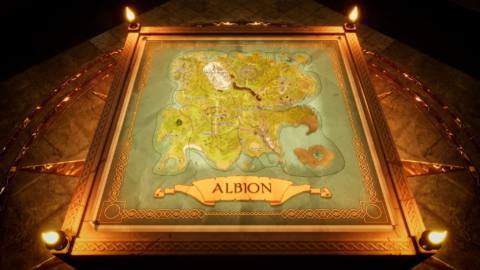
Masters of Albion—which hits Steam early access on April 22—is a bit Fable, a bit Black and White, a bit Dungeon Keeper. It ping-pongs you between systems at speed: now you’re designing your town, now you’re defending it from enemies, now you’re inhabiting a single hero villager directly and roaming the world map. It’s Now That’s What I Call Molyneux 2006, but here’s the rub: I’m not convinced any of Masters of Albion’s distinct parts are as good as the original games that inspired them.
It’s that black and white
Masters of Albion marks the return of one of old Lionhead’s most iconic characters: the anonymous sky hand. You are, for all intents and purposes, god, and you make your will manifest by clicking and dragging things and people all about the world with your great meaty mitts (just like in the Bible. Look it up).
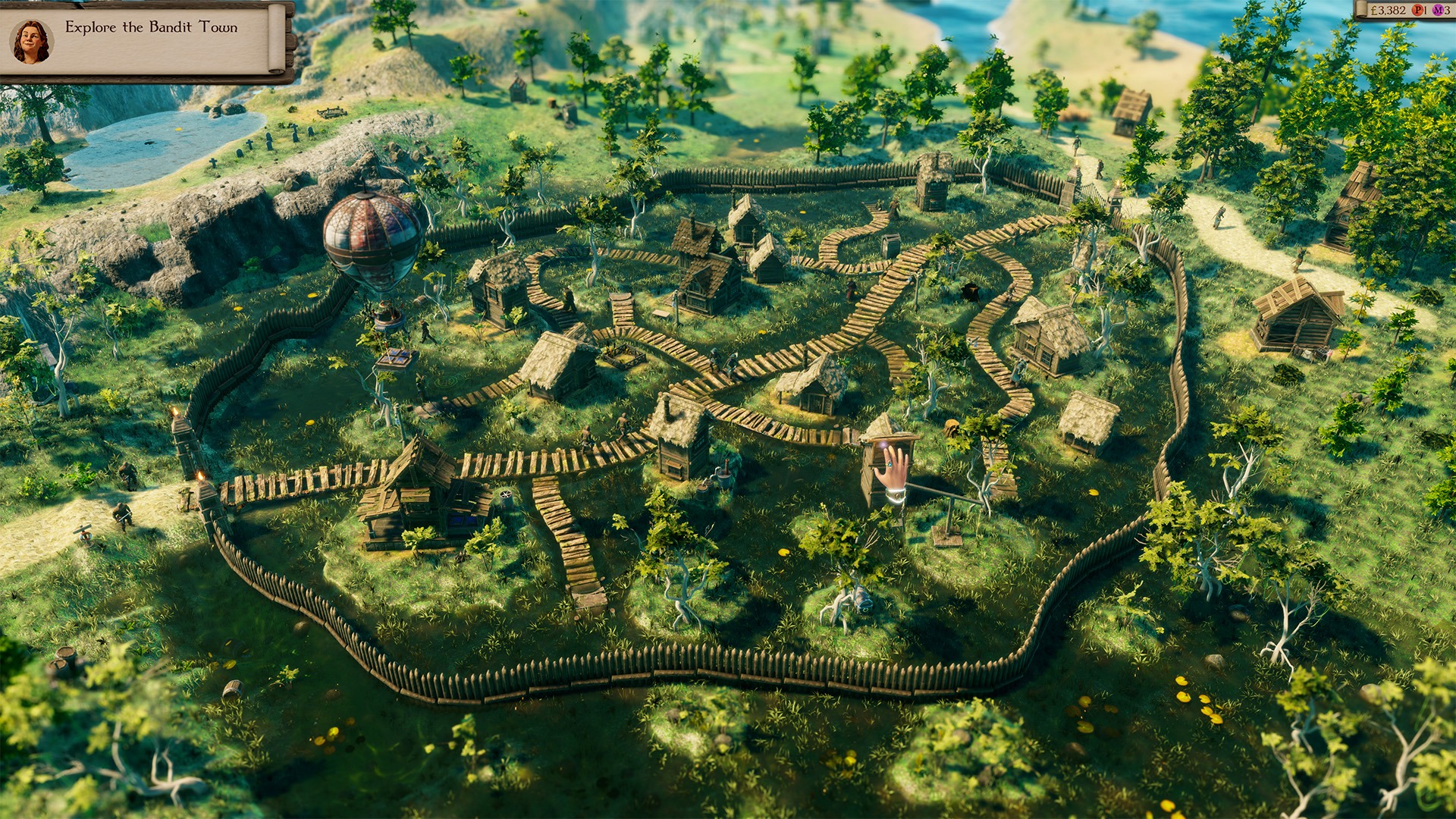
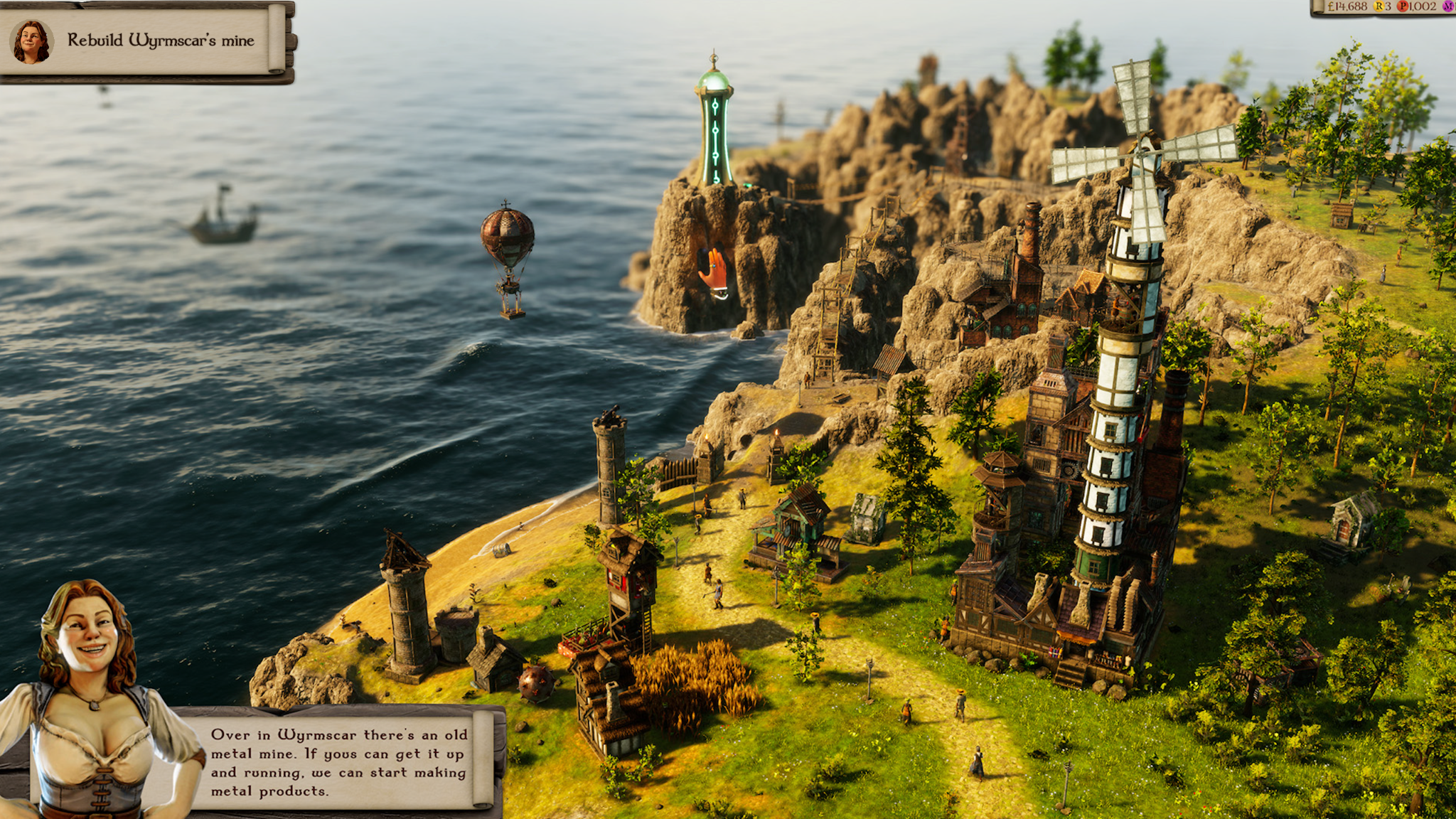
This is where Molyneux starts off the demo. Masters of Albion gives you a sizable map, but our starting ministry is small: the village of Oakridge, whose economy consists of its local wheatfield and not much else.
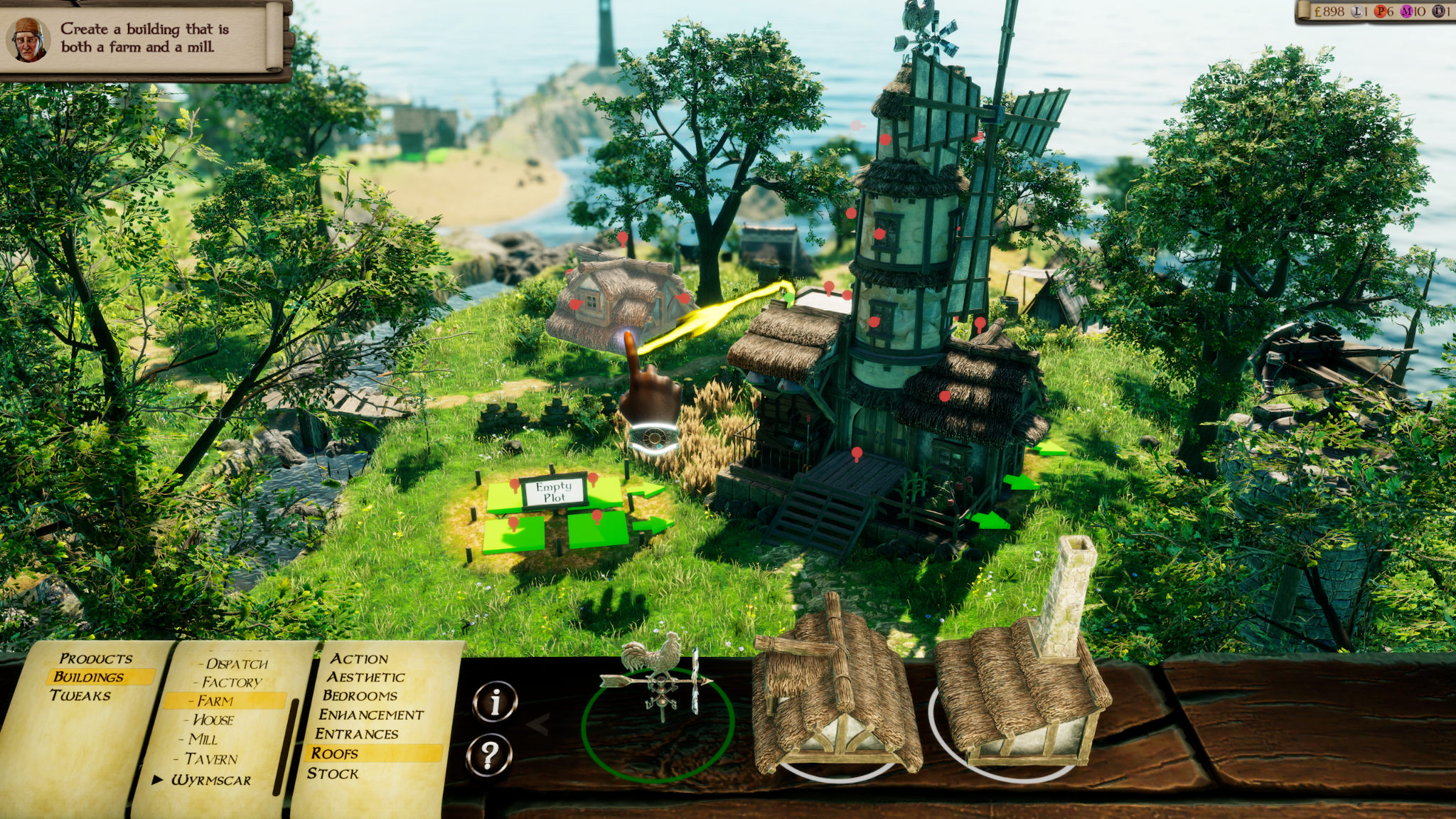
It’s the citybuilding phase. Your goal in this third of the game is to generate money, fulfill orders from your villagers, and expand your influence. The first two go hand-in-hand: Molyneux grabs one of the orders scattered about the map—a woman named Sylvia Plinth wants nine food—and slaps it onto the local factory.
This drops us into what felt like the most novel part of the whole thing, a design minigame where your goal is to assemble something that best satisfies whoever made the order. Plinth wants nine units of “basic” food and her only instruction is “all meat, no starch.” We could, Molyneux says, deliberately “give her the most disgusting food ever,” but he’s feeling mostly charitable.
He chucks down a pie crust, tosses in chicken and stock—each ingredient has its own requirements; you need flour for the stock, for instance—and just a soupçon of dead rat, and the production line spins up to copy his design nine times. Each pie nets him around £50. Not bad for something that’s one-third rat.
I get the impression it was this system that provided the initial germ for Masters of Albion. Before the demo even begins, Molyneux says that when the team sat down four years ago, the goal was to “revolutionise the way that people built buildings, and the sort of things that they could do.” The game’s economic simulation—wheat milled into flour turned into stock that gets combined with pie crust and chicken and rat and so on—is the fruit of that.
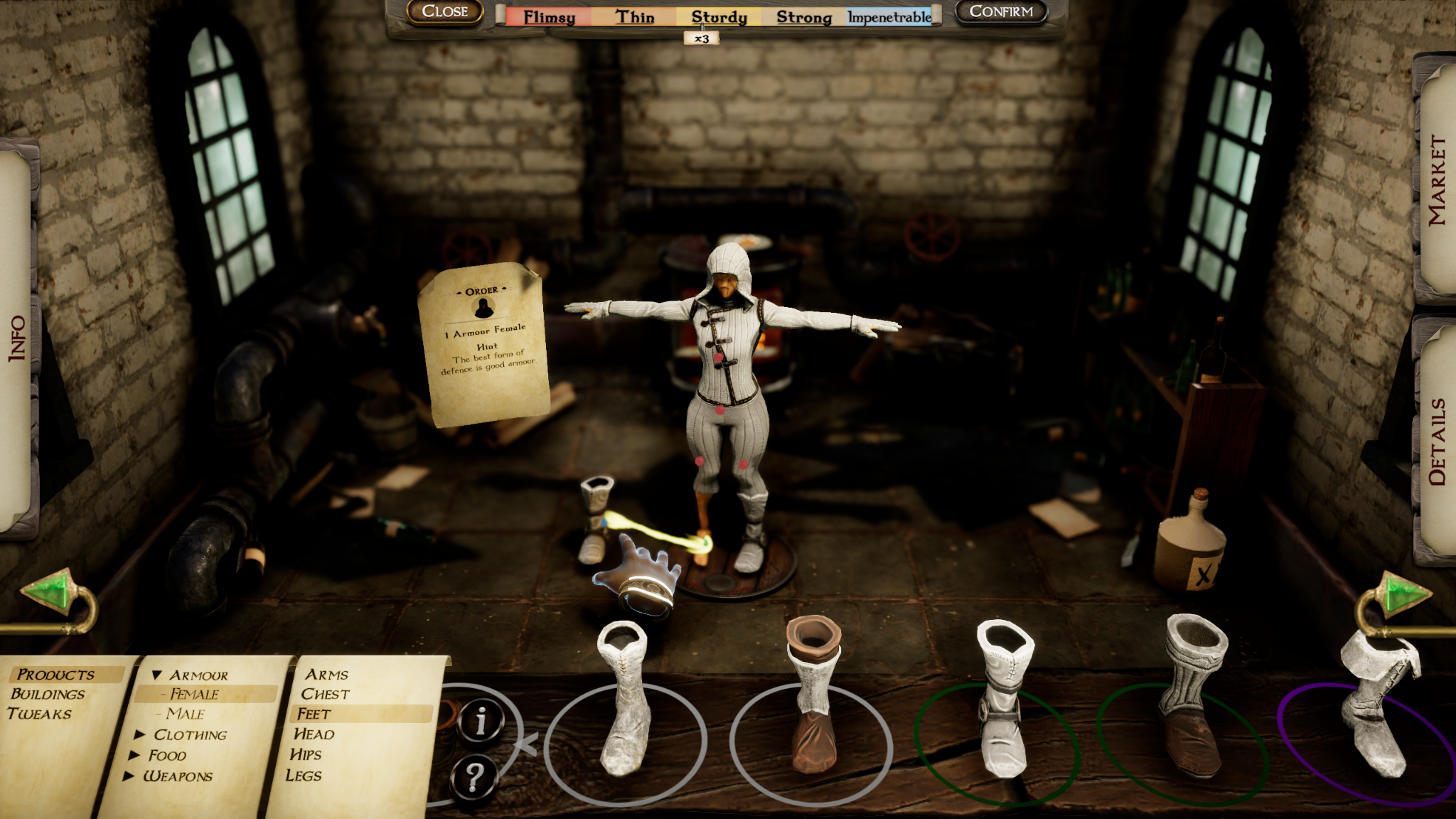
It goes beyond pies, by the way. A little later on, Molyneux dips back into his factories to piece together a new sword for a hero character, choosing between hilts and pommels and lengths of blade that influence the speed and damage of his attacks. When it comes time to rebuild a new village, he designs buildings by comboing rooms of different functions: a sleeping quarters atop a factory produces, well, pretty much a sweatshop. It’s efficient, but Molyneux suggests this hyper-utilitarian approach to design might carry maluses for denizen happiness, or earn a finger-wag from a housing inspector that, alas, we don’t meet in the demo.
It’s a fun system, and a way of imposing your will on the world in a more granular way than you’re used to in something like a Black and White, but it is also, emphasizes Molyneux, kind of optional. “This is another philosophy of the game: for those people that just want to do things quickly, it’s incredibly quick… if you don’t want to be bothered with [design], just drag parts in.”
This concerns me, rather than reassures me. The design system was the most interesting part of what I saw, but the fact that it can apparently be skimmed over leaves me unconvinced that it will have much depth or go very far in “revolutionising” citybuilder play. I suspect this is a decision made not to impinge on anyone’s time—if you come to Masters of Albion for its Fable-esque gameplay, 22cans doesn’t want to bore you with a load of meticulous pie-design, and so on. But, well, about that…
Hero protagonist
Once he’s done shoving rats into pies, Molyneux zooms out. Your influence as a disembodied hand is limited in classic Black and White style: outside of your own region, you can affect nothing.
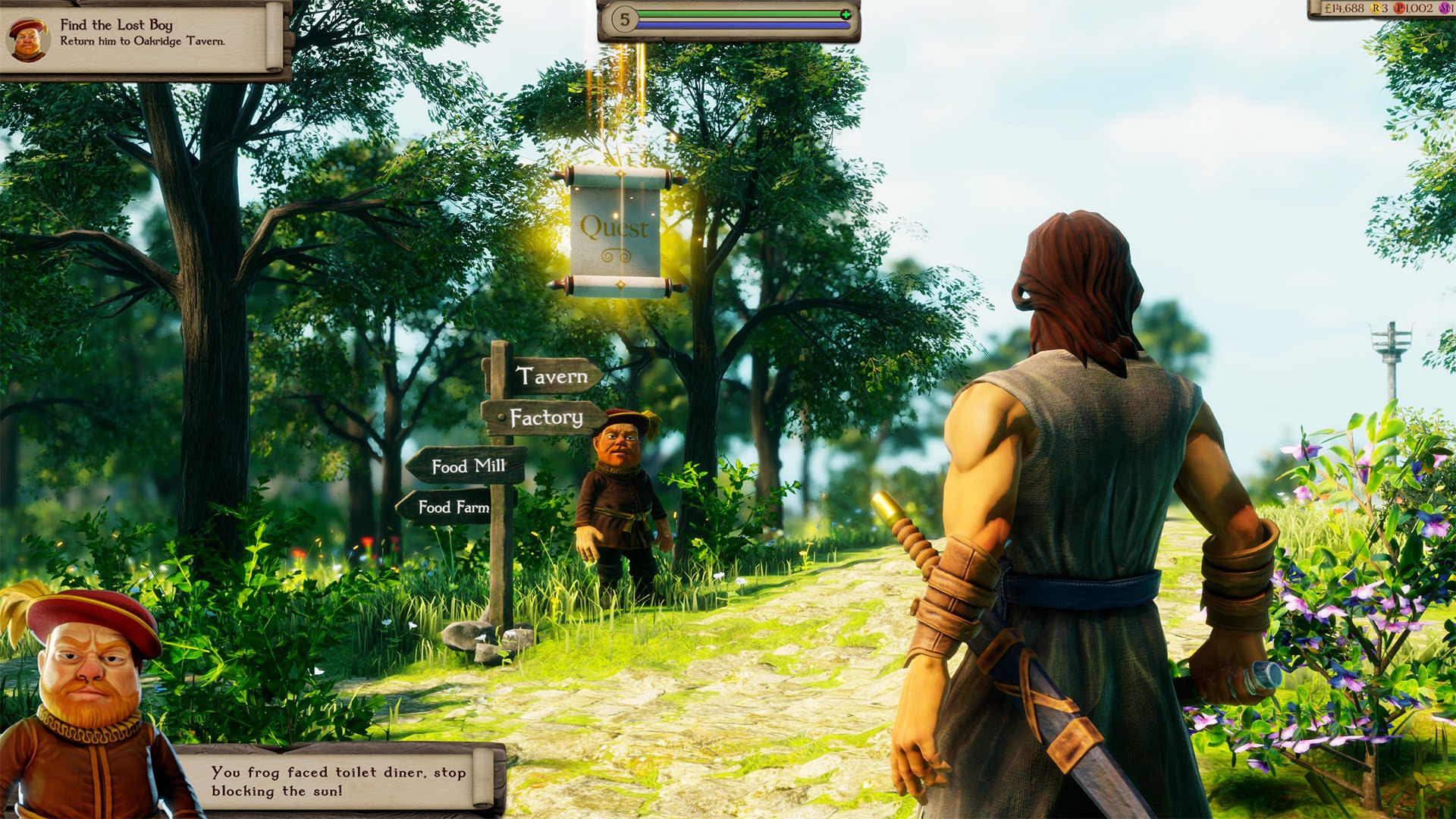
To remedy that, we summon and possess a hero—an axe-wielding Aragorn-type, in this case—and stomp into the new territory.
This is all very Fable. As you explore the world on-foot, you can find collectibles, dungeons, the odd puzzle to solve, and plenty of bandits, who you take on using whatever weapon you’ve equipped your avatar with in fights that look floaty and simple in a very Fable-the-first way, though Molyneux notes that 22cans is still finessing how the combat works and feels.
Our hero’s goal is to open the region up to the influence of your hand-of-god. You find a beacon, quickly assemble it using parts strewn about the map (Molyneux likens this to a jigsaw puzzle; I find myself thinking of it as a kind of Tower of Hanoi if it only had one tower), and presto, you can now click and drag to your heart’s content, rebuilding that region’s village into a hub of prosperity and production.
This whole aspect of Masters of Albion feels for all the world like you have suddenly leapt backwards in game-design time, back to a forgotten Xbox 360 launch game filled with colourful, quippy pop-up tutorials and red explosive barrels, as your foes fall before you and spit out different kinds of orb. It’s not bad, or at least it doesn’t look bad, but it feels quite unremarkable. If you are that breed of player who just wants to get into the hack-and-slash and not waste time designing pies, I struggle to imagine you finding much to grab onto.
Turret section
Our final few minutes with Masters of Albion were spent with its city-defence gameplay. The hero and citybuilder gameplay all took place in daytime, when citizens mill about, make and take orders, and generate the economic life of your town. But when you’re ready, you can click into night, which is when the spooks and phantoms rise and start to lay siege to your little productive snowglobe world. For unknown reasons. Complaints about the pies, probably.
This whole aspect of Masters of Albion feels for all the world like you have suddenly leapt backwards in game-design time, back to a forgotten Xbox 360 launch game
You prepare for this in daytime by building walls, turrets (that is to say, medieval turrets: honking pillars with trebuchets on top, not Tesla coils), and other defences, but you aren’t really limited by your daytime choices when night comes around. As skeletons massed at his walls, Molyneux noted that a turret he built in daytime wasn’t really operating at effectively—he simply picked it up mid-battle and stuck it down somewhere a bit nearer the thick of the action. Likewise, when the game informed him that enemies were approaching from the west, he grabbed a wall and instantly extended it such that they couldn’t intrude from that direction.
An aside, and something genuinely charming in a very Molyneux way: you’re more than welcome to load your trebuchets with whatever you want. Want to launch your horrible foodstuffs at the enemy? Fill your boots. Then launch the boots, too.
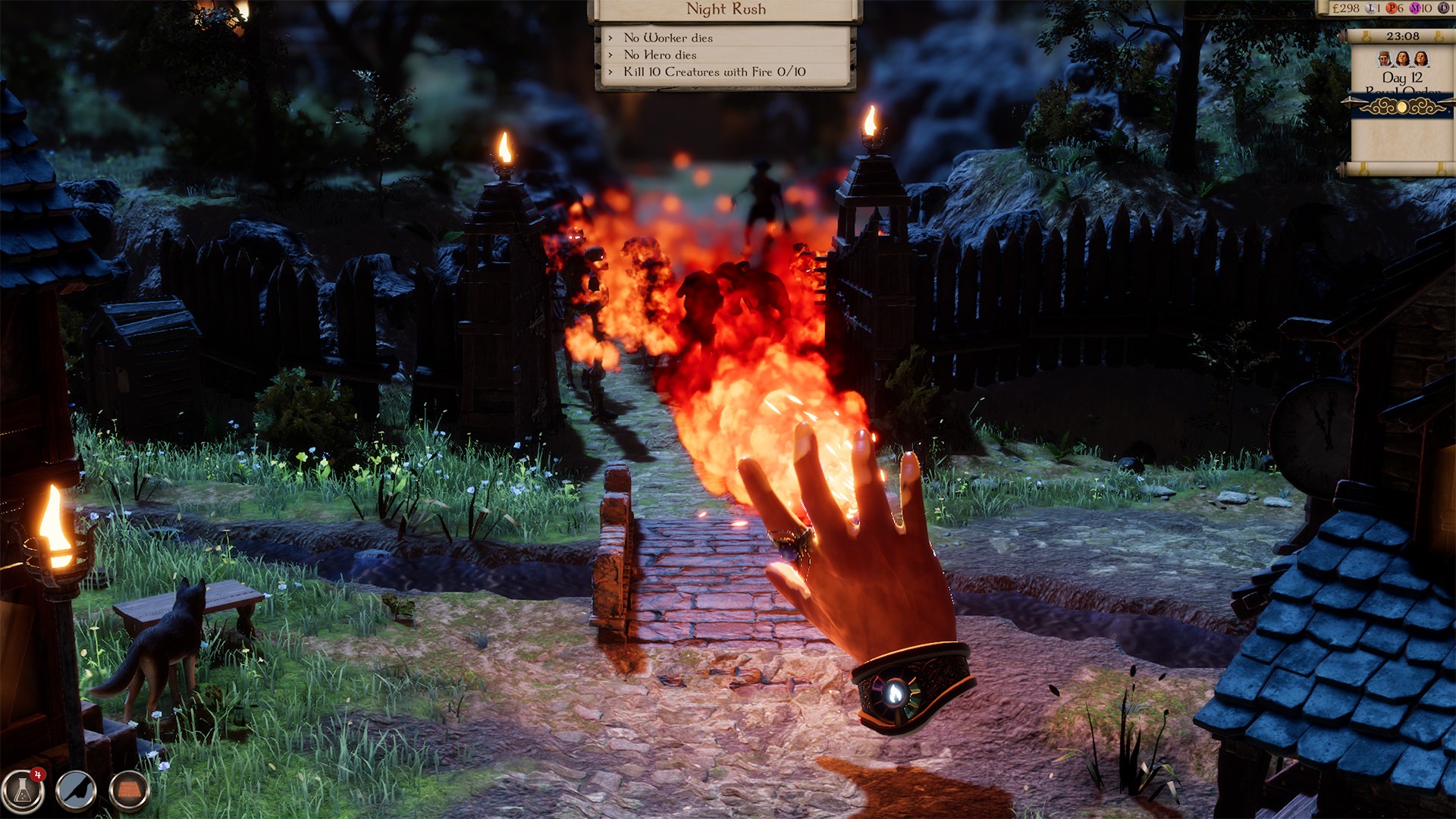
So it’s a relatively forgiving mode, at least in the early-game iteration of it I saw, and it’s made a little easier by the fact your hand has access to Black and White-style powers. Where his defenders weren’t picking up the slack, Molyneux could simply cast bolts of lightning at foes.
What provides the actual challenge seem to be your objectives. On top of, you know, not dying, Masters of Albion tasked Molyneux with fulfilling a few optional objectives too: don’t let a particular building take damage, kill 10 foes with objects, etc. Doing all that seems harder than the more generic main objective of surviving until dawn, and would likely take more focused daytime prep and defence-construction.
It’s fun and quirky, but did not (again, in a short, early-game demo) really have the depth of a Dungeon Keeper, or even a Dungeon Keeper disciple like Evil Genius.
Again, that’s deliberate. Masters of Albion is trying to be all of Molyneux’s most-beloved games at once, but without committing 100% to any of them for fear of burdening players with gameplay they didn’t come for. Its goal is for you “to play at any pace that you want,” said Molyneux. “If you want to feast yourself on things you can, if you want to unlock tech trees you can, if you want to go out questing you can, if you want to specialize in combat you can.”
That might be enough for some, and who knows? Perhaps all the systems I saw get much more complex later on. But from what I saw, Masters of Albion felt like a game which tries to cram a lot of Bullfrog and Lionhead into one box, without ever quite measuring up to the games it draws from.
2026 games: All the upcoming games
Best PC games: Our all-time favorites
Free PC games: Freebie fest
Best FPS games: Finest gunplay
Best RPGs: Grand adventures
Best co-op games: Better together
About Author