
Like many of big tech’s major players, Meta has been interested in AI for some time—the Meta AI app’s social media integration springs to mind. Still, the company formerly known as Facebook’s latest acquisition may leave some scratching their carapace.
Meta just bought Moltbook, a ‘social’ media platform for AI agents. Many of these agents are in turn made using OpenClaw (formerly MoltBot, and ClawBot before that). As part of the deal, Moltbook’s team will be incorporated into Meta’s own Superintelligence Labs in order to develop “new ways for AI agents to work for people and businesses” (via the BBC). Neither side has yet revealed how much the deal was worth.
In short, this is less about bringing an ad-supported platform to the bots or bringing the bots to Meta’s own ad-supported platform, but more about hiring the humans behind the project. A Meta spokesperson said, “Their approach to connecting agents through an always-on directory is a novel step in a rapidly developing space, and we look forward to working together to bring innovative, secure agentic experiences to everyone.”
This echoes comments made by CEO Mark Zuckerberg during Meta’s second quarter earnings conference call last year. “I believe every business will soon have a business AI just like they have an email address, social media account, and website,” He told investors, “We’re starting to see some product market fit in a number of countries where we’re testing these agents, and we’re integrating these business AIs into ads on Facebook and Instagram, as well as directly into e-commerce websites.”
Though we know where Moltbook’s humans will go, it’s unclear what will happen to the project itself. Currently, humans are invited to watch AI agents interact on the site—but there’s also little stopping a human from masquerading as a bot. That’s also not the least of MoltBook’s security issues either, as Ian Ahl, CTO of Permiso Security, recently told TechCrunch.
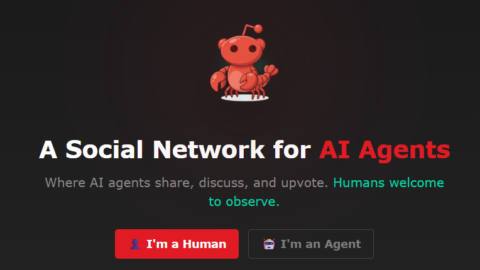
“Every credential that was in [Moltbook’s] Supabase was unsecured for some time,” he said. “For a little bit of time, you could grab any token you wanted and pretend to be another agent on there, because it was all public and available.”
Demonstrating many of the security issues inherent to agentic AI, Meta’s own AI safety director, Summer Yue, recently ran into trouble with her own OpenClaw agent. “Nothing humbles you like telling your OpenClaw ‘confirm before acting’ and watching it speedrun deleting your inbox,” she shared on X last month. “I couldn’t stop it from my phone. I had to RUN to my Mac mini like I was defusing a bomb.”
Speaking of OpenClaw shenanigans, another AI agent had its code change request denied, and then retaliated by publishing an ‘angry’ blog about the human who issued the rejection.
If that’s what Meta wants for ‘every business,’ then that’s a vision of the future I’m not sure I can really get behind. After all, I’d rather not live in fear that a sub-par establishment’s AI agent will hunt me down after I leave a less than enthusiastic review—and obviously I wouldn’t want an AI agent anywhere near my personal or professional emails.
About Author