I’ve been writing about games for long enough that my threshold for a single piece of artwork grabbing me by the shoulders and screams “PLAY ME!!” in my face is pretty damn high. I did not attend an Xbox indie showcase at this year’s Game Developer’s Conference in San Francisco with a plan to play At Fate’s End. I did not, in fact, know At Fate’s End existed. But a few seconds of animation was all it took to magnetize me to that demo chair.
Even compared to stiff competition like Supergiant’s Hades or last year’s Dispatch, the artwork of At Fate’s End is striking. Much of that’s due to its fine touches that stand apart from other 2D games with hand-illustrated styles. When I first took control of protagonist Shan, the young outcast of a family of demigods, I noticed the way she’d shift her weight when she stopped running, her hair sweeping forward under lingering momentum. Conversations that at first seemed like they’d be static, driven just by dialogue boxes, were granted a breath of life by occasional shifts in posture and small gestures. The way the camera whirls around Shan during a climactic confrontation feels like a pure animator’s flex. At Fate’s End seems to relish every opportunity to bump the lamp.

But what is it, anyway, other than beautiful? A slightly odd mix of 2D action and family drama, but blessedly not aping Hades’ roguelite structure. Shan’s story, as best I could follow it from the opening 20 minutes or so, is about reconciling with her more powerful siblings after somewhat awkwardly becoming the Chosen One as the runt of the family. A conversation system lets you choose how to interact with each of them to figure out in what specific ways they’re sad, mad, or otherwise fucked up, and you collect clues that peel the corners of the layers-deep family trauma holding you at a distance.
There’s also the option to blow past nuance and kick their asses instead.
Or maybe you’ll end up kicking their asses regardless of whether you make a therapeutic conversational breakthrough? That I’m not so sure about. But within the conversation system lies a whole other collection of amazing artwork in the form of tarot cards that serve as Shan’s powers. At Fate’s End isn’t a deckbuilder, but the cards represent abilities you’ll be able to use mid-combat by tapping a trigger on the controller and freezing time, then clicking on a skill.
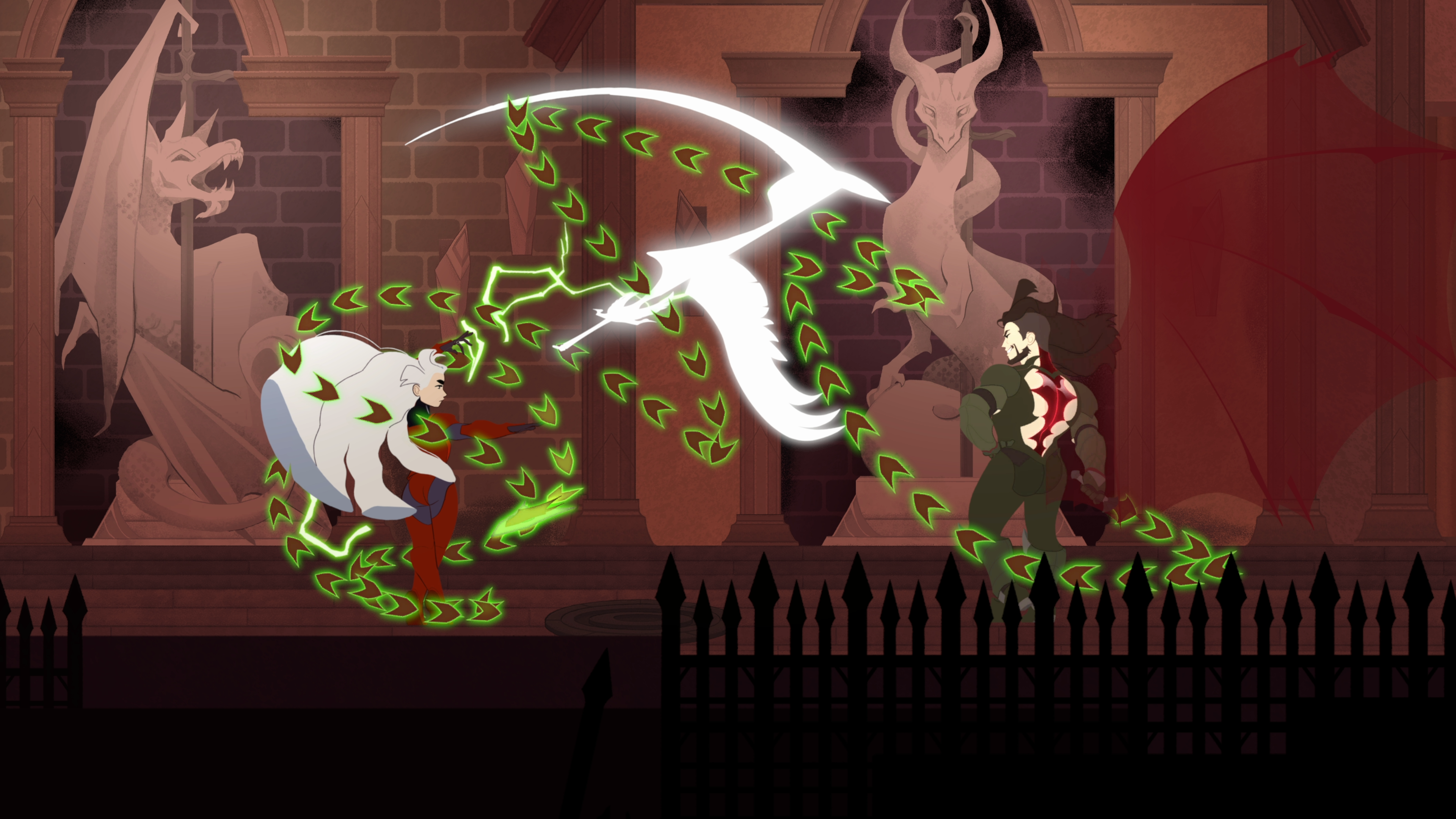
This was the only bit of At Fate’s End that struck me as awkward—pausing the action to then guide a cursor around the screen with an analog stick breaks the flow and overcomplicates what feels like a simple interaction. I immediately wanted hotkeys so I could minimize that downtime; At Fate’s End uses the same pause-and-then-click system for examining bits of the environment for flavor text, which again feels oddly at arm’s length. Even adventure games in the ’90s figured out shortcuts to let you do stuff with one click instead of burying every action behind an extra menu layer.
I didn’t get enough time with At Fate’s End to judge it thoroughly on either the feel of its action or the writing of its messy family drama, but I honestly want to see every frame of bespoke animation that this team, which last made Spiritfarer, has spent the last five years working on. If the rest of it comes even close to measuring up, that’s just gravy.
At Fate’s End doesn’t have a release date yet, but it’s meant to be out this year.
About Author